Q
Sts. Quatuor Coronati
C
St. Cuby
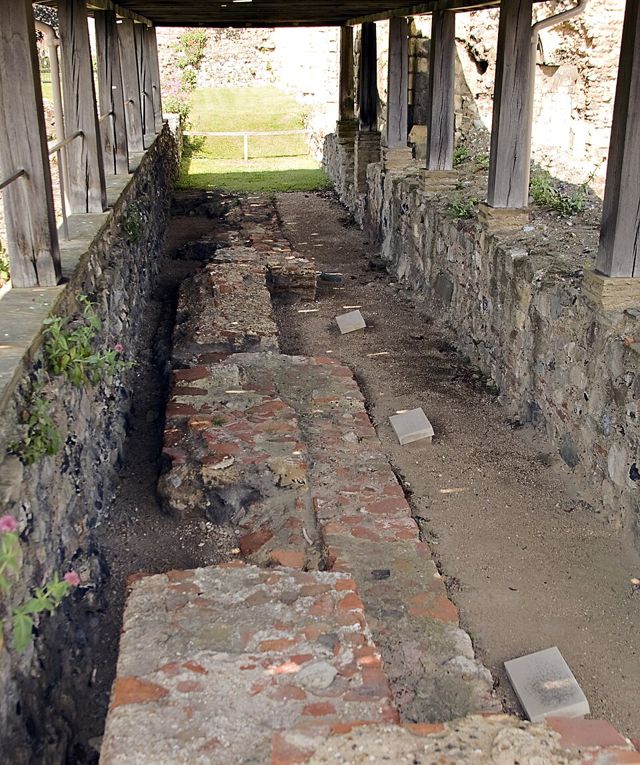
Building a community where people could actually live the Gospel.
November 8
July 29
Abbot
According to the Breton account, he was the son of Brochwel Ysgythrog, prince of Powys, and of Arddun Benasgell, sister of Dunawd. Brochwel succeeded his father Cyngen ap Cadell in the principality of Powys, and lived till after the time of S. Augustine, when he commanded the reserve left for the protection of the monks of Bangor, on the advance of Ethelfrid against the British army at Chester. The Breton legend is to this effect: — Suliau, as he is there called, was persuaded by Guymarch, abbot of Meibot (Meifod in Montgomery),2 to fly his father’s court, and embrace a life of religion.
Learn from the kind of life it was. Building a community where people could actually live the Gospel.
Keep their day. Remember them on November 8 with a short prayer, and ask for their help.
1 Commemorated on Nor. j. But the account given by the Breton writers is different, so that we are disposed to think it must refer to another saint of the same name; yet if so, it is curious that he should be unknown to the Welsh. According to the Breton account, he was the son of Brochwel Ysgythrog, prince of Powys, and of Arddun Benasgell, sister of Dunawd. Brochwel succeeded his father Cyngen ap Cadell in the principality of Powys, and lived till after the time of S. Augustine, when he commanded the reserve left for the protection of the monks of Bangor, on the advance of Ethelfrid against the British army at Chester. Ethelfrid, instead of directing his attack upon the British army, fell on the monks and massacred twelve hundred of them.1 Brochwel was defeated and fled. According to the Welsh genealogies Brochwel had three children, Tysilio, Cynan Gargwyn, and Llyr; and no mention is made of Sulien, or Suliau, Maian, Jacob, and Chanaan, attributed to him by the Breton accounts. The Breton legend is to this effect: — Suliau, as he is there called, was persuaded by Guymarch, abbot of Meibot (Meifod in Montgomery),2 to fly his father’s court, and embrace a life of religion. He took occasion of a chase to make his escape and take refuge with Guymarch (Gwyddfarch); the abbot sent him for security to a cell in the island in Aber-menew, and after the resentment of his father was appeased, recalled him. Suliau found the abbot very anxious to journey to Rome. He tried to dissuade him, assuring him that his departure would prove disastrous to the abbey. When Guymarch could not thus be dissuaded, Suliau took him to the top of a mound, and showed him thence in panorama all the churches, temples, and other public buildings of Rome, even the obelisk which Constantius had brought from Heliopolis, and the ruins of the 1 Gwyddfarch, son of Amalarius, prince of Powell, was abbot of Meifod at the close of the 8th century.
S. Deusdedit Colosseum. The abbot was satisfied, and said nothing more about his journey. On the death of Guymarch Suliau was elected in his room. Brochwel died and was succeeded in the principality of Powys by his son Jacob, who died leaving no issue by his wife Hajarme. It was decided therefore that the widow should marry Suliau, and raise up of the seed royal to reign in Powys. Scared at the prospect, Suliau fled to his island in Aber-menew, and thence to Aleth, in Brittany, where he visited S. Malo, who gave him a monastery where now stands S. Suliac. On the death of his sister-in-law he was invited to return to Wales, but refused, and died at S. Suliac.
Feast: July 29
Traditional: November 8
One short email a day for nine days. The day's prayer, a line from St. Sulien's story, and a nudge to keep going.
From Sabine Baring-Gould, The Lives of the Saints, new edition in 16 vols. (London: John C. Nimmo, 1897–98); text from the Internet Archive scan (OCR, lightly cleaned; errors possible). Public domain.
From Sabine Baring-Gould, The Lives of the Saints, new edition in 16 vols. (London: John C. Nimmo, 1897–98); text from the Internet Archive scan (OCR, lightly cleaned; errors possible). Public domain in the United States. Reproduced unedited, except for short bracketed notes in grey that we added to explain names and terms (“S.” is the old abbreviation for Saint). Some history and judgments reflect 19th-century scholarship.