St. Telesphorus, Pope

Faithfulness to Christ when it cost everything.

Read the essentials →
January 5 · Martyr

St. Telesphorus

St. Telesphorus, Pope

Faithfulness to Christ when it cost everything.

Traditional feast

January 5
1914 / pre-1969 calendar, per Baring-Gould (1914)

Current feast

January 5 (also listed: February 22)
Secondary source · Wikipedia

Represents

Martyr

Their story

Adapted in modern English from Baring-Gould (1914) · original text below · little is known

Telesphorus was a Greek by birth and the seventh bishop of Rome after Peter. He succeeded Sixtus I and led the Roman Church for about eleven years in the first half of the 2nd century (modern dates are roughly 125–136). He is the first pope after Peter whose martyrdom is attested early: St. Irenaeus (bishop of Lyon, d. c. 202, who listed the early popes) says he 'suffered a glorious martyrdom'. Later tradition credits him with the Christmas midnight Mass and the Gloria, but that is not proven.

Why they’re the patron of…

  • Christmas midnight Mass · Tradition
    Ascribed to him by the Liber Pontificalis (the early medieval 'Book of the Popes', not always reliable for the earliest ones).

Early life

Selected sentences from the original account, unaltered.

Thin entry · the 1914 book gives only 60 words. We have not filled the gap with invented detail.

Saint Telesphorus was by birth a Greek, and was the seventh Bishop of Rome.

What they represent

How they teach us to live

Drawn from themes in the original account

Stay faithful when it costs you. This account is about holding firm under pressure.

Learn from the kind of life it was. Faithfulness to Christ when it cost everything.

From the Catholic Encyclopedia

1913 · 194 words

St. Telesphorus was the seventh Roman bishop in succession from the Apostles, and, according to the testimony of St. Irenæus (Adv. hæreses, III, iii, 3), suffered a glorious martyrdom. Eusebius [Eusebius of Caesarea (d. c. 339), the first historian of the Church] (Hist. eccl., IV, vii, xiv) places the beginning of his pontificate in the twelfth of Hadrian's reign (128-129), his death in the first year of the reign of Antoninus [Antoninus Pius, Roman emperor 138–161] Pius (138-139). These statements, however, should be compared with Lightfoot, "The Apostolic Fathers", I (London, 1899), 201 sq., section on "Early Roman Successions", and Harnack, "Geschlichte der alchristl. Literatur", pt. II, "Die Chronologie", I (Leipzing, 1879), 70 sq. In the fragment of the letter of Irenæus of Lyons to Pope Victor concerning the celebration of Easter (Euseb., "Hist. eccl.," V, xxiv), Telesphorus is mentioned as one of the Roman bishops who always celebrated Easter on Sunday, without, however, abandoning church fellowship with those communities that did not follow this custom. None of the statements in the "Liber pontificalis" and other authorities of a later date as to liturgical and other decisions of this pope are genuine. In the Roman Martyrology his feast is given under 5 January; the Greek Church celebrates it on 22 February.
Read more

The full original · 60 words

Read Baring-Gould’s full account

Baring-Gould’s sources: Mentioned originally in the Carmelite Breviary. This Pope was inserted in the Roman Breviary by Clement VIII. He is commemorated by the Greeks on Feb. 22.

Saint Telesphorus was by birth a Greek, and was the seventh Bishop of Rome. Towards the end of the year 128, he succeeded S. Sixtus I., and sat eleven years on the throne of S. Peter, and saw the havoc which the persecution of Hadrian wrought in the Church. "He ended his life by an illustrious martyrdom," says Eusebius [Eusebius of Caesarea (d. c. 339), the first historian of the Church]. [30]

Feast days

Feast: January 5

Nine days · Free

Pray the novena
with us.

One short email a day for nine days. The day's prayer, a line from St. Telesphorus's story, and a nudge to keep going.

Also on January 5
M

The Martyrs in the…

January 5 · Feast
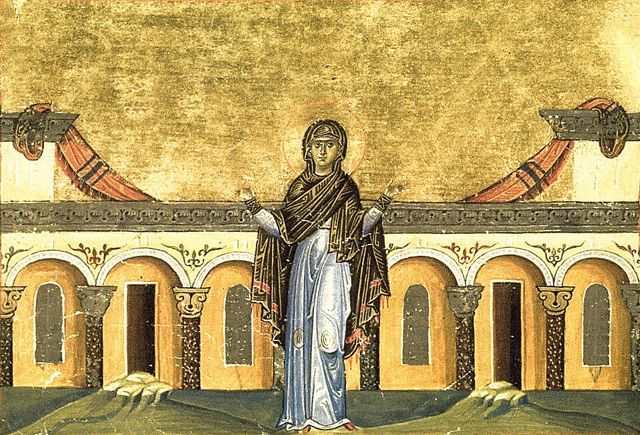
St. Syncletica

St. Syncletica

January 5 · Virgin
A

St. Apollinaris…

January 5 · Virgin
← All 1726 saints in the library
Sources & notes

Feast-day sources

Story sources

Sources

Credits

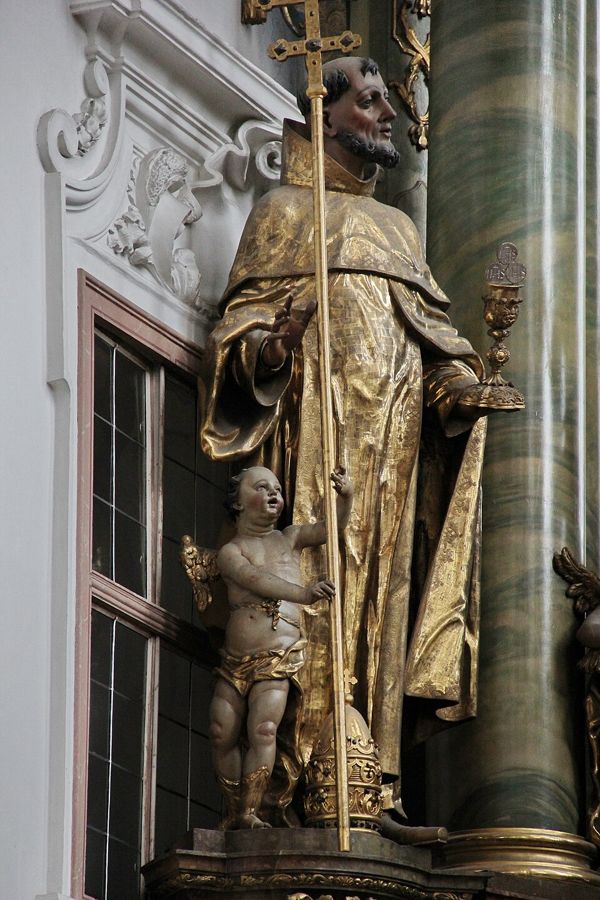
Image: Straubing, Karmelitenkirche 008.JPG · Mattana · CC BY-SA 3.0, via Wikimedia Commons

From Sabine Baring-Gould, The Lives of the Saints, new and revised edition (Edinburgh: John Grant, 1914; first edition 1872). Public domain.

Image: Mattana, Wikimedia Commons (CC BY-SA 3.0)

From “Catholic Encyclopedia (1913)/Pope St. Telesphorus,” The Catholic Encyclopedia (New York: Robert Appleton Company, 1907–1914), via Wikisource. Public domain. Matched by name and feast date; text unedited except for our bracketed notes in grey.

From Sabine Baring-Gould, The Lives of the Saints, new and revised edition (Edinburgh: John Grant, 1914; first edition 1872). Public domain in the United States. Reproduced unedited, except for short bracketed notes in grey that we added to explain names and terms (“S.” is the old abbreviation for Saint). Some history and judgments reflect 19th-century scholarship.