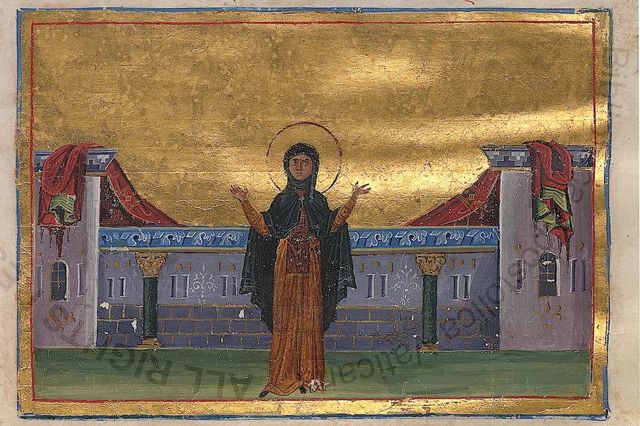
Baring-Gould’s sources: Greek Mentea, Menology, Russian, Coptic, and Abyssinian Kalendars. Inserted by Baronius in the Modern Roman Martyrology. Authority: — Two Lives of this saint exist, but both are merely historical romances, founded perhaps on some few facts. That such a person as Theodora did exist is however established by the retention of some of her sayings in the Lives of the Fathers of the Desert. The fabulous lives have been given by Lipomani and Surius, but not by the Bollandists.] Theodora was the wife of a prefect of Egypt, named Gregorius, and having fallen into sin and dishonour, she was ashamed to show her face before her husband. She dressed herself in some of his clothes, and ran away, and entered a monastery in the Thebaid, as a monk. After many years she was sent with some camels to Alexandria to the prefect, and suddenly, with the utmost emotion, Gregorius recognised in the poor camel-driver his lost wife.
She returned again to the desert, and only sent again to her husband when she felt herself dying. He arrived when she was dead, to assist at her obsequies. Such are probably the facts of her history, out of which a Sept, ii.] ♦S’. Theodora of Alexandria, Greek romancer has woven a long story pieced with incidents from other lives, one that of S. Marina (July 17). Some of her apophthegms have been preserved by more veracious historians than the romance writer who composed her history.
She met a Valentinian one day full of scorn for the Law, and exalting the freedom of the Gospel which emancipated man from all vexatious restraints. “A law for the body gives the body to the Creator,” said Theodora. “ It is not fasting, watching, nor solitude that makes a monk, but humility. There was once an anchorite [a hermit, sometimes walled into a cell beside a church] who drove out devils. And as they were fleeing away he asked them, ‘What has expelled you — fasting?’ ‘We neither eat nor drink/ they answered, ‘ meat and drink are no concern to us.’ ‘What then has expelled you — vigils?’ We never sleep/ they answered, 4 vigils interfere not with us.’ ‘ What then has expelled you— solitude ?’ ‘ We haunt solitudes/ ‘ Then tell me what has driven you out ?’ They answered, ‘ We cannot endure humility, from that we flee away/”
“ Once a brother was feverish and sick, and he said to himself, * I am too ill to pray/ Then after a while he thought, ‘ I can but die once/ and he got out of bed and said his office. And when he had done his office his fever left him.”
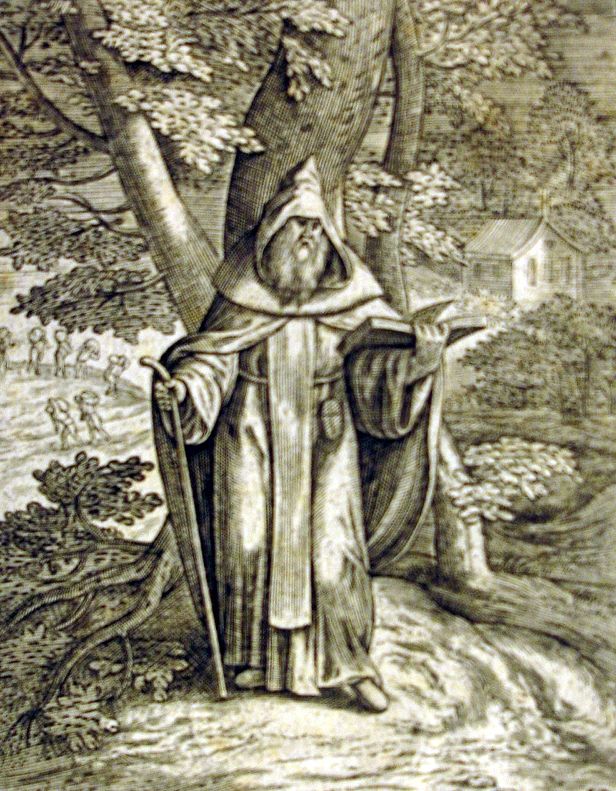
“ Once a hermit said, ‘ I am so surrounded with temptations that I must leave this place and go elsewhere/ So he went out of his door, and put on his sandals, and he saw near him his double putting on his sandals, and preparing to journey. ‘I am Self/ said the double, ‘wherever you go, I go too/ ”