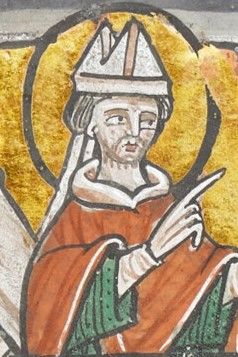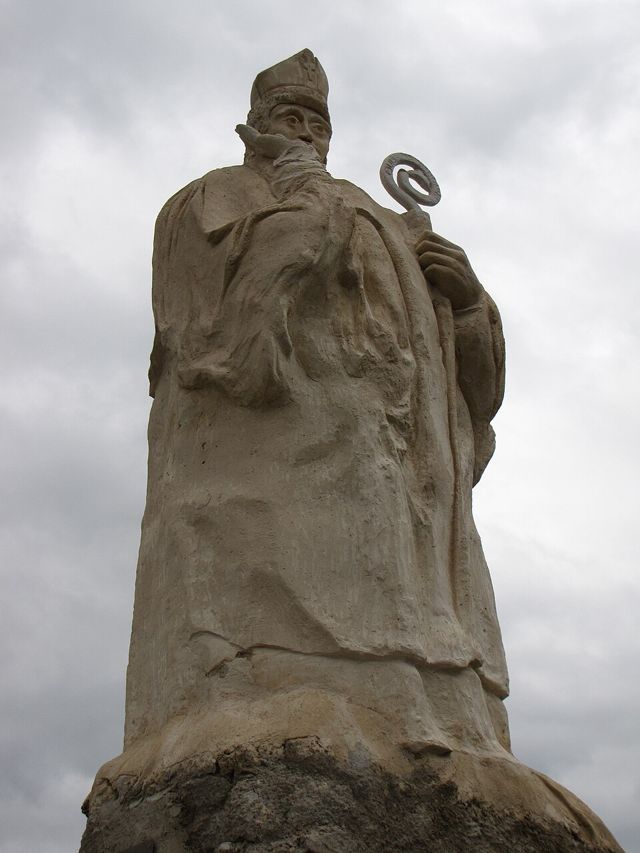
St. Trophimus

The first bishop of Arles was named Trophimus, and that church liked to think he was the disciple of St. Paul.

Read the essentials →
December 29 · Bishop

St. Trophimus

St. Trophimus

The first bishop of Arles was named Trophimus, and that church liked to think he was the disciple of St. Paul.

Traditional feast

December 29
1914 / pre-1969 calendar, per Baring-Gould (1897)

Current feast

December 29 (also listed: January 4)
Secondary source · Wikipedia

Represents

Bishop

Their story

Adapted in modern English from Baring-Gould (1897–98) · original text below

The first bishop of Arles was named Trophimus, and that church liked to think he was the disciple of St. Paul. Baring-Gould calls this very improbable. Gregory of Tours names him among companions of St. Dionysius of Paris in the mid-3rd century, which would put him around 250.

In 417 Pope Zosimus called him a missionary sent from Rome, without mentioning Paul. The bishops of Arles first claimed the link in 450. The Greeks say he was martyred with Peter and Paul. The sources differ; the Roman Martyrology (the Church's official list of saints for each day) identifies him with Paul's disciple.

Zosimus wrote letters supporting Patroclus, bishop of Arles, and called Trophimus the source of the true faith in Gaul; had he believed him Paul's disciple, he would probably have said so. A bishop of Arles named Martian, who backed the Novatian heresy, was in office about 252. Pseudo-Hippolytus makes Trophimus one of the seventy disciples, which cannot be, since none of them were Gentiles.
Early life

The book says little or nothing about early life. This is how the account begins.

The first bishop of Arles was a Trophimus, and it pleases the members of that Church to suppose him to have been this favourite disciple of S. Paul. But this is quite conjectural, and very improbable. He is also spoken of as one of the six companions of S. Dionysius of Paris, by ‘6.

What they represent

How they teach us to live

Drawn from themes in the original account

Keep their day. Remember them on December 29 with a short prayer, and ask for their help.

Read more

The full original · 312 words

Read Baring-Gould’s full account

Baring-Gould’s sources: Roman and Gallican Martyrologies. Usuardus, Ado, Notker, &c. By the Greeks on April 14 and 15, along with Aristarchus and Pudens. In some Menaeas on July 31, in all along with SS. Peter and Paul ot> ROPHIMUS and Tychicus, two natives of Asia Minor, accompanied S. Paul on his third missionary expedition. Both of them attended S. Paul from Macedonia on his return journey, as far as Asia Minor, where Tychicus remained; but Trophimus proceeded with the apostle to Jerusalem. There he was the innocent cause of the tumult in which S. Paul was apprehended. From the account we have given us of this tumult, we learn that Trophimus was an Ephesian and a Gentile. We hear no more of Trophimus for a long time; but in the last letter written by S. Paul, shortly before his martyrdom, from Rome, he mentions both Trophimus and Tychicus: the latter he had sent to Ephesus, of which place he, probably, like Trophimus, was a native; Trophimus had been left at Miletus, sick. From this we may conclude that the apostle had been shortly before in the Levant, and that Trophimus had accompanied him. Trophimus is probably one of the two brethren who, with Titus, conveyed the Second Epistle to the Corinthians to its destination. He was evidently closely attached to the apostle, and thoroughly in his confidence.

The first bishop of Arles was a Trophimus, and it pleases the members of that Church to suppose him to have been this favourite disciple of S. Paul. But this is quite conjectural, and very improbable. He is also spoken of as one of the six companions of S. Dionysius of Paris, by ‘6. Gregory of Tours [bishop and historian of the Franks (d. 594)], who represents that saint as having preached in Gaul [roughly modern France and Belgium] in the middle of the third century. In the time of Decius [Roman emperor 249–251, who ordered everyone to sacrifice to the gods], Martian, bishop of Arles, favoured the Novatian heresy. Martian probably was bishop in 252, and we may put S. Trophimus at 250. In 417 Pope Zosimus wrote letters in favour of Patroclus, bishop of Arles, to the bishops of Gaul, and in one of these he mentions S. Trophimus as having been sent by the Holy See into Gaul, and as having been the source of true faith there. Had he considered him as the disciple of S. Paul, and sent by him and S. Peter, he would probably have said so. The first instance of Trophimus of Arles being identified with Trophimus disciple of S. Paul, is by the bishops of the province of Arles in 450. The tradition or conceit began then to be received, and when their deputation waited on S. Leo in that year, they represented Trophimus, the founder of the see of Arles [a bishop’s “see” is his diocese, named from his seat (Latin sedes)], as having been sent into Gaul by S. Peter. On the other hand, Pseudo Hippolytus says that Trophimus suffered martyrdom along with S. Paul. But he also makes him one of the seventy disciples, which could not have been. No Gentile was of the seventy. The Greeks regard him as having suffered martyrdom with SS. Peter and Paul, and commemorate their passion on the same day, October 29. S. Crescens.

The Roman Martyrology asserts the identity of Trophimus of Arles with Trophimus disciple of S. PauL

Feast days

Feast: December 29

Nine days · Free

Pray the novena
with us.

One short email a day for nine days. The day's prayer, a line from St. Trophimus's story, and a nudge to keep going.

Also on December 29
St. Crescens

St. Crescens

December 29 · Bishop
St. Ebrulfus

St. Ebrulfus

December 29 · Abbot
St. Thomas A Becket

St. Thomas A Becket

December 29 · Archbishop, Martyr
← All 1726 saints in the library
Sources & notes

Feast-day sources

Story sources

Sources

Credits

Image: Saint-trophime.jpg · Fabgar · CC BY-SA 3.0, via Wikimedia Commons

From Sabine Baring-Gould, The Lives of the Saints, new edition in 16 vols. (London: John C. Nimmo, 1897–98); text from the Internet Archive scan (OCR, lightly cleaned; errors possible). Public domain.

Image: Fabgar, Wikimedia Commons (CC BY-SA 3.0)

From Sabine Baring-Gould, The Lives of the Saints, new edition in 16 vols. (London: John C. Nimmo, 1897–98); text from the Internet Archive scan (OCR, lightly cleaned; errors possible). Public domain in the United States. Reproduced unedited, except for short bracketed notes in grey that we added to explain names and terms (“S.” is the old abbreviation for Saint). Some history and judgments reflect 19th-century scholarship.