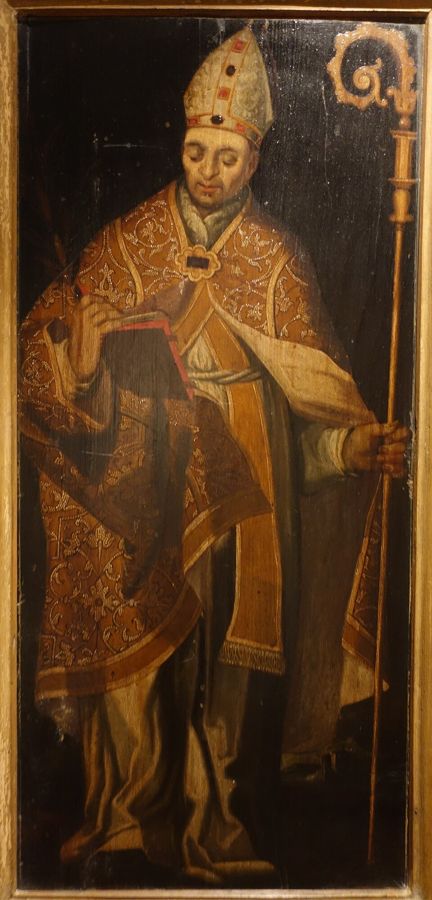
St. Ubald of Gubbio

Ubald was born at Gubbio early in the twelfth century.

Read the essentials →
May 15 · Bishop

St. Ubald of Gubbio

St. Ubald of Gubbio

Ubald was born at Gubbio early in the twelfth century.

Traditional feast

May 15
1914 / pre-1969 calendar, per Baring-Gould (1897)

Current feast

May 16
Secondary source · Wikipedia

Represents

Bishop

Their story

Adapted in modern English from the Catholic Encyclopedia (1913) · original text below · little is known

Ubald was born at Gubbio early in the twelfth century. He became a canon and then prior, and refused offers of bishoprics. At last Pope Honorius II consecrated him Bishop of Gubbio himself.

He suffered two years of painful illness before he died at Whitsuntide in 1168. Celestine III canonized (officially declared a saint by the pope) him in 1192, and his body is said to be incorrupt (not decayed after death). He is invoked against evil spirits, and Gubbio still keeps his festival.

Early life

The book says little or nothing about early life. This is how the account begins.

The bishop of Gubbio dying in 1128, Ubald was unanimously elected to fill his place, and he was consecrated the following year by Pope Honorius II. A pretty story is told of him whilst bishop, which speaks more for his character than pages of panegyric. The walls of Gubbio were being repaired, and the masons had invaded the bishop's vineyard for the purpose; he found that in their carelessness they were seriously damaging his vines. He therefore went to the master mason and remonstrated with him.

What they represent

How they teach us to live

Drawn from themes in the original account

Look after people who are sick or suffering. The sick come up again and again in this story.

Be a peacemaker. Making peace is part of this story.

From the Catholic Encyclopedia

1913 · 523 words

Confessor, Bishop of Gubbio, born of noble parents at Gubbio, Umbria, Italy, towards the beginning of the twelfth centry; died there, Whitsuntide, 1168. Whilst still very young, having lost his father, he was educated by the prior of the cathedral church of his native city, where he also became a canon regular. Wishing to serve God with more regularity he passed to the Monastery of St. Secondo in the same city, where he remained for some years. Recalled by his bishop, he returned to the cathedral monestary, where he was made prior. Having heard that Vienna Blessed Peter de Honestis some years before had established a very fervent community of canons regular, to whom he had given special statutes which had been approved by Paschall II, Ubaldus went there, remaining with his brother canons for three months, to learn the details and the practice of their rules, wishing to introduce them among his own canons of Gubbio. This he did at his return. Serving God in great regularity, poverty (for all his rich patrimony he had given to the poor and to the restoration of monasteries), humility, mortification, meekness, and fervour, the fame of his holiness spread in the country, and several bishoprics were offered to him, but he refused them all. However, the episcopal See of Gubbio becoming vacant, he was sent, with some clerics, by the population to ask for a new bishop from Honorius II who, having consecrated him, sent him back to Gubbio. To his people he became a perfect pattern of all Christian virtues, and a powerful protector in all their spiritual and temporal needs. He died full of merits, after a long and painful illness of two years. Numerous miracles were wrought by him in life and after death. At the solicitation of Bishop Bentivoglio Pope Celestine III canonized him in 1192. His power, as we read in the Office [the Divine Office, the Church’s daily cycle of prayer from the Psalms] for his feast, is chiefly manifested over the evil spirits, and the faithful are instructed to have recourse to him "contra omnes diabolicas nequitias".

The life of the saint was written by Blessed Theobaldus, his immediate successor in the episcopal see, and from this source is derived all the information given by his numerous biographers. The body of the holy man, which had at first been buried in the cathedral church by the Bishops of Perugia and Cagli, at the time of his canonization was found flexible and incorrupt, and was then placed in a small oratory on the top of the hill overlooking the city, where in 1508, at the wish of the Duke of Urbino, the canons regular built a beautiful church, frequented to this day by numerous pilgrims, who come to visit the relics [the bodily remains of a saint, or objects they used, kept with honor] of their heavenly protector from near and far. The devotion to the saint is very popular throughout Umbria, but especially at Gubbio, where in every family at least one member is called Ubaldus. The feast of their patron saint is celebrated by the inhabitants of the country round with great solemnity, there being religious and civil processions which call to mind the famous festivities of the Middle Ages in Italy.


Read more

The full original · 592 words

Read Baring-Gould’s full account

Baring-Gould’s sources: Canonised by Pope Celestine III. in 1192. Roman Martyrology. Ferrarins and other Italian hagiographers. Authority: — A life written by his successor in the see of Gnbbio, Isbald, in 1162, for it was sent to the Emperor Frederick Barbarossa, whilst besieging Milan.] S. Ubald was bom of noble parents at Gnbbio, in the Papal States. He was appointed prior of the cathedral chapter by the bishop, who was his uncle, as soon as he had reached the age of manhood. The condition of the chapter was scandalous above measure. The bells were regularly rung for service, but not a canon appeared. The canons lived in their private apartments in the utmost luxury, and not one of them was unmarried. The cloister gates were open day and night, for any one who liked to come in or go out of the canons' residences. Ubald was resolved on effecting a reform. His attempt to enforce decency and order aroused violent opposition. However, he found three of the canons weary of the disorders in which they lived, and ready to support him in his plan of reformation. He at once began to live with them in strict discipline, but finding it necessary to gain some practical experience of the manner of conducting a religious house, he resolved to visit the Canons Regular instituted by Peter de Honestis in the territory of Ravenna. A terrible fire, which consumed a large portion of Gubbio, and reduced the canons' house and cloister to ruins, gave him an opportunity of leaving the cathedral. After three months spent with the.Regular Canons, he returned to Gubbio, and succeeded in time, by gentleness and firmness, in reducing his canons to order.

The bishop of Gubbio dying in 1128, Ubald was unanimously elected to fill his place, and he was consecrated the following year by Pope Honorius II. A pretty story is told of him whilst bishop, which speaks more for his character than pages of panegyric. The walls of Gubbio were being repaired, and the masons had invaded the bishop's vineyard for the purpose; he found that in their carelessness they were seriously damaging his vines. He therefore went to the master mason and remonstrated with him. The fellow, a passionate and inconsiderate man, perhaps not knowing who was the complainer, swore at him and thrust him out with so much violence, that the bishop who had broken his thigh formerly, and now limped, fell into the liquid mortar that the masons had prepared. Ubaldus rose, and concealing the mortar that adhered to his clothes as well as he was able under his reversed cloak, hastened back to the palace without a word. But the people of Gubbio heard of the outrage, and broke forth into indignation. The master mason was seized and dragged before the magistrates by an incensed crowd, clamouring for punishment, by banishment and confiscation of goods. But suddenly the bishop appeared in the hall of justice. “This is an ecclesiastical offence, an injury done to a clerk, and it therefore must not be tried in a secular, but in an ecclesiastical court.” And going up to the mason he said, “I am thine accuser, and thy judge, I denounce thee, I try thee, and I condemn thee — kiss me.” Then he embraced him and said, “My son, go in peace.”

A party feud having broken out in the city one day, and the combatants having come to blows, the bishop limped S. Ubald. into the market-place to separate them; stones were flying and swords were drawn. Being unable to make himself heard and regarded, Ubald suddenly staggered, as though struck by a paving stone, and fell on his face. The combat ceased at once; the citizens of both parties loved their bishop, and those who had been foes a minute before united to raise the prostrate saint. Then Ubald rose and said, “ My friends, I am not struck with a stone, but my heart is pierced with grief at your animosities. Separate and keep peace." And now that he had obtained a hearing, he made good use of the opportunity to appease the tumult.

S. Ubald was an infirm man; he had twice broken his thigh and once his right arm, and the fractures not having been perfectly set, he suffered from abscesses and the coming away of pieces of bone. In his last illness, the people of Gubbio were heart-broken because Easter approached, and he would not appear to communicate them with his beloved hand. Hearing of their sorrow, the bishop made an effort, and on Easter Day celebrated the holy mass, preached to the people, gave them his pastoral benediction, and went back to bed, never to rise from it again. On the vigil and feast of Pentecost, the bishop allowed the people to visit him for the last time. All Gubbio was there, women and men and children poured into his sick-room in a long train, to kiss his hand and receive his blessing 3 then all entered the church bearing tapers to pray for him during his passage into eternity. He died the same night murmuring psalms. His body is preserved in the church of the regular canons on Monte Ubaldo, near Gubbio.

Feast days

Feast: May 16
Traditional: May 15

Nine days · Free

Pray the novena
with us.

One short email a day for nine days. The day's prayer, a line from St. Ubald of Gubbio's story, and a nudge to keep going.

Also on May 15
St. Hallvard

St. Hallvard

May 15 · Martyr
Sts. Torquatus, Ctesiphon and Others

Sts. Torquatus

May 15 · Feast
Sts. Peter, Andrew, Paul

Sts. Peter

May 15 · Martyrs
← All 1726 saints in the library
Sources & notes

Feast-day sources

Story sources

Sources

Credits

Image: UbaldoGubbio.jpg · Unknown · Public domain, via Wikimedia Commons

From Sabine Baring-Gould, The Lives of the Saints, new edition in 16 vols. (London: John C. Nimmo, 1897–98); text from the Internet Archive scan (OCR, lightly cleaned; errors possible). Public domain.

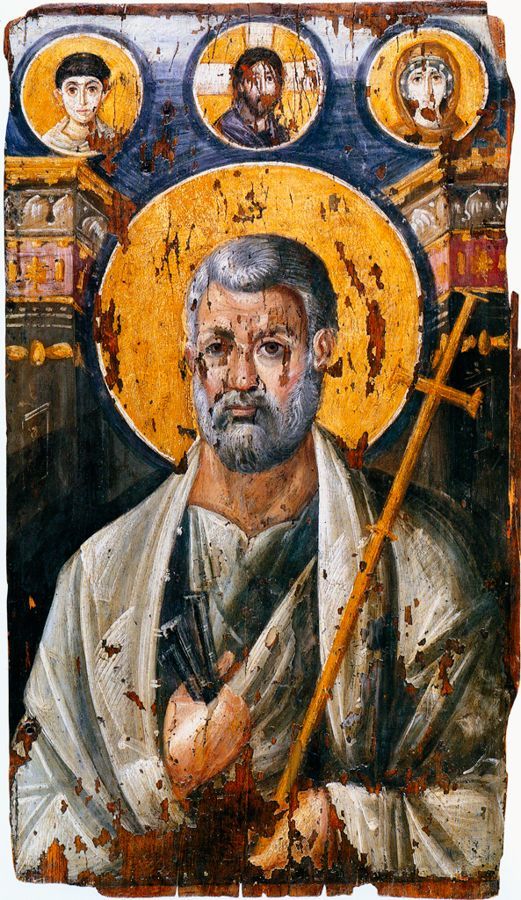
Image: Unknown, Wikimedia Commons (Public domain)

From “Catholic Encyclopedia (1913)/St. Ubaldus,” The Catholic Encyclopedia (New York: Robert Appleton Company, 1907–1914), via Wikisource. Public domain. Matched by name and feast date; text unedited except for our bracketed notes in grey.

From Sabine Baring-Gould, The Lives of the Saints, new edition in 16 vols. (London: John C. Nimmo, 1897–98); text from the Internet Archive scan (OCR, lightly cleaned; errors possible). Public domain in the United States. Reproduced unedited, except for short bracketed notes in grey that we added to explain names and terms (“S.” is the old abbreviation for Saint). Some history and judgments reflect 19th-century scholarship.