St. Wendelin

Leaving everything to pray, yet still drawing people who needed wisdom.

Read the essentials →
October 19 · Hermit, Confessor

St. Wendelin

St. Wendelin

Leaving everything to pray, yet still drawing people who needed wisdom.

Traditional feast

October 19
1914 / pre-1969 calendar, per Baring-Gould (1897)

Current feast

October 22
Secondary source · Wikipedia

Represents

Hermit
Confessor

Their story

Adapted in modern English from the Catholic Encyclopedia (1913) · original text below

The earliest lives of Wendelin date from after 1417, and the Catholic Encyclopedia doubts how far they can be trusted. According to them, he was the son of a Scottish king who left home in secret on pilgrimage to Rome. On his return he became a hermit near Trier. Rebuked as idle by a landowner, he served the man as a herdsman until a miracle set him free, and his hermits later gave rise to the abbey of Tholey.

What is certain is the devotion. A chapel was built over his grave, and the town of St. Wendel grew around it. After a plague was checked in 1320 through his intercession, the chapel was rebuilt. He is the patron of country people and herdsmen.

Early life

The book says little or nothing about early life. This is how the account begins.

Thin entry · the 1897 book gives only 0 words. We have not filled the gap with invented detail.

What they represent

How they teach us to live

Drawn from themes in the original account

Learn from the kind of life it was. Leaving everything to pray, yet still drawing people who needed wisdom.

Keep their day. Remember them on October 19 with a short prayer, and ask for their help.

From the Catholic Encyclopedia

1913 · 347 words

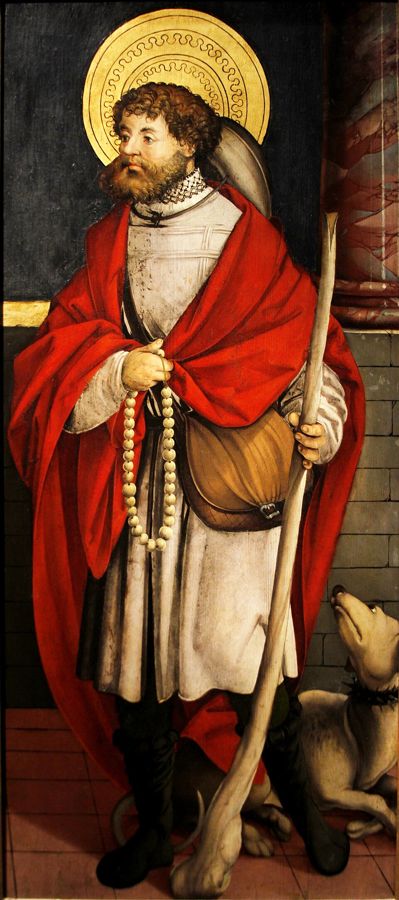
Born about 554; died probably in 617. His earliest biographies, two in Latin and two in German, did not appear until after 1417. Their narrative is the following: Wendelin was the son of a Scottish king; after a piously spent youth he secretly left his home on a pilgrimage to Rome. On his way back he settled as a hermit in Westricht in the Diocese of Trier. When a great landowner blamed him for his idle life he entered this lord's service as a herdsman. Later a miracle obliged this lord to allow him to return to his solitude. Wendelin then established a company of hermits from which sprang the Benedictine [monks following the Rule of St. Benedict] Abbey of Tholey. He was consecrated abbot about 597, according to the later legends. Tholey was apparently founded as a collegiate body about 630. It is difficult to say how far the later biographers are trustworthy. Wendelin was buried in his cell, and a chapel was built over the grave. The small town of St. Wendel grew up nearby. The saint's intercession was powerful in times of pestilence and contagious diseases among cattle. When in 1320 a pestilence was checked through the intercession of the saint, Archbishop Baldwin of Trier had the chapel rebuilt. Baldwin's successor, Boemund II, built the present beautiful Gothic church, dedicated in 1360 and to which the saint's relics [the bodily remains of a saint, or objects they used, kept with honor] were transferred; since 1506 they have rested in a stone sarcophagus. Wendelin is the patron saint of country people and herdsmen and is still venerated in Germany, Austria, and Switzerland. He is represented in art as a youth, or as a bearded man, with a shepherd's bag and a book in one hand and a shepherd's crook in the other; about him feed lambs, cattle, and swine, while a crown and a shield are placed at his feet. St. Wendelin is not mentioned in the Roman Martyrology, but his feast is observed in the Diocese of Trier on 22 October.

Acta SS., October, IX, 342-51; MOHR, Die Heiligen der Diozese Trier (Trier, 1892); LESKER, St. Wendelinus (Donauworth, 1898); ZURCHER, St. Wendelinus-Buch (Menzingen, 1903).
Read more

The full original · 0 words

Read Baring-Gould’s full account

Baring-Gould’s sources: In German Kalendars of the 15th cent. In a Stavelot Kalendar of the nth cent. A Kalendar of S. Maximius at Treves, of the 10th cent. &c. In the diocese of Trfcves the Feast of S. Wendelin is transferred to Oct 2 8, because of the occurrence with that of S. Ursula. Translations on July 5 and Sept. 8, the “ Deposition ” on Oct 20. No Lives exist earlier than 1417, and therefore all legendary and untrustworthy.] S. Wendelin is thought, without evidence, to have been of Scottish or Irish origin, and to have been a shepherd in the diocese of Trfeves. A great deal of fable has been told about him, as that he was the son of a Scottish king, who sent him to Trfeves to keep swine, because he was so fond of reading the psalter and praying in churches. All that is really known of him is that he was a pious shepherd, and that miracles were believed to be wrought over his body, which reposes at S. Wendel on the Nahe. A great fire broke out at Saarbriick in 1417, which was extinguished after invocation of S. Wendel, whereupon he became generally famous. He is represented as a shepherd or swineherd. roctn.

Feast days

Feast: October 22
Traditional: October 19

Nine days · Free

Pray the novena
with us.

One short email a day for nine days. The day's prayer, a line from St. Wendelin's story, and a nudge to keep going.

Also on October 19
J

St. James

October 19 · Feast
V

Sts. Varus and Others

October 19 · Martyrs
E

St. Ethbin

October 19 · Feast
← All 1727 saints in the library
Sources & notes

Feast-day sources

Story sources

Sources

Credits

Image: St. Wendelin by Martin Schaffner - Staatsgalerie - Stuttgart - Germany 2017.jpg · José Luiz · CC BY-SA 4.0, via Wikimedia Commons

From Sabine Baring-Gould, The Lives of the Saints, new edition in 16 vols. (London: John C. Nimmo, 1897–98); text from the Internet Archive scan (OCR, lightly cleaned; errors possible). Public domain.

Image: José Luiz, Wikimedia Commons (CC BY-SA 4.0)

From “Catholic Encyclopedia (1913)/St. Wendelin of Trier,” The Catholic Encyclopedia (New York: Robert Appleton Company, 1907–1914), via Wikisource. Public domain. Matched by name and feast date; text unedited except for our bracketed notes in grey.

From Sabine Baring-Gould, The Lives of the Saints, new edition in 16 vols. (London: John C. Nimmo, 1897–98); text from the Internet Archive scan (OCR, lightly cleaned; errors possible). Public domain in the United States. Reproduced unedited, except for short bracketed notes in grey that we added to explain names and terms (“S.” is the old abbreviation for Saint). Some history and judgments reflect 19th-century scholarship.