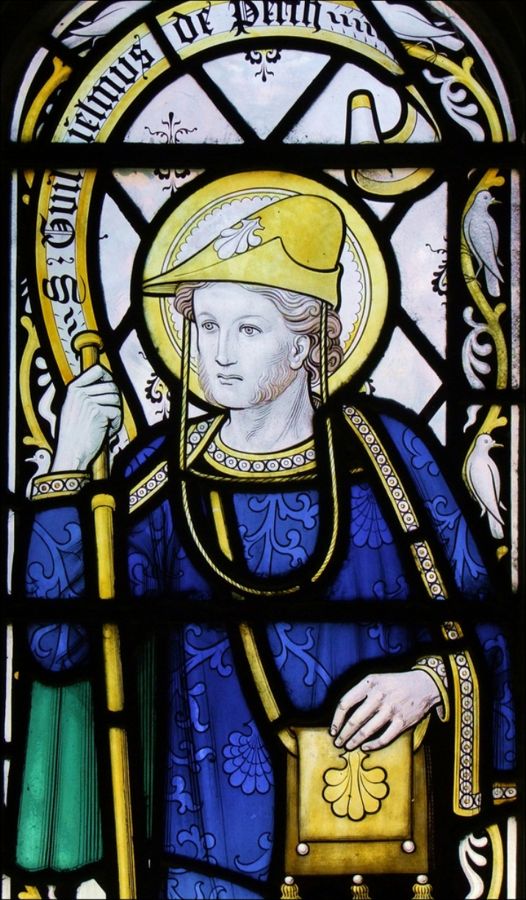
St. William of Rochester

Faithfulness to Christ when it cost everything.

Read the essentials →
May 24 · Martyr

St. William of Rochester

St. William of Rochester

Faithfulness to Christ when it cost everything.

Traditional feast

May 24
1914 / pre-1969 calendar, per Baring-Gould (1897)

Current feast

May 23
Secondary source · Wikipedia

Represents

Martyr

Their story

Adapted in modern English from Baring-Gould (1897–98) · original text below

William was a baker in Perth. As a young man he lived carelessly and without God, but he changed and became a model of virtue and a good father of his household. Of every ten loaves he baked, he gave one to the poor. Early one morning on his way to Mass he found a baby crying on the church doorstep. He picked the child up, had him baptised David, and raised him as his own. The foundling grew up with the nickname Cockerman, which the medieval author says was Scots for foundling.

David repaid the baker's kindness badly. His heart was full of envy and spite, and he was jealous of William's own children. When William was well on in years he decided to make a pilgrimage to Jerusalem, and he chose David alone as his companion. All went well for a while, but David tired of the journey. He made up his mind to rob his adoptive father and live on his own, far from Scotland and from the memory of where he came from.

When they reached Rochester, David decided to act. As they left the city he led William into a narrow lane, dropped behind him, struck him down with a hatchet, took his purse and fled. Miracles followed when the body was carried into Rochester, so the people concluded he was a saint, and he was venerated throughout the diocese.
Struggles & surrender

What they wrestled with, and how they gave it to God

  • A careless youth ·
    Before he became known for his charity, William the baker of Perth lived, in his early years, a careless and godless life.

Early life

The book says little or nothing about early life. This is how the account begins.

S. William was a baker at Perth, who in his early life lived a careless and godless life, but afterwards changed and became a model of virtue, as a good father of a household. Of every ten loaves he baked he gave one to the poor. One morning early as he went to mass he found a little babe crying on the door-step of the church.

What they represent

How they teach us to live

Drawn from themes in the original account

Give to people in need. The account records care for the poor.

Share your faith, in words and by example. Preaching and conversion are central here.

Learn from the kind of life it was. Faithfulness to Christ when it cost everything.

Read more

The full original · 286 words

Read Baring-Gould’s full account

S. William was a baker at Perth, who in his early life lived a careless and godless life, but afterwards changed and became a model of virtue, as a good father of a household. Of every ten loaves he baked he gave one to the poor. One morning early as he went to mass he found a little babe crying on the door-step of the church. He took the poor child up, had it baptized by the name of David, and brought it up as his own. The foundling grew up to man’s estate, and obtained the nickname of Cockerman, which, says the mediaeval author, is the Scottish for foundling. But the kindness of the good baker was ill-repaid by David Cockerman, whose heart was full of envy and spite, and he looked with jealousy on the children of the baker. When William was well advanced in years, he resolved to make a pilgrimage to Jerusalem, and he chose only David to be his companion. All went smoothly for some time. But wicked thoughts were working in the foundling’s mind. He wearied of the journey, and determined to rob his adopted father and live independently away from Scotland, and the remembrance of his condition. In the meantime every day saw William’s purse grow lighter. At last, when they had reached Rochester, David Cockerman resolved to murder and rob the baker without further delay. As they left the city, he led William into a narrow lane, and dropping behind him, felled him with a hatchet, took his purse and ran away. As miracles were wrought when the body was brought into Rochester, the people concluded he was a saint, and he received general veneration in the diocese.

Feast days

Feast: May 23
Traditional: May 24

Nine days · Free

Pray the novena
with us.

One short email a day for nine days. The day's prayer, a line from St. William of Rochester's story, and a nudge to keep going.

Also on May 24
D

St. Desiderius of Vienne

May 24 · Bishop, Martyr
St. Vincent of Lerins

St. Vincent of Lerins

May 24 · Priest
← All 1726 saints in the library
Sources & notes

Feast-day sources

Story sources

Sources

Credits

Image: Cathedral of Rochester William of Perth.jpg · Unknown authorUnknown author · Public domain, via Wikimedia Commons

From Sabine Baring-Gould, The Lives of the Saints, new edition in 16 vols. (London: John C. Nimmo, 1897–98); text from the Internet Archive scan (OCR, lightly cleaned; errors possible). Public domain.

Image: Unknown authorUnknown author, Wikimedia Commons (Public domain)

From Sabine Baring-Gould, The Lives of the Saints, new edition in 16 vols. (London: John C. Nimmo, 1897–98); text from the Internet Archive scan (OCR, lightly cleaned; errors possible). Public domain in the United States. Reproduced unedited, except for short bracketed notes in grey that we added to explain names and terms (“S.” is the old abbreviation for Saint). Some history and judgments reflect 19th-century scholarship.