Good Friday to Divine Mercy Sunday
Pray the novena →Faustina Kowalska wrote in her diary that Jesus asked for a novena from Good Friday to the Sunday after Easter.
Divine Mercy Sunday (April 4, 2027)
Mercy
Sinners
Faustina Kowalska (1905–1938), a Polish nun, recorded in her Diary that Jesus asked for nine days of prayer, each for a different group of souls, from Good Friday to the Sunday after Easter. John Paul II canonized her in 2000 and set the Second Sunday of Easter as Divine Mercy Sunday.
The image 'Jesus, I trust in You' was first painted in Vilnius in 1934.
The nine days pray in turn for all mankind, priests and religious, the devout, unbelievers, separated Christians, the meek and children, those who honor mercy, souls in purgatory and the lukewarm.
The Chaplet of Divine Mercy is prayed on ordinary rosary beads.
A novena is nine days of prayer for one intention, modeled on the nine days the apostles and Mary prayed between the Ascension and Pentecost (Acts 1–2). Pray this each day:
This novena begins on Good Friday and ends on Divine Mercy Sunday. Each day Faustina's Diary names a group of souls to bring to Christ, followed by the Chaplet of Divine Mercy. The text is still under copyright, so we do not reproduce it here. The official text is at thedivinemercy.org.
One short email a day for nine days. The day's prayer, a line from Divine Mercy's story, and a nudge to keep going.
[Affiliate placeholder: Catholic Company Divine Mercy Novena medal]
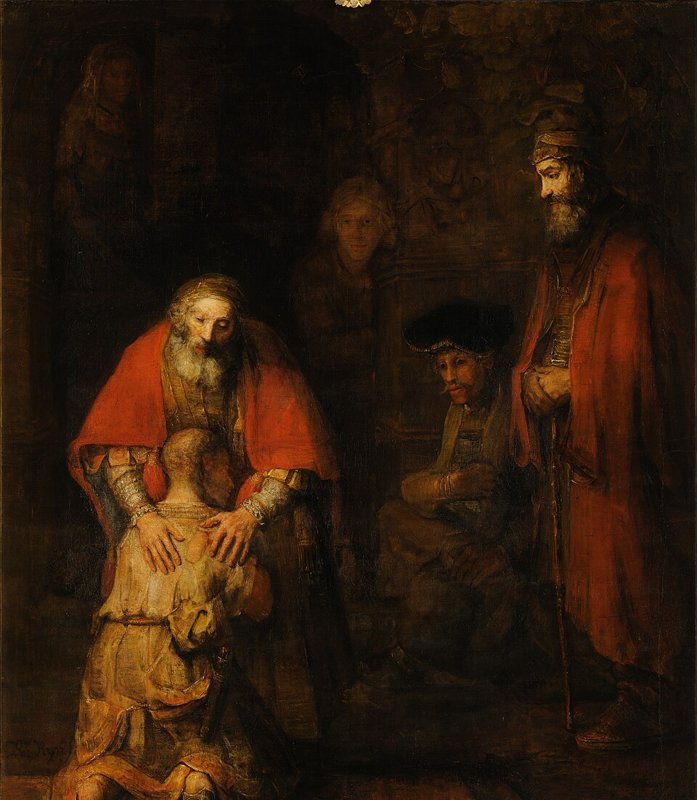
Image: Rembrandt (The Return of the Prodigal Son), Wikimedia Commons (Public domain)
Summary only. The novena's text is from St. Faustina's Diary (1930s), which is still under copyright and is published by the Marian Fathers. See thedivinemercy.org for the official text.