Their story
Karol Wojtyła was born on May 18, 1920, in Wadowice, Poland. By the time he was twenty, his mother, his older brother and his father had all died. Under Nazi occupation he worked in a quarry and a chemical plant and acted in an underground theater. He studied for the priesthood in a secret seminary and was ordained in 1946.
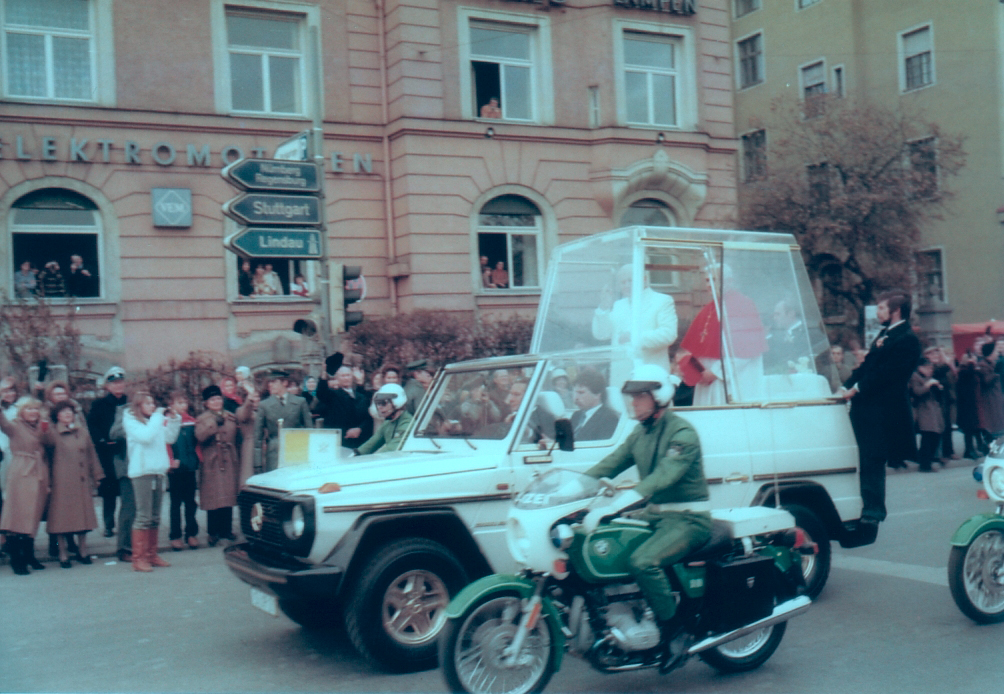
As a young priest he took students hiking and kayaking, talking about faith and love along the way. He became a bishop at 38 and Archbishop of Kraków in 1964, and took part in the Second Vatican Council (1962–1965, the council that reformed the liturgy and opened the Church to the modern world). On October 16, 1978, he was elected pope, the first non-Italian in 455 years. At his first Mass as pope he said, “Do not be afraid!” His 1979 visit to Poland drew huge crowds and is widely credited with encouraging the Solidarity movement.
On May 13, 1981, he was shot in St. Peter's Square by Mehmet Ali Ağca. He later visited his attacker in prison and forgave him. He traveled to some 129 countries, started World Youth Day, and lived with Parkinson's disease in public. He died on April 2, 2005, and was canonized (officially declared a saint by the pope) in 2014. People follow him because he lost his whole family young, survived Nazism, Communism and a bullet, and kept saying: do not be afraid.