Their story
Sebastian was a Roman martyr buried on the Appian Way, where the basilica of San Sebastiano now stands. His burial there and his January 20 feast are listed in the Depositio Martyrum (a Roman list of martyrs' burial days, compiled in 354) of 354, which makes him historically real. Almost everything else comes from a 5th-century account, his Passio (an account of a martyr's sufferings), which is more legend than record.
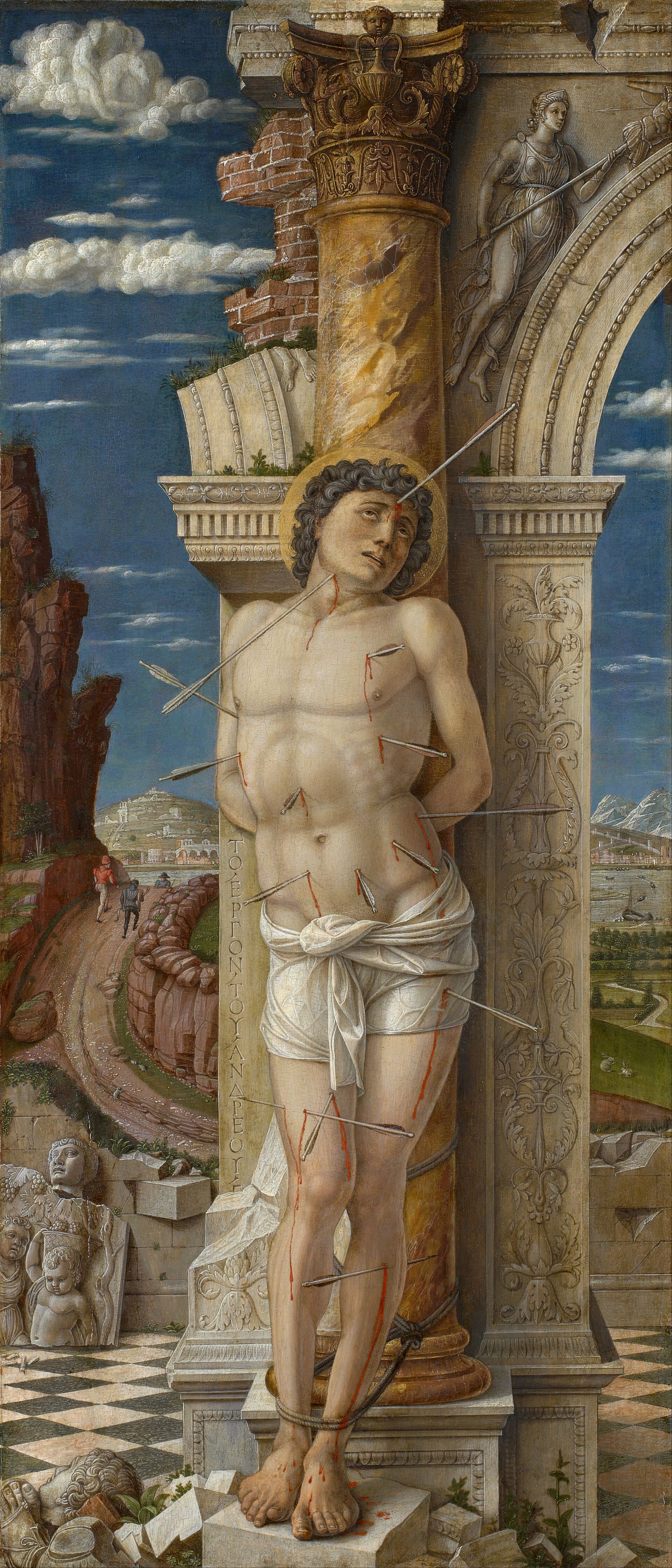
According to that account, he was an officer in the imperial guard under Diocletian (Roman emperor 284–305, who launched the last and fiercest persecution of Christians in 303) who secretly strengthened Christians in prison. It says he encouraged the brothers Marcus and Marcellian to stay firm. When he was exposed, the emperor had him tied to a post and shot with arrows. He was left for dead, but a widow named Irene came to bury him and found him alive, and nursed him back to health. He then confronted the emperor again and was clubbed to death.
Because the arrow scene is so striking, Renaissance painters made him one of the most painted saints in history. People follow Sebastian because, in the story, he had a second chance to hide and stay safe, and instead went back to bear witness.