Bl. Raymond of Fitero

Building a community where people could actually live the Gospel.

Read the essentials →
February 1 · Abbot, Confessor

Bl. Raymond of Fitero

Bl. Raymond of Fitero

Building a community where people could actually live the Gospel.

Traditional feast

February 1
1914 / pre-1969 calendar, per Baring-Gould (1897)

Current feast

February 1 (also listed: March 15)
Secondary source · Wikipedia

Represents

Abbot
Confessor

Their story

Adapted in modern English from Baring-Gould (1897) · original text below

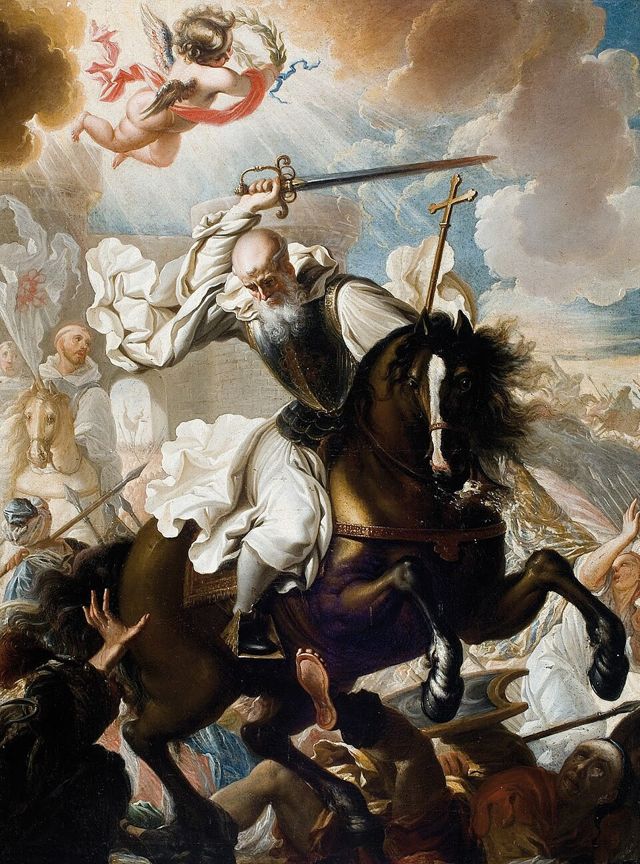
In 714, after defeating King Roderick, the Moorish (Muslim) forces took Andalusia and fortified the city of Oreto, renaming it Calatrava. They held it until Alfonso the Warlike captured it in 1147 and gave it to the Templars. But after eight years, alarmed by the forces gathering to retake it, the Templars handed it back to Don Sancho, the new king of Castille. Sancho offered the town to any nobleman who would defend it, but none would.

Only a Cistercian (a strict reform of Benedictine monks begun at Cîteaux in 1098) monk volunteered: Don Didacus Velasquez of the abbey of Our Lady of Fitero in Navarre, a former soldier known to the king, who happened to be at court with his abbot, Don Raymond. He begged the abbot to ask for Calatrava. Raymond at first refused, then, won by his zeal, boldly asked for it. People thought him mad, but in 1158 Sancho gave the town to the Cistercians, specifically to Fitero, on condition that they hold it.

The two monks proposed founding a military Order of Calatrava. The king agreed, and the bishop of Toledo approved, gave a large sum for fortifications, and granted indulgences to those who fought for it or gave arms or money. An army was soon raised, and they entered Calatrava and repaired the walls so quickly and strongly that the attack was abandoned.

Raymond then organized the new order, whose rule and habit were set by the general chapter of Citeaux, though historians disagree on the original habit. Because the area was nearly empty, he brought the young and active monks from Fitero, many cattle and twenty thousand peasants to settle it. He governed the order six years and died at Cirvelos in 1163.

After his death the knights refused to be ruled by an abbot or live with monks and elected their own Grand Master, Don Garcias. The monks, with their new abbot Don Rudolf, withdrew to Cirvelos and sued to recover Calatrava, but a reconciliation was reached and the knights gave them a house at S. Petro de Gurniel in the diocese of Osma. In 1540 the knights were allowed to marry, and from 1652 they added a vow to defend the Immaculate Conception.

Early life

The book says little or nothing about early life. This is how the account begins.

In the year a.d. 714, the Moors, having conquered King Roderick, took possession of Andalusia, and fortified the city of Oreto, to which they gave the name of Calatrava; of which they remained masters for nearly four hundred years, till Alfonso the Warlike took possession of it, in the year 1147, and gave it to the Templars, to guard against the irruption of the infidels. But they held it for only eight years. The forces which the Moors assembled to recover Calatrava so discouraged them, that they gave up the city into the hands of Don Sancho, who had succeeded to the kingdom of Castille, on the death of Alfonso, and withdrew from it.

What they represent

How they teach us to live

Drawn from themes in the original account

Build up the community you belong to. This life was lived with and for a community.

Learn from the kind of life it was. Building a community where people could actually live the Gospel.

Read more

The full original · 780 words

Read Baring-Gould’s full account

Baring-Gould’s sources: Cistercian Breviary. Authority:—Radez, Chronic de las ordines y Cavall. de Santiago, Calatrava, y Alcantara.

In the year a.d. 714, the Moors [the Muslims of North Africa and Spain], having conquered King Roderick, took possession of Andalusia, and fortified the city of Oreto, to which they gave the name of Calatrava; of which they remained masters for nearly four hundred years, till Alfonso the Warlike took possession of it, in the year 1147, and gave it to the Templars, to guard against the irruption of the infidels. But they held it for only eight years. The forces which the Moors assembled to recover Calatrava so discouraged them, that they gave up the city into the hands of Don Sancho, who had succeeded to the kingdom of Castille, on the death of Alfonso, and withdrew from it. This prince announced to his court that if any nobleman would undertake the defence of the place, he should have and hold it, in perpetuity, as his own property. But no one offered; the host of the Moors which had so alarmed the Templars, caused equal dismay in the minds of the nobles at court. A monk of the order of Citeaux alone had courage to undertake the defence of the town. This was Don Didacus Velasquez, monk of the abbey of Our Lady of Fitero, in the kingdom of Navarre. He had borne arms before he assumed the white habit of Citeaux, and was well known to King Sancho, and this perhaps was the reason why his abbot, Don Raymond, had taken him with him on a visit to the king, about some matter concerning his monastery, at this very time. He entreated the abbot to allow him to ask permission of Sancho to undertake the defence of Calatrava. Raymond, at first, rejected the proposal, but at length, gained by the zeal and confidence of Didacus, he boldly asked the city of the prince. He was regarded as mad, but Sancho was prevailed upon by the evident assurance of the two monks to give the town of Calatrava to the Cistercian [strict Benedictine reform begun at Cîteaux in 1098] Order, and especially to the abbey of Fitero, on condition that the monks held it against the infidels. This was in 1158.

The abbot Raymond and his companion Velasquez then proposed to the king to found a military Order of Calatrava, and after having obtained his consent, they communicated their design to the bishop of Toledo, who not only approved it, but gave them a large sum of money for the fortification of the town, and accorded indulgences to all such as should take arms in its defence, or contribute arms or money for the purpose. Several persons joined the two monks, and in a short while an army was raised, at the head of which they entered Calatrava, and took possession of it. The walls were repaired and completed with such expedition and strength, that the Moors abandoned their purpose of attacking it, and withdrew.

The abbot Raymond, having nothing further to fear from the infidels, applied himself to organise the new military Order, which took its name from this town. The general chapter of Citeaux prescribed the manner of life and habit of these warrior monks, but historians are not agreed as to the colour or shape of the original habit.

As the territory of Calatrava was almost devoid of inhabitants, the abbot Raymond returned to Fitero, where he left only the aged and infirm monks, bringing all who were active and young to Calatrava, together with a great number of cattle, and twenty thousand peasants, that he might settle them in the newly acquired territory. He governed the order six years, and died at Cirvelos, in the year 1163. After his death, the knights of Calatrava, although they were novices of Citeaux into whose hands he had put arms, refused to be governed by an abbot, and to have monks among them. They elected as their Grand Master one of their number, Don Garcias; and the monks, who had chosen their new abbot, Don Rudolf, retired with him to Cirvelos, where they began an action against the knights, to eject them, that they might recover possession of Calatrava, which the king had given to their order, and especially to their house of Fitero. But a reconciliation was effected, probably through fear of the Moors, and the knights ceded to them a house at S. Petro de Gurniel, in the diocese of Osma, with all its dependencies, and there they built a monastery, leaving Calatrava in the hands of the knights.

In the year 1540, the knights were allowed to marry, and took only the vows of poverty, obedience, and conjugal fidelity; since the year 1652, they have added a fourth; to defend and maintain the Immaculate Conception of the blessed Virgin.
Feast days

Feast: February 1

Nine days · Free

Pray the novena
with us.

One short email a day for nine days. The day's prayer, a line from Bl. Raymond of Fitero's story, and a nudge to keep going.

Also on February 1
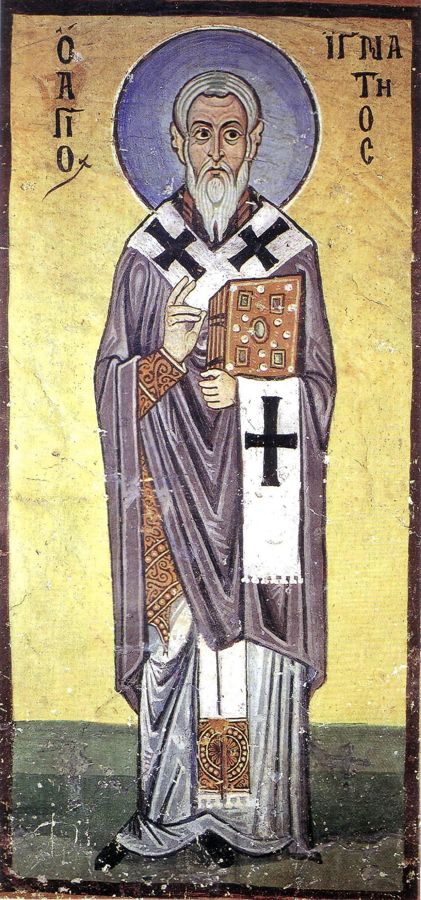
St. Ignatius

St. Ignatius

February 1 · Bishop, Martyr
P

Sts. Pionius and…

February 1 · Priest, Martyrs
E

St. Ephraem the Syrian

February 1 · Deacon, Confessor
← All 1726 saints in the library
Sources & notes

Feast-day sources

Story sources

Sources

Credits

Image: Meléndez-san raimundo de fitero.jpg · Miguel Jacinto Meléndez · Public domain, via Wikimedia Commons

From Sabine Baring-Gould, The Lives of the Saints, new edition in 16 vols. (London: John C. Nimmo, 1897), digitized text from Project Gutenberg. Public domain.

Image: Miguel Jacinto Meléndez, Wikimedia Commons (Public domain)

From Sabine Baring-Gould, The Lives of the Saints, new edition in 16 vols. (London: John C. Nimmo, 1897), digitized text from Project Gutenberg. Public domain in the United States. Reproduced unedited, except for short bracketed notes in grey that we added to explain names and terms (“S.” is the old abbreviation for Saint). Some history and judgments reflect 19th-century scholarship.