A

A whole life given to God with an undivided heart.

Read the essentials →
January 30 · Virgin

St. Aldegund

St. Aldegund

A whole life given to God with an undivided heart.

Traditional feast

January 30
1914 / pre-1969 calendar, per Baring-Gould (1914)

Current feast

Not verified yet

Represents

Virgin

Their story

Adapted in modern English from the Catholic Encyclopedia (1913) · original text below · little is known

Aldegund (also written Adelgundis or Aldegonde) was closely related to the Merovingian (the first dynasty of Frankish kings) royal family. Her parents, honoured as St Walbert and St Bertilia, lived in Hainault in Flanders.

Pressed to marry, she chose virginity instead. She left home and received the veil from Amandus, Bishop of Maastricht. Her Lives say she then walked dry-shod across the River Sambre. This is a legend.

On its banks, at a lonely place called Malbode, she built a small convent. Under the name Maubeuge it became a famous abbey of Benedictine (monks following the Rule of St. Benedict) nuns, later replaced by canonesses. The Catholic Encyclopedia notes that there are several early Lives, including one by Hucbald in the tenth century, but none by people who knew her.
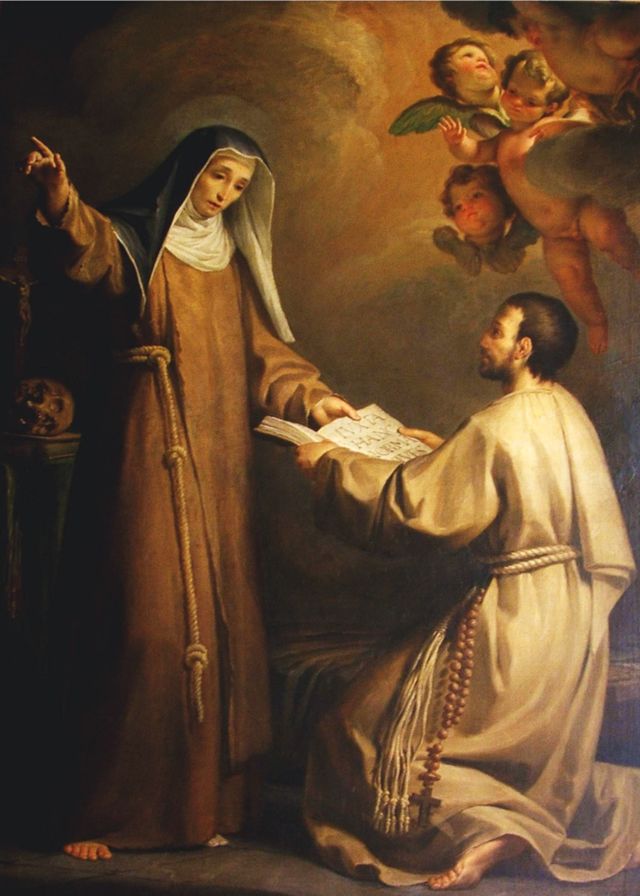
Early life

Selected sentences from the original account, unaltered.

Thin entry · the 1914 book gives only 138 words. We have not filled the gap with invented detail.

The blessed Aldegund was the daughter of Waldbert, Count of Hainault. Her parents, moved by her example, renounced the world, and distributed their wealth among the poor.

What they represent

How they teach us to live

Drawn from themes in the original account

Make time for silence. Solitude and withdrawal to pray shape this life.

Give to people in need. The account records care for the poor.

Build up the community you belong to. This life was lived with and for a community.

Learn from the kind of life it was. A whole life given to God with an undivided heart.

From the Catholic Encyclopedia

1913 · 172 words

​Aldegundis. Saint, virgin and abbess (c. 639–684), variously written Adelgundis, Aldegonde, etc. She was nearly related to the Merovingian royal family. Her father and mother, afterwards honoured as St. Walbert and St. Bertilia, lived in Flanders in the province of Hainault. Aldegundis was urged to marry, but she chose a life of virginity and, leaving her home, received the veil from Amandus, Bishop of Maastricht. Then she walked dry-shod over the Sambre, and built on its banks a small nunnery at a desert placed called Malbode. This foundation afterwards, under the name Maubeuge, became a famous abbey of Benedictine [monks following the Rule of St. Benedict] nuns, though at a later date these were replaced by canonesses. St. Aldegundis' feast is kept on 30 January. There are several early Lives, but none by contemporaries. Several of these, including the tenth-century biography by Hucbald, are printed by the Bollandists [Jesuit scholars who since the 1600s have critically studied the lives of the saints] (Acta SS., Jan., 11, 1034–35).

Bollandists, as above; Dunbar, Dict. of Saintly Women, (London, 1905), I, 41, 42; Leroy, Histoire de Ste. Aldigonde (Paris, 1883); Chevalier, Bio-bibliogr. (2d ed.), 125, 126.

Read more

The full original · 138 words

Read Baring-Gould’s full account

Baring-Gould’s sources: Roman and many ancient Martyrologies; by others on Jan. 27th, or Nov. 13th, but these were probably days of translation of relics. Authorities; a life by a contemporary quoted in an anonymous life compiled from already existing notices; another by one Hugbald, and another by a monk of S. Ghislain.

The blessed Aldegund was the daughter of Waldbert, Count of Hainault. Her whole heart was given to Christ whom she chose as her heavenly bridegroom. Her parents, moved by her example, renounced the world, and distributed their wealth among the poor. After their death, in the year 661, Aldegund took the veil, and retired into the forest of Maubeuge where she built a convent, and became the first abbess. When her fair fame was attacked by wicked slanders, so that she suffered agonies of grief, she struggled hard to submit to the hand of God, and at last, bowing completely to His will, she desired that He would try her with ever keener sufferings, to perfect her by affliction. She was shortly after attacked with cancer in the breast, from which she died on Jan. 30th, a.d. 680.

Feast days

Feast: January 30

Nine days · Free

Pray the novena
with us.

One short email a day for nine days. The day's prayer, a line from St. Aldegund's story, and a nudge to keep going.

Also on January 30
B

St. Barsas of Edessa

January 30 · Bishop, Confessor
A

St. Adelelm of Burgos

January 30 · Abbot
St. Hyacintha

St. Hyacintha

January 30 · Virgin
← All 1727 saints in the library
Sources & notes

Feast-day sources

Story sources

Sources

Credits

From Sabine Baring-Gould, The Lives of the Saints, new and revised edition (Edinburgh: John Grant, 1914; first edition 1872). Public domain.

From “Catholic Encyclopedia (1913)/St. Aldegundis,” The Catholic Encyclopedia (New York: Robert Appleton Company, 1907–1914), via Wikisource. Public domain. Matched by name and feast date; text unedited except for our bracketed notes in grey.

From Sabine Baring-Gould, The Lives of the Saints, new and revised edition (Edinburgh: John Grant, 1914; first edition 1872). Public domain in the United States. Reproduced unedited, except for short bracketed notes in grey that we added to explain names and terms (“S.” is the old abbreviation for Saint). Some history and judgments reflect 19th-century scholarship.