E
St. Epaphras
M
St. Macrina
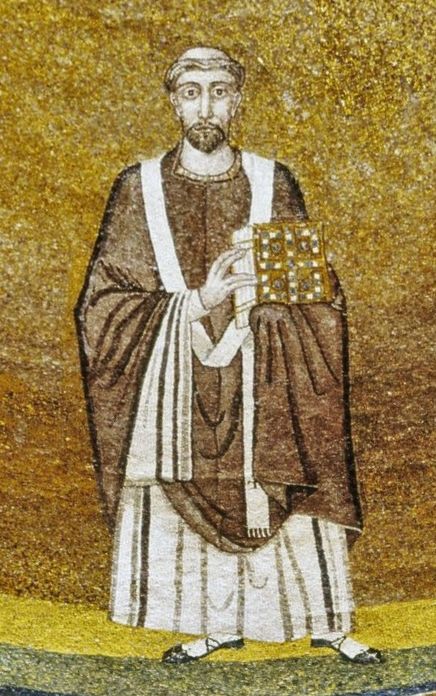
Leaving everything to pray, yet still drawing people who needed wisdom.
Read the essentials →Leaving everything to pray, yet still drawing people who needed wisdom.
July 19
Not verified yet
Hermit
LBy the Greeks on May 8tb; by the Latins on July 19th. Floras, in his Additions to Bede, Ado, Usuardus, Notker, Wandelbert, &c. Modem Roman Martyrology. Specially venerated in France and Belgium.
Make time for silence. Solitude and withdrawal to pray shape this life.
Feed your mind with Scripture and good books. Learning and the Scriptures matter in this life.
Learn from the kind of life it was. Leaving everything to pray, yet still drawing people who needed wisdom.
LBy the Greeks on May 8tb; by the Latins on July 19th. Floras, in his Additions to Bede [English monk and historian (d. 735)], Ado, Usuardus [a 9th-century monk of Paris who compiled a list of saints for each day], Notker, Wandelbert, &c. Modem Roman Martyrology. Specially venerated in France and Belgium. Authorities A Life by Theodore of the Studium (d. 826), and mention in the Lives of the Fathers of the Desert.] S. Arsenius was a Roman, of a noble and wealthy house. He was supposed to be, and perhaps was learned S. Arsenins.
for a time when learning was rapidly decaying, and was shortly to disappear. Theodosius [name of Roman emperors; Theodosius I (379–395) made Christianity the state religion] made him tutor of his two sons, Arcadius and Honorius, in Constantinople. In the court he lived in the utmost splendour, surrounded with every luxury. He had a duty to perform of the highest importance — the training of the future emperors of the known world. In 395 Theodosius died, and the empire was parted between the brothers. Then, or shortly after, Arsenius fled to Egypt, covered with shame, as well he might be, at having wasted his glorious opportunities, and provided the world with governors, the one a cypher, the other with no higher aims than breeding poultry, false, cruel, without gratitude to his best friends and deliverers. The monks of Egypt hailed Arsenius, when he took refuge among them, as the Father of the Emperors. No title could have been better calculated to shame him, and overwhelm him with self-reproach. The formation of the emperors' characters had been in his hands, and he had instilled into them not a generous, not a noble idea.
Well might he fly from the monastery and hide himself in the wildest wastes of the desert, away from where news could reach him of the: feebleness of Arcadius, and the foolishness of Honorius. So the old man spent long years, silent, consuming his heart with remorse, understood by none, for none in those deserts could tell how miserably he had betrayed a sacred trust. He would speak to no one; for every visitor added to his shame by telling the news from Europe, now how the two brothers were quarrelling, and exciting the barbarians to fall on each other's s territories, now how the feeble Arcadius had fallen under the sway of the eunuch Eutropius, then how Honorius was flying without striking a blow before the invading VOL. viii. 4 Goths [Germanic peoples who invaded the Roman Empire, many of them Arian Christians], and leaving Rome to be pillaged by them, then, worst of all, how he had murdered in cold blood the heroic general who had routed the barbarians and saved his throne and the Roman honpur.
Men came to see Arsenius in his cave, and sat down with him; but could not prevail on him to speak a word, and went away wondering at his reticence. So year after year passed, and the old man remained in the desert, weeping till the lashes were worn off his red eyelids — weeping over his sins of omission, and over the degradation of Rome, till his time was accomplished, and God called him to his rest.
Feast: July 19
One short email a day for nine days. The day's prayer, a line from St. Arsenius's story, and a nudge to keep going.
From Sabine Baring-Gould, The Lives of the Saints, new edition in 16 vols. (London: John C. Nimmo, 1897–98); text from the Internet Archive scan (OCR, lightly cleaned; errors possible). Public domain.
From Sabine Baring-Gould, The Lives of the Saints, new edition in 16 vols. (London: John C. Nimmo, 1897–98); text from the Internet Archive scan (OCR, lightly cleaned; errors possible). Public domain in the United States. Reproduced unedited, except for short bracketed notes in grey that we added to explain names and terms (“S.” is the old abbreviation for Saint). Some history and judgments reflect 19th-century scholarship.