A

Faithfulness to Christ when it cost everything.

Read the essentials →
January 23 · Martyr

St. Asclas

St. Asclas

Faithfulness to Christ when it cost everything.

Traditional feast

January 23
1914 / pre-1969 calendar, per Baring-Gould (1914)

Current feast

Not verified yet

Represents

Martyr

Their story

Adapted in modern English from Baring-Gould (1914) · original text below

Asclas, from Antinoë in Upper Egypt, was tried by the governor Arrianus. Told to sacrifice and shown the instruments of torture, he said, "Try which will prevail, thou and thy instruments, or I and my Christ." He was hung on the rack and his flesh torn; when an orator said he had lost his wits, he replied that he had lost neither his wits nor his God.

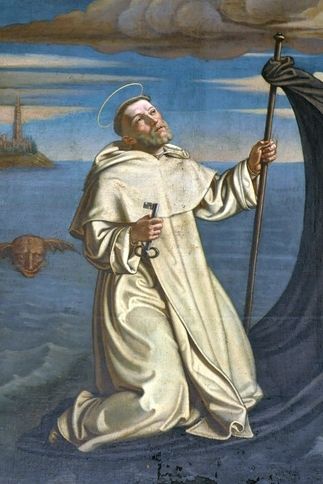
To continue at Hermopolis, Arrianus had him ferried across the Nile. According to the Acts (the written account of a martyr's trial and death), Asclas prayed that the governor's boat would stop mid-river until he confessed God's power, and it stuck fast until Arrianus wrote that the Lord of Asclas is God. Once ashore, thinking it magic, he had Asclas burned with fire and thrown into the Nile with a stone round his neck.

The first torture took place on the far side of the river near Antinoë, where the governor lacked the means to continue. Arrianus said sullenly that Asclas was as stubborn as ever. Asclas prayed that God's name be glorified "even by unwilling lips." The boat moved only when the governor's written confession was sent to the martyr.
Early life

Selected sentences from the original account, unaltered.

Asclas, a native of Antinoë, was brought before the Roman governor, Arrianus, when he visited Hermopolis, in the Thebaid, or Upper Egypt.

What they represent

How they teach us to live

Drawn from themes in the original account

Stay faithful when it costs you. This account is about holding firm under pressure.

Learn from the kind of life it was. Faithfulness to Christ when it cost everything.

Read more

The full original · 348 words

Read Baring-Gould’s full account

Baring-Gould’s sources: S. Asclas was martyred on Jan. 21st, but his body was found on Jan. 23rd, and on this latter day he is usually commemorated. His Acts, in a fragmentary condition, are genuine.

Asclas, a native of Antinoë, was brought before the Roman governor, Arrianus, when he visited Hermopolis, in the Thebaid [the desert region of Upper (southern) Egypt], or Upper Egypt. After a close interrogation, which is faithfully recorded in the Acts of this martyr, the Governor exclaimed, "Come, now! sacrifice to the gods, and consult thy safety. I have various instruments at hand, as thou seest." "Try, now," said the martyr, boldly. "Try, now, which will prevail, thou and thy instruments, or I and my Christ." The Governor ordered him to be swung from the little horse, and his flesh to be torn off in ribands. This was done. Then Arrianus said sullenly, "I see he is as obdurate as ever." An orator, standing by, remarked, "The approach of death has robbed him of his wits." Asclas turned his head, and said, "No, I am robbed neither of my wits nor of my God."

Now this had taken place on the further side of the river, near Antinoë; and as there were not sufficient conveniences for continuing the torture, the Governor said, "We will return to Hermopolis." So he ordered Asclas into one boat; and when he had been taken over the Nile, then Arrianus entered his boat, and began to cross. Thereupon Asclas cried out, "O Lord, for whose sake I have suffered, may Thy name be glorified now, even by unwilling lips. Retain the vessel in the midst of the river, till Arrianus confesses Thy power." Then suddenly the boat stood, as though it had grounded on a sand-bank, and it could not be moved, till the Governor wrote on a piece of parchment: "The Lord of Asclas, He is God, and there is none other god save He." And when he had sent this to the martyr, the boat floated, and was propelled to the shore. Then the Governor, inflamed with rage, thinking that the captive had used magical arts, tortured him by applying fire to his sides and belly, till his body was one great sore. And after that he cast him, with a stone attached to his neck, into the Nile.

Feast days

Feast: January 23

Nine days · Free

Pray the novena
with us.

One short email a day for nine days. The day's prayer, a line from St. Asclas's story, and a nudge to keep going.

Also on January 23
C

St. Clement of Ancyra…

January 23 · Bishop, Martyrs
St. John the Almsgiver, Patriarch of Alexandria

St. John the Almsgiver

January 23 · Feast
St. Raymond of Peñafort

St. Raymond of Peñafort

January 23 · Feast
← All 1726 saints in the library
Sources & notes

Feast-day sources

Story sources

Sources

Credits

From Sabine Baring-Gould, The Lives of the Saints, new and revised edition (Edinburgh: John Grant, 1914; first edition 1872). Public domain.

From Sabine Baring-Gould, The Lives of the Saints, new and revised edition (Edinburgh: John Grant, 1914; first edition 1872). Public domain in the United States. Reproduced unedited, except for short bracketed notes in grey that we added to explain names and terms (“S.” is the old abbreviation for Saint). Some history and judgments reflect 19th-century scholarship.