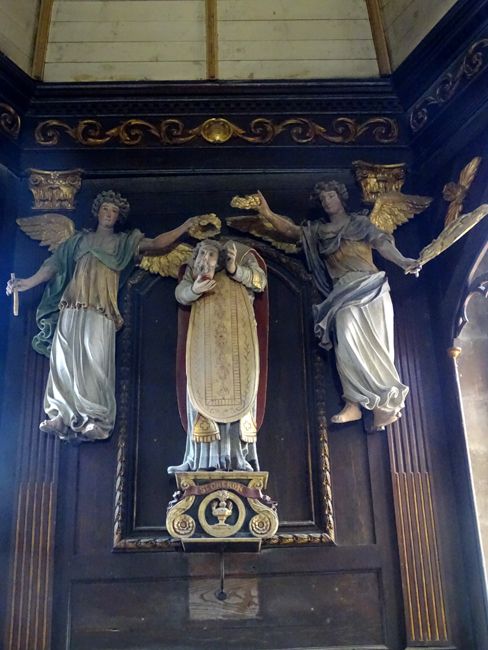
St. Caraunus

Faithfulness to Christ when it cost everything.

Read the essentials →
May 28 · Martyr

St. Caraunus

St. Caraunus

Faithfulness to Christ when it cost everything.

Traditional feast

May 28
1914 / pre-1969 calendar, per Baring-Gould (1897)

Current feast

May 28
Secondary source · Wikipedia

Represents

Martyr

Their story

Adapted in modern English from Alban Butler's Lives of the Saints · little is known

Caraunus, also called Caranus or Caro, was a native of Gaul. After his Christian parents died he gave all he had to the poor and retired into a desert, where the local bishop ordained him deacon. He preached in several provinces of Gaul and came to the country around Chartres, where few Christians remained from the converts of St. Potentianus and St. Altinus.

The faith spread through his preaching, and he set out for Paris with some disciples. Three leagues from Chartres he saw a gang of robbers approaching and told his disciples to hide in the thickets. Butler calls him a martyr. Butler and Baring-Gould agree on the fifth century.
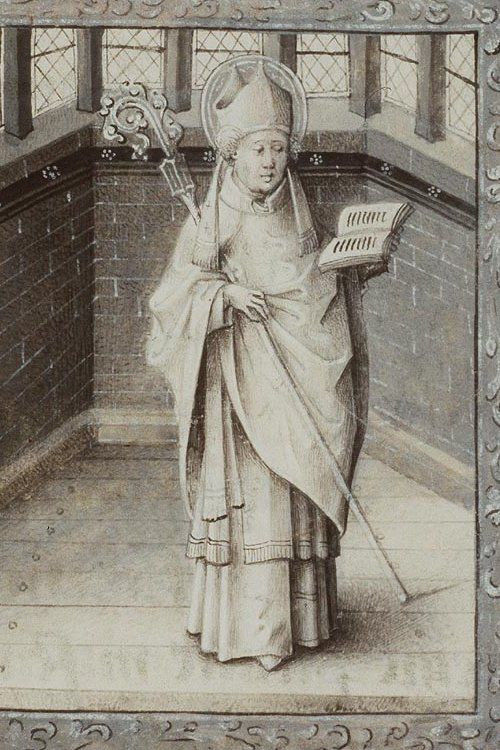
Early life

The book says little or nothing about early life. This is how the account begins.

Thin entry · the 1897 book gives only 0 words. We have not filled the gap with invented detail.

What they represent

How they teach us to live

Drawn from themes in the original account

Learn from the kind of life it was. Faithfulness to Christ when it cost everything.

Keep their day. Remember them on May 28 with a short prayer, and ask for their help.

Read more

The full original · 0 words

Read Baring-Gould’s full account

Baring-Gould’s sources: Modem Roman and Gallican Martyrologies. Usuardus and Mau* rolycus. The Acts or Life is a Mediaeval composition, of very uncertain authority; as it is unknown on what evidence it was composed.] S. Caraunus, or, as he is commonly called, S. Cheron,, was a Roman by birth. He owed his conversion to the Epistles of S. Paul, which fell by chance into his hands. And when he had read them he said, “ This wisdom is not of this world,” and he sought further instruction, and was baptized. On the death of his parents, he entered holy orders; but it is not stated that he ever proceeded beyond the diaconate. Under the reign of Domitian he left Rome and came into Gaul. He visited Marseilles and Lyons, and finally arrived at Chartres, where he confirmed in the faith those who had been converted by SS. Potentianus and Altinus. He was on his way to Paris with some companions when his party was attacked by robbers. At his advice his companions took to flight and secreted themselves. The robbers finding no money on the person of Caraunus, smote off his head. Towards evening his companions quitted their hiding-places, and taking up his body, buried it on a hill hard by, called at this day Montagne-Sainte. He is generally represented with his head in his hands. His relics are still shown at S. Chdron, near Chartres.

Feast days

Feast: May 28

Nine days · Free

Pray the novena
with us.

One short email a day for nine days. The day's prayer, a line from St. Caraunus's story, and a nudge to keep going.

Also on May 28
H

St. Heliconis

May 28 · Martyr
T

St. Theodulus the Stylite

May 28 · Hermit
St. Germain of Paris

St. Germain of Paris

May 28 · Bishop
← All 1726 saints in the library
Sources & notes

Feast-day sources

Story sources

Sources

Credits

Image: Cavan. Eglise. Saint Cheron.jpg · J.C EVEN · CC BY-SA 4.0, via Wikimedia Commons

From Sabine Baring-Gould, The Lives of the Saints, new edition in 16 vols. (London: John C. Nimmo, 1897–98); text from the Internet Archive scan (OCR, lightly cleaned; errors possible). Public domain.

Image: J.C EVEN, Wikimedia Commons (CC BY-SA 4.0)

From Sabine Baring-Gould, The Lives of the Saints, new edition in 16 vols. (London: John C. Nimmo, 1897–98); text from the Internet Archive scan (OCR, lightly cleaned; errors possible). Public domain in the United States. Reproduced unedited, except for short bracketed notes in grey that we added to explain names and terms (“S.” is the old abbreviation for Saint). Some history and judgments reflect 19th-century scholarship.