H
St. Heliconis
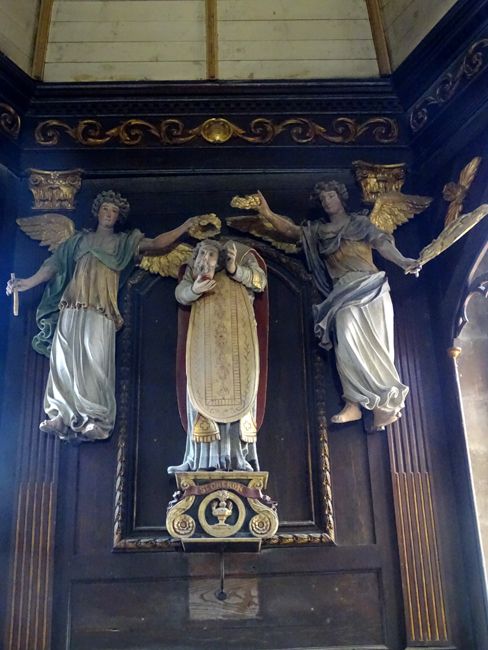
St. Caraunus
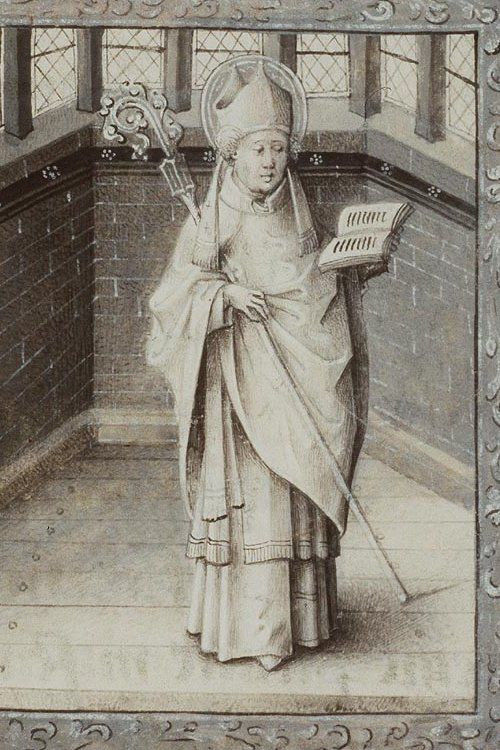
Leaving everything to pray, yet still drawing people who needed wisdom.
Read the essentials →Leaving everything to pray, yet still drawing people who needed wisdom.
May 28
Not verified yet
Hermit
In the reign of Theodosius the Great there was at Constantinople a prefect of the city, named Theodulus, a good man who feared God with all his house. Now he read how Solomon tried all manner of things to satisfy the longing of his heart, and found all to be vanity and vexation of spirit; and he felt that his own heart spoke the same language. Then he yearned with an unspeakable longing to live to God alone.
Make time for silence. Solitude and withdrawal to pray shape this life.
Pray a little every day. Prayer runs all through this account.
Practise small acts of self-denial. The account dwells on fasting and penance; a skipped snack or a phone-free hour is a start.
Learn from the kind of life it was. Leaving everything to pray, yet still drawing people who needed wisdom.
In the reign of Theodosius [name of Roman emperors; Theodosius I (379–395) made Christianity the state religion] the Great there was at Constantinople a prefect of the city, named Theodulus, a good man who feared God with all his house. Now he read how Solomon tried all manner of things to satisfy the longing of his heart, and found all to be vanity and vexation of spirit; and he felt that his own heart spoke the same language. Then he yearned with an unspeakable longing to live to God alone. So he told his desire to Procula, his wife, to whom he had been married only two years. But when she heard him, she uttered a cry of grief. “What, man! have I not been to thee faithful in every way? Have I not been to thee modest and unselfish? And now wilt thou divorce me? Never did the apostle utter such a command, as that thou shouldst desert thy true wife for ever ! ” But he burst from her and went forth, and resigned his office into the hands of the emperor; and returned to her. Then she fell at his feet weeping, and held him fast and implored him not to leave her, and she said, “ Beware ! should evil befall me, thou wilt have to answer for my soul at the judgment bar of God.” Then rising, “ Come ! 99 said she, “ let us be as monk and nun in this house, dressing in mean apparel, and sleeping in different chambers, and faring on poor thin diet. I was not bom and bred to this, but I will endure this all rather than lose thee ! ” Then the brave true woman tore off her costly robes, and threw away her necklaces, and went weeping to her room and shut the door. And her heart broke, and next morning she was found dead, with tears on her cheek. Then Theodulus left Constantinople, and arrived at Edessa, where he found a pillar, and he ascended that pillar, and fasted and prayed, and watched thereon, winter and summer, night and day, for forty and eight years. “In hungers and thirsts, fevers and cold, In coughs, aches, stitches, ulcerous throes and cramps, A sign betwixt the meadow and the cloud, Patient on this tall pillar I have borne Rain, wind, frost, heat, hail, damp, and sleet, and snow.” And at last, when the forty and eight years were over, Theodulus thought that he must be nigh perfection. Had he not given up house and land, and wife for the sake of Christ? surely his would be the palm and crown. Then he prayed that God would reveal to him, who would be his equal in heavenly glory. So the Lord appeared to him in a dream, and answered, and said, “ Cornelius the clown.” Then the old hermit was aghast, and his soul melted away, and he was as one dead with shame and dismay. And when he was come to himself, he called for a ladder, and he came stumbling down the steps, and caught up a stick, and went, grey, ragged, and dazed into Edessa, asking at every step, “ Where is Cornelius the clown ? ” And so, after awhile he came on the merry fellow, capering with double pipes in his mouth, and a hideous mask, before a laughing crowd. Then the old hermit plucked him by the sleeve, and drew him away, and said, wild with dismay, “ What good thing hast thou done to inherit eternal life ? I have given up he uses and land and a dear wife, I have spent forty-eight years on a pillar, exposed to the glaring sun by day, and to the numbing frost at night. I have worn out my body with fasting. I have eaten but a crust and a raw olive in the day. What hast thou done ? I have become stiff in my joints, my feet are sore and swollen with long standing, I have prayed night and day, some hundred prayers by day, and I have watched by night as the stars wheeled above me. What hast thou done ? ”
“ I have done nothing/' answered the clown, humbly. “ I cannot compare with thee.57 “ But thou hast done something/7 said Theodulus, roughly shaking him; “ I know that thou wilt be accounted great in heaven, tell me what hast thou done ? 57 “ I am vile as dirt. I have not even served God purely and honestly/7 said the clown.
“Bethink thee/5 again urged the hermit; “what good thing hast thou done ? 57 Then the clown reddening said, “There is one little thing I did, but it is not worth mentioning. Some time ago there was a virtuous young wife in this town who had been married only two years, when her husband fell into difficulties, and was cast into the debtor’s prison. And she, poor thing, was constrained to beg for food and money to keep him and herself alive. And she was very fair, and she feared lest she should attract rude eyes, and was withal as modest as a young maiden, and when she begged, she held out both her hands, and hung her face, and only murmured inarticulate words. And so I saw her one day. And I was grieved, for I had piped and danced in the court of her house for a few coppers not many months before. Then I went to her and asked her how much her husband owed, and she said ‘Four hundred pieces of silver.7 Then I ran home, and turned out my money box, and found therein two hundred and thirty pieces. So then I took a pair of gold bracelets and some brooches which had belonged to my dear dead wife, and they were worth seventy pieces of silver. But that was not enough. So then I got together some of my silk theatrical dresses, and I rolled them all up in a piece of linen, and took it all to the woman, and I said to her, c There, take all, and release yonr husband from jail/ Then I ran away. And this, I believe, is the only good thing I have ever done.”
Then Theodulus saw how this man had sacrificed himself for a strange woman, bound to him by no tie, whereas he had cast away his own wife, and had broken her heart, seeking only his own self.
Then the old hermit smote his breast, and lifted his hands to heaven and blessed the poor clown, and thanked God, and went back to his pillar, and re-ascended it, and there, not many years after, he died.
Feast: May 28
One short email a day for nine days. The day's prayer, a line from St. Theodulus the Stylite's story, and a nudge to keep going.
From Sabine Baring-Gould, The Lives of the Saints, new edition in 16 vols. (London: John C. Nimmo, 1897–98); text from the Internet Archive scan (OCR, lightly cleaned; errors possible). Public domain.
From Sabine Baring-Gould, The Lives of the Saints, new edition in 16 vols. (London: John C. Nimmo, 1897–98); text from the Internet Archive scan (OCR, lightly cleaned; errors possible). Public domain in the United States. Reproduced unedited, except for short bracketed notes in grey that we added to explain names and terms (“S.” is the old abbreviation for Saint). Some history and judgments reflect 19th-century scholarship.