F
Sts. Fusca and Maura
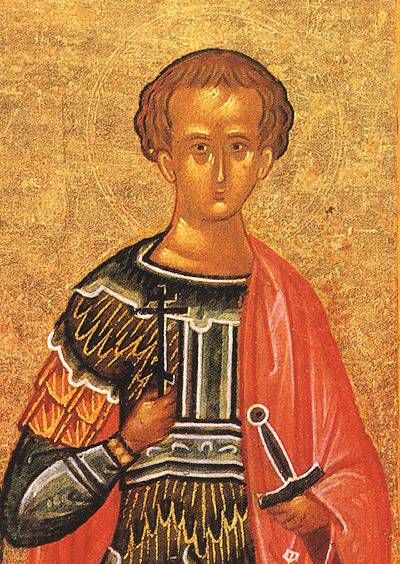
St. Polyeuctus
M
A life spent serving ordinary people.
February 13
Not verified yet
Priest
Confessor
Thin entry · the 1897 book gives only 108 words. We have not filled the gap with invented detail.
S. Castor was ordained first deacon, and then priest, by S. Maximus, second bishop of Trèves. He was appointed to preach the Gospel at Carden, on the Moselle, where is a church founded by him. A popular legend represents him as having asked of a boat which was going up the river with a load of salt, a small quantity of that useful condiment, which was however refused him; but when the vessel was shortly after nigh sinking in a storm, Castor saved it by making the sign of the cross over the tossing waves.
Share your faith, in words and by example. Preaching and conversion are central here.
Learn from the kind of life it was. A life spent serving ordinary people.
S. Castor was ordained first deacon, and then priest, by S. Maximus, second bishop of Trèves. He was appointed to preach the Gospel at Carden, on the Moselle, where is a church founded by him. A popular legend represents him as having asked of a boat which was going up the river with a load of salt, a small quantity of that useful condiment, which was however refused him; but when the vessel was shortly after nigh sinking in a storm, Castor saved it by making the sign of the cross over the tossing waves. His body, or part of it, was translated in after years to Coblenz.
Feast: February 13
One short email a day for nine days. The day's prayer, a line from St. Castor's story, and a nudge to keep going.
From Sabine Baring-Gould, The Lives of the Saints, new edition in 16 vols. (London: John C. Nimmo, 1897), digitized text from Project Gutenberg. Public domain.
From Sabine Baring-Gould, The Lives of the Saints, new edition in 16 vols. (London: John C. Nimmo, 1897), digitized text from Project Gutenberg. Public domain in the United States. Reproduced unedited, except for short bracketed notes in grey that we added to explain names and terms (“S.” is the old abbreviation for Saint). Some history and judgments reflect 19th-century scholarship.