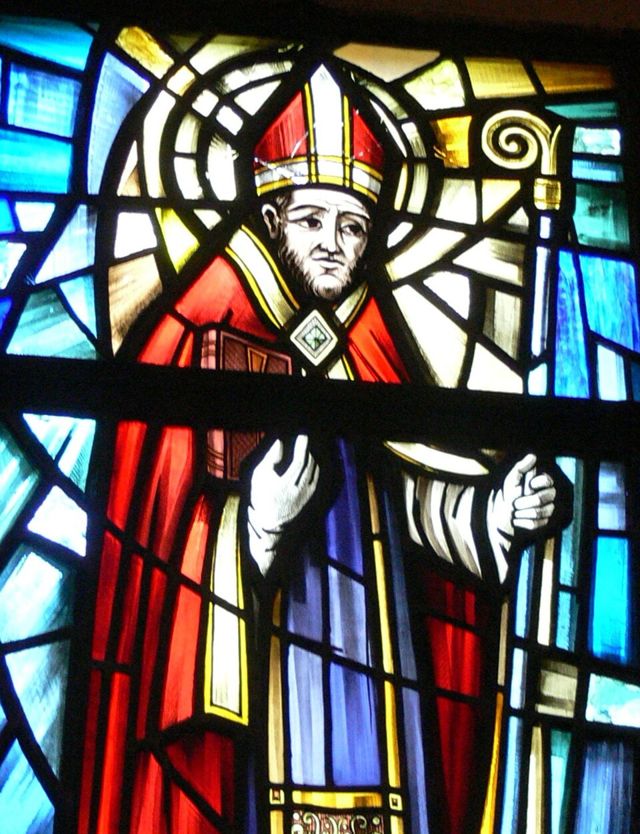
St. Cerbonius

Cerbonius, bishop of Piombino, had been accused of saying Mass too early, and legates from Pope Vigilius came for him.

Read the essentials →
October 10 · Bishop

St. Cerbonius

St. Cerbonius

Cerbonius, bishop of Piombino, had been accused of saying Mass too early, and legates from Pope Vigilius came for him.

Traditional feast

October 10
1914 / pre-1969 calendar, per Baring-Gould (1897)

Current feast

October 10
Secondary source · Wikipedia

Represents

Bishop

Their story

Adapted in modern English from Baring-Gould (1897–98) · original text below

(The surviving account on this page begins partway through the story.)

Cerbonius, bishop of Piombino, had been accused of saying Mass too early, and legates from Pope Vigilius came for him. He invited them to eat after his Mass, and they replied they were not heretics, to eat before Mass; he said Mass had been over an hour. On the road to Rome he found them a spring when they were thirsty and cured three men of fever, and the legates began to think him a saint.

Near Rome they went ahead to tell the pope. In the story, Cerbonius saw a flight of geese, made the sign of the cross, and told them they had no leave to fly until they followed him to the pope. He marched on with the geese behind him and met Vigilius coming in procession with clergy and incense. Together they went to the altar of St. Peter's, where Cerbonius blessed the geese and let them go.

Next morning at daybreak he pulled the sleepy pope out of bed, had him stand foot on foot and hand in hand with him, and asked whether he heard the angels singing; Vigilius said he heard something of the kind. After that the pope let him say Mass at any hour he chose and sent him home. St. Gregory says that Totila, the Gothic king, exposed the old bishop to a bear in the amphitheatre, but it crouched and licked his feet. Released, Cerbonius fled to Elba and died there; his body was brought back to Piombino.

Early life

The book says little or nothing about early life. This is how the account begins.

“ Come and eat with us,” said Cerbonius. “We are not heretics to eat before mass.” “ That is over an hour ago,” answered the bishop. The legates started for Rome with the bishop.

What they represent

How they teach us to live

Drawn from themes in the original account

Keep their day. Remember them on October 10 with a short prayer, and ask for their help.

Read more

The full original · 413 words

Read Baring-Gould’s full account

Baring-Gould’s sources: Roman Martyrology. Authorities: — Mention by S. Gregory the Great in his Dialogues, and a life written not before the 10th cent.] S. Cerbonius, a native of northern Africa, on the Vandal invasion fled to Italy and came to Piombino, of which city he became bishop. The people of the neighbourhood were, however, speedily tired of their bishop, for every Sunday he rose at break of day and said mass. When they arrived at the church the bishop and his clergy were breakfasting, and they had to return to their homes without having performed their religious duties. At length they could endure it no longer, and complained to Pope Vigilius, who, on hearing of what Cerbonius did, blazed up into wrath, and sent legates to Piombino to bring the bishop to Rome. They arrived on Saturday. Next morning very early, Cerbonius awoke and said to his deacon, “ Go out and see if the time has arrived for mass.” The deacon returned to say that a white streak was showing above the eastern hills. Cerbonius and his priests accordingly got up and said mass. When the legates crawled out of bed, they found the bishop and his clergy enjoying their breakfasts.

“ Come and eat with us,” said Cerbonius. “We are not heretics to eat before mass.” “ That is over an hour ago,” answered the bishop. The legates started for Rome with the bishop. On the way they got thirsty, and he discovered for them a spring of water. He cured three men suffering from fever, and astonished the legates into thinking that, after all, he was a saint, and not a heretic When they came near to Rome, Oct. io.] S. Cerbonius.

they left Cerbonius and went on to Vigilius and told him of the marvels wrought by the bishop on the way. Whilst Cerbonius was waiting, he saw a flight of geese coming his way. He at once made the sign of the cross over them and said, “You have not licence from the Lord to fly anywhere till you have followed me to the presence of the Lord Pope.” Then he marched forward with his staff, the geese following demurely, — and lo ! he met the Pope, attended by his clergy in chasubles and dalmatics, with incense burning, coming to do honour to the saint who had found a spring of water and at whose word tertian ague had disappeared. The two processions met and united, and the Pope, followed by his cleigy, walked with Cerbonius and the geese in his train to the altar of S. Peter’s, where Cerbonius blessed the geese and gave them leave to depart.

Next morning, at daybreak, Cerbonius went into the Pope’s chamber, pulled him out of bed, and made him put his foot on his own foot, and his hand in his own hand, and look up into heaven. He then asked the Pope, stupefied with sleep, if he did not hear angels singing, and Vigilius having said he did hear something of the kind, was allowed to go back to bed again, whilst Cerbonius went off to say mass. After this the Pope gave him leave to say his mass at any hour of the morning that pleased him, and sent him back at once to Piombino.

Totila, the Gothic King, is said by S. Gregory to have exposed the old bishop to be hugged by a bear in the amphitheatre, but the bear, instead of hurting him, crouched at his feet and licked them. He was allowed to depart, and he fled to the isle of Elba, and there died. His body was brought back to Piombino, and there reposes.
Feast days

Feast: October 10

Nine days · Free

Pray the novena
with us.

One short email a day for nine days. The day's prayer, a line from St. Cerbonius's story, and a nudge to keep going.

Also on October 10
P

St. Pinitus

October 10 · Bishop
G

Sts. Gereon and…

October 10 · Martyrs
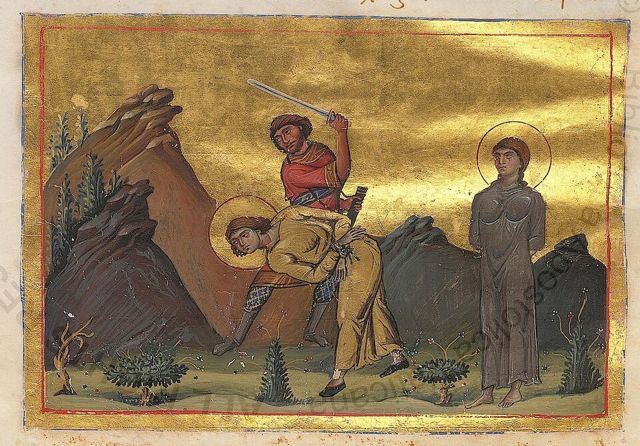
Sts. Eulampius and Eulampia

Sts. Eulampius and…

October 10 · Martyrs
← All 1726 saints in the library
Sources & notes

Feast-day sources

Story sources

Sources

Credits

Image: Stained glass - Saint Cerbonius of Populonia (cropped).jpg · Wolfgang Sauber · CC BY-SA 3.0, via Wikimedia Commons

From Sabine Baring-Gould, The Lives of the Saints, new edition in 16 vols. (London: John C. Nimmo, 1897–98); text from the Internet Archive scan (OCR, lightly cleaned; errors possible). Public domain.

Image: Wolfgang Sauber, Wikimedia Commons (CC BY-SA 3.0)

From Sabine Baring-Gould, The Lives of the Saints, new edition in 16 vols. (London: John C. Nimmo, 1897–98); text from the Internet Archive scan (OCR, lightly cleaned; errors possible). Public domain in the United States. Reproduced unedited, except for short bracketed notes in grey that we added to explain names and terms (“S.” is the old abbreviation for Saint). Some history and judgments reflect 19th-century scholarship.