…accept her sufferings, and for their sake shed graces and pardon on the head of her master and his household.
Read the essentials →…accept her sufferings, and for their sake shed graces and pardon on the head of her master and his household.
Read the essentials →…accept her sufferings, and for their sake shed graces and pardon on the head of her master and his household.
October 5
October 5
Virgin
Martyr
Thin entry · the 1897 book gives only 123 words. We have not filled the gap with invented detail.
…accept her sufferings, and for their sake shed graces and pardon on the head of her master and his household. This is not the only instance which the Acts of the Martyrs reveals to us, of the tenderest love existing between the masters and mistresses and their slaves in the old Roman world. Claudius, when he gave up the girl to the soldiers, said to her: “ Remember me before the Heavenly King.” She was brought before the magistrate, her hair cut off, and burning coals poured over her head; she was then flung into the water, but clambered out.
Keep their day. Remember them on October 5 with a short prayer, and ask for their help.
…accept her sufferings, and for their sake shed graces and pardon on the head of her master and his household. This is not the only instance which the Acts of the Martyrs reveals to us, of the tenderest love existing between the masters and mistresses and their slaves in the old Roman world. Claudius, when he gave up the girl to the soldiers, said to her: “ Remember me before the Heavenly King.” She was brought before the magistrate, her hair cut off, and burning coals poured over her head; she was then flung into the water, but clambered out. “ This,” said she, “ is my baptism.” The governor then had her teeth knocked out, and her hands and feet cut off.
Feast: October 5
One short email a day for nine days. The day's prayer, a line from St. Charitina's story, and a nudge to keep going.
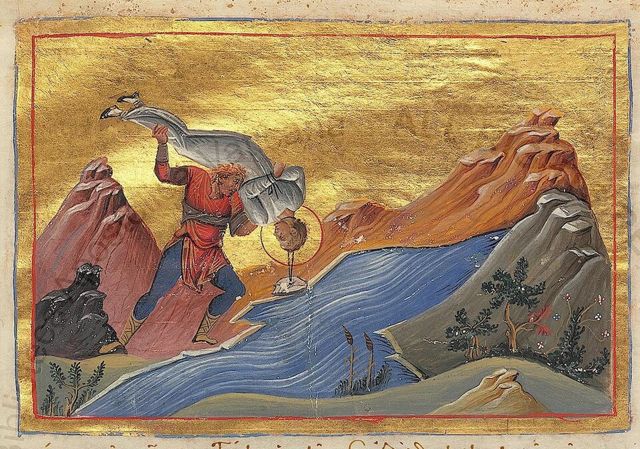
Image: Charitina of Amisus (Menologion of Basil II).jpg · Authors of Menologion of Basil II (circa 985 AC, Constantinople), Byzantine manuscript illuminators[1]: Pantoleon with G · Public domain, via Wikimedia Commons
From Sabine Baring-Gould, The Lives of the Saints, new edition in 16 vols. (London: John C. Nimmo, 1897–98); text from the Internet Archive scan (OCR, lightly cleaned; errors possible). Public domain.
Image: Authors of Menologion of Basil II (circa 985 AC, Constantinople), Byzantine manuscript illuminators[1]: Pantoleon with G, Wikimedia Commons (Public domain)
From Sabine Baring-Gould, The Lives of the Saints, new edition in 16 vols. (London: John C. Nimmo, 1897–98); text from the Internet Archive scan (OCR, lightly cleaned; errors possible). Public domain in the United States. Reproduced unedited, except for short bracketed notes in grey that we added to explain names and terms (“S.” is the old abbreviation for Saint). Some history and judgments reflect 19th-century scholarship.