D

Darlugdach, a young nun of St. Bridget's Kildare, fell in love with a man and planned to elope one night.

Read the essentials →
February 1 · Virgin

St. Darlugdach

St. Darlugdach

Darlugdach, a young nun of St. Bridget's Kildare, fell in love with a man and planned to elope one night.

Traditional feast

February 1
1914 / pre-1969 calendar, per Baring-Gould (1897)

Current feast

Not verified yet

Represents

Virgin

Their story

Adapted in modern English from Baring-Gould (1897) · original text below · little is known

Darlugdach, a young nun of St. Bridget's Kildare, fell in love with a man and planned to elope one night. Lying beside the sleeping abbess, she was torn between duty and desire.

In the story, she rose, prayed for strength, and held her bare feet in the hot coals until the pain overcame her passion. In the morning Bridget said she had seen the struggle, healed her feet, and promised the temptation would not return. She had long followed Bridget and was very dear to her. Darlugdach later asked to die with Bridget, and died, as promised, a year after her.

Struggles & surrender

What they wrestled with, and how they gave it to God

  • Temptation ·
    Source: Baring-Gould, Lives of the Saints. Darlugdach planned to leave her convent for a man she loved, and overcame the temptation.

Early life

Selected sentences from the original account, unaltered.

When young, she followed S. Bridget, and being very dear to her, slept with the abbess.

What they represent

How they teach us to live

Drawn from themes in the original account

Build up the community you belong to. This life was lived with and for a community.

Keep their day. Remember them on February 1 with a short prayer, and ask for their help.

Read more

The full original · 271 words

Read Baring-Gould’s full account

Baring-Gould’s sources: Authorities:—The lives of S. Bridget.

Amongst the nuns of S. Bridget's monastery of Kildare, there was one named Darlugdach. When young, she followed S. Bridget, and being very dear to her, slept with the abbess.

Darlugdach, not guarding her eyes with sufficient strictness, saw, and fell in love with a man, who also became enamoured of her, and their ardent glances revealed their mutual passion. A plan was formed that she should elope with him, on a certain night; and she laid herself in the bosom of the sleeping abbess with beating heart, troubled by a conflict between duty and passion. At last she rose, and in an agony of uncertainty, cast herself on her knees, and besought God to give her strength to master her love, and then, in the vehemence of her resolve, she thrust her naked feet into the red coals that glowed on the hearth, and held them there till the pain had conquered the passion. After that, she softly stole into bed again, and crept into the bosom of her holy mother. When morning broke, Bridget rose, and looked at the blistered and scorched soles, and touching them, said gently, "I slept not, dear child, but was awake, and saw thy struggle, and now, because thou hast fought valiantly, and hast conquered, the flame of lust shall no more hurt thee." And she healed her feet.

Darlugdach, as has been related in the life of S. Bridget, besought her spiritual mother to let her die with her, but S. Bridget promised that she should follow on the anniversary of her departure, after the expiration of a year. And so it was.
Feast days

Feast: February 1

Nine days · Free

Pray the novena
with us.

One short email a day for nine days. The day's prayer, a line from St. Darlugdach's story, and a nudge to keep going.

Also on February 1
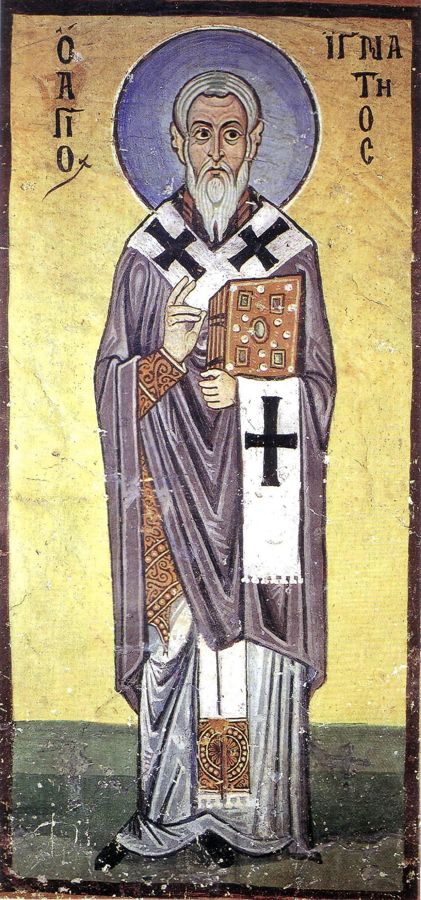
St. Ignatius

St. Ignatius

February 1 · Bishop, Martyr
P

Sts. Pionius and…

February 1 · Priest, Martyrs
E

St. Ephraem the Syrian

February 1 · Deacon, Confessor
← All 1726 saints in the library
Sources & notes

Feast-day sources

Story sources

Sources

Credits

From Sabine Baring-Gould, The Lives of the Saints, new edition in 16 vols. (London: John C. Nimmo, 1897), digitized text from Project Gutenberg. Public domain.

From Sabine Baring-Gould, The Lives of the Saints, new edition in 16 vols. (London: John C. Nimmo, 1897), digitized text from Project Gutenberg. Public domain in the United States. Reproduced unedited, except for short bracketed notes in grey that we added to explain names and terms (“S.” is the old abbreviation for Saint). Some history and judgments reflect 19th-century scholarship.