Their story
Edward was born in 1003, son of King Ethelred II and Emma of Normandy. When he was barely ten, the Danes took England, and he and his brother Alfred were sent to be raised at their uncle the Duke of Normandy's court. He spent his best years in exile while Canute settled the crown on his own children by Emma. The Catholic Encyclopedia says that early misfortune taught him the folly of ambition. He grew up loving the Mass and the company of monks, though he also enjoyed hunting.
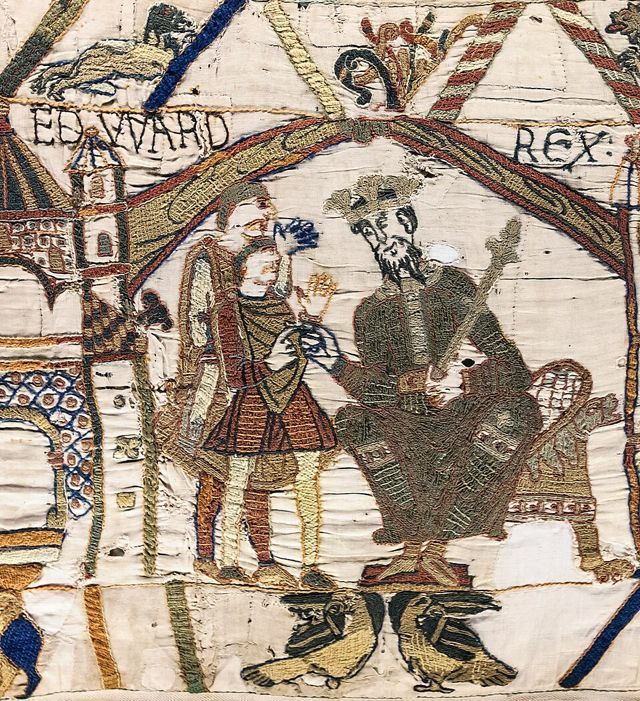
When Canute died in 1035, his son Harold seized the throne. Edward and Alfred made an attempt on the crown. Alfred fell into Harold's hands and was cruelly killed, and Edward fled back to Normandy. When Hardicanute died suddenly in 1042, Edward, about forty, was acclaimed king. Even the Danish settlers welcomed him for his gentleness.
His reign was nearly unbroken peace. He settled the ambitions of Earl Godwin and his sons without bloodshed and went to war only to repel the Welsh and to help Malcolm III of Scotland against Macbeth. He abolished the hated Danegeld (a land tax first raised to pay off Viking raiders) tax and lived on his own estates instead of taxing his people. Later generations, when oppressed, demanded 'the good St. Edward's laws'. He married Godwin's daughter Edith, and the CE reports the tradition that they lived as brother and sister.
He had vowed a pilgrimage to St. Peter's tomb in Rome. Because he could not leave his kingdom, the pope changed the vow into rebuilding St. Peter's abbey at Westminster. It was consecrated only a week before he died on January 5, 1066, and he was buried there. He was the first English king said to cure the 'king's evil (scrofula, a tuberculous swelling of the neck that kings were believed to cure by touch)' by touch. Alexander III canonized (officially declared a saint by the pope) him in 1161. His incorrupt (not decayed after death) body was translated on October 13, 1163, by Thomas Becket in the presence of Henry II.