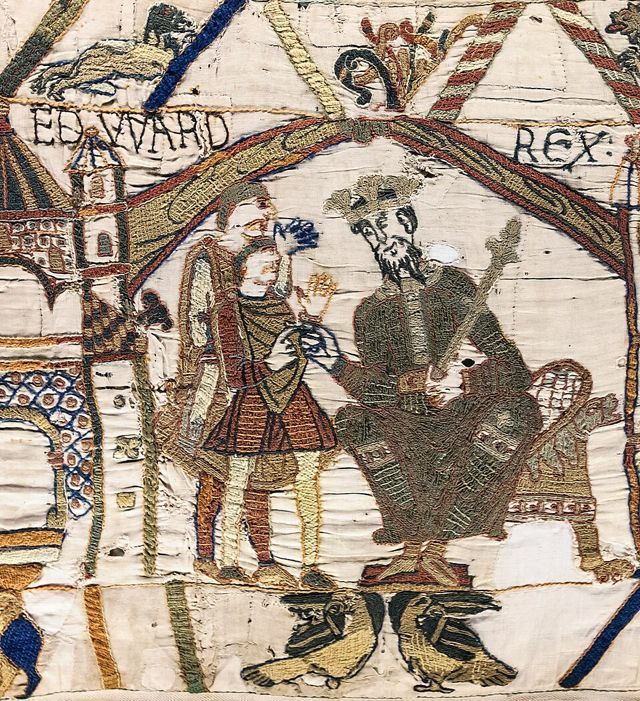
St. Edward the Confessor

St. Edward the Confessor (c. 1003–1066) was one of the last Anglo-Saxon kings of England. He built the first great Westminster Abbey and is buried there.

Read the essentials →
January 5 · King

St. Edward the Confessor

St. Edward the Confessor

St. Edward the Confessor (c. 1003–1066) was one of the last Anglo-Saxon kings of England. He built the first great Westminster Abbey and is buried there.

Traditional feast

January 5
1914 / pre-1969 calendar, per Baring-Gould (1914)

Current feast

January 5 (also listed: October 13)
Secondary source · Wikipedia

Represents

King

Their story

Adapted in modern English from the Catholic Encyclopedia (1913) · original text below

Edward was born in 1003, son of King Ethelred II and Emma of Normandy. When he was barely ten, the Danes took England, and he and his brother Alfred were sent to be raised at their uncle the Duke of Normandy's court. He spent his best years in exile while Canute settled the crown on his own children by Emma. The Catholic Encyclopedia says that early misfortune taught him the folly of ambition. He grew up loving the Mass and the company of monks, though he also enjoyed hunting.

When Canute died in 1035, his son Harold seized the throne. Edward and Alfred made an attempt on the crown. Alfred fell into Harold's hands and was cruelly killed, and Edward fled back to Normandy. When Hardicanute died suddenly in 1042, Edward, about forty, was acclaimed king. Even the Danish settlers welcomed him for his gentleness.

His reign was nearly unbroken peace. He settled the ambitions of Earl Godwin and his sons without bloodshed and went to war only to repel the Welsh and to help Malcolm III of Scotland against Macbeth. He abolished the hated Danegeld (a land tax first raised to pay off Viking raiders) tax and lived on his own estates instead of taxing his people. Later generations, when oppressed, demanded 'the good St. Edward's laws'. He married Godwin's daughter Edith, and the CE reports the tradition that they lived as brother and sister.

He had vowed a pilgrimage to St. Peter's tomb in Rome. Because he could not leave his kingdom, the pope changed the vow into rebuilding St. Peter's abbey at Westminster. It was consecrated only a week before he died on January 5, 1066, and he was buried there. He was the first English king said to cure the 'king's evil (scrofula, a tuberculous swelling of the neck that kings were believed to cure by touch)' by touch. Alexander III canonized (officially declared a saint by the pope) him in 1161. His incorrupt (not decayed after death) body was translated on October 13, 1163, by Thomas Becket in the presence of Henry II.
Why they’re the patron of…

  • English kings and difficult marriages · Tradition
    He was a king of England, and tradition tells of a chaste marriage.

Early life

The book says little or nothing about early life. This is how the account begins.

Thin entry · the 1914 book gives only 0 words. We have not filled the gap with invented detail.

What they represent

How they teach us to live

Drawn from themes in the original account

Learn from the kind of life it was. A king remembered more for his prayer and generosity than his battles.

Keep their day. Remember them on January 5 with a short prayer, and ask for their help.

From the Catholic Encyclopedia

1913 · 560 words

Edward the Confessor, Saint, King of England, b. in 1003; d. January 5, 1066. He was the son of Ethelred II and Emma, daughter of Duke Richard of Normandy, being thus half-brother to King Edmund Ironside, Ethelred's son by his first wife, and to King Hardicanute, Emma's son by her second marriage with Canute. When hardly ten years old he was sent with his brother Alfred into Normandy to be brought up at the court of the duke his uncle, the Danes [Viking raiders from Scandinavia] having gained the mastery in England. Thus he spent the best years of his life in exile, the crown having been settled by Canute, with Emma's consent, upon his own offspring by her. Early misfortune thus taught Edward the folly of ambition, and he grew up in innocence, delighting chiefly in assisting at Mass and the church offices, and in association with religious, whilst not disdaining the pleasures of the chase, or recreations suited to his station. Upon Canute's death in 1035 his illegitimate son, Harold, seized the throne, Hardicanute being then in Denmark, and Edward and his brother Alfred were persuaded to make an attempt to gain the crown, which resulted in the cruel death of Alfred who had fallen into Harold's hands, whilst Edward was obliged to return to Normandy. On Hardicanute's sudden death in 1042, Edward was called by acclamation to the throne at the age of about forty, being welcomed even by the Danish settlers owing to his gentle saintly character. His reign was one of almost unbroken peace, the threatened invasion of Canute's son, Sweyn of Norway, being averted by the opportune attack on him of Sweyn of Denmark; and the internal difficulties occasioned by the ambition of Earl Godwin and his sons being settled without bloodshed by Edward's own gentleness and prudence. He undertook no wars except to repel an inroad of the Welsh, and to assist Malcom III of Scotland against Macbeth, the usurper of his throne. Being devoid of personal ambition, Edward's one aim was the welfare of his people. He remitted the odious "Danegelt", which had needlessly continued to be levied; and though profuse in alms to the poor and for religious purposes, he made his own royal patrimony suffice without imposing taxes. Such was the contentment caused by "the good St. Edward's laws", that their enactment was repeatedly demanded by later generations, when they felt themselves oppressed.

Yielding to the entreaty of his nobles, he accepted as his consort the virtuous Editha, Earl Godwin's daughter. Having, however, made a vow of chastity, he first required her agreement to live with him only as a sister. As he could not leave his kingdom without injury to his people, the making of a pilgrimage to St. Peter's tomb, to which he had bound himself, was commuted by the pope into the rebuilding at Westminster of St. Peter's abbey, the dedication of which took place but a week before his death, and in which he was buried. St. Edward was the first King of England to touch for the "king's evil", many sufferers from which disease were cured by him. He was canonized by Alexander III in 1161. His feast is kept on the 13th of October, his incorrupt body having been solemnly translated on that day in 1163 by St. Thomas of Canterbury in the presence of King Henry II.

Read more

The full original · 0 words

Read Baring-Gould’s full account

Baring-Gould’s sources: S. Edward is commemorated on this day in the Roman Martyrology, by order of Innocent IV. On this day, he is mentioned in the old English Martyrologies as well, but the festival of his Translation, Oct. 13th, is that which is chiefly observed in his honour, and to that day we shall refer our readers for his life.

Feast days

Feast: January 5

Nine days · Free

Pray the novena
with us.

One short email a day for nine days. The day's prayer, a line from St. Edward the Confessor's story, and a nudge to keep going.

Also on January 5
St. Telesphorus, Pope

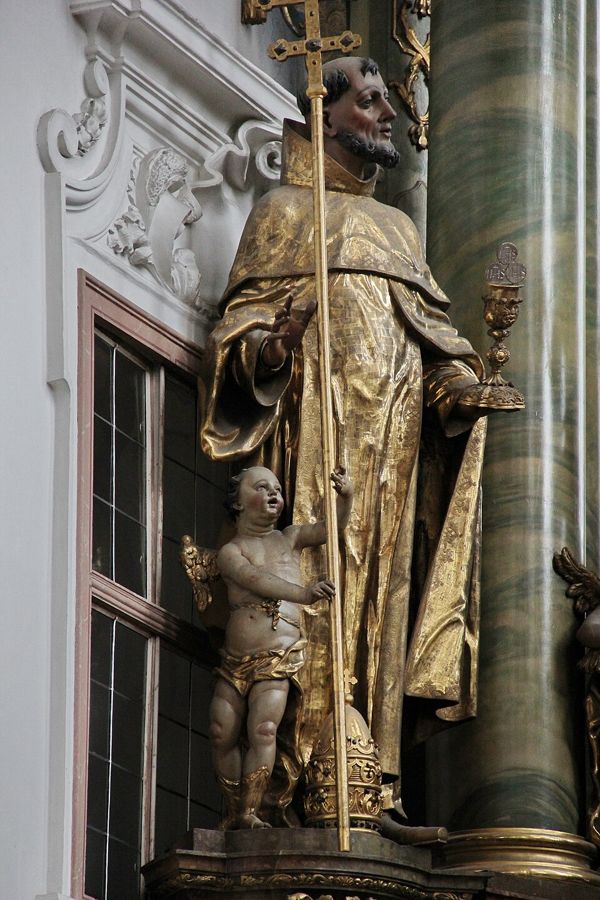
St. Telesphorus

January 5 · Martyr
M

The Martyrs in the…

January 5 · Feast
St. Syncletica

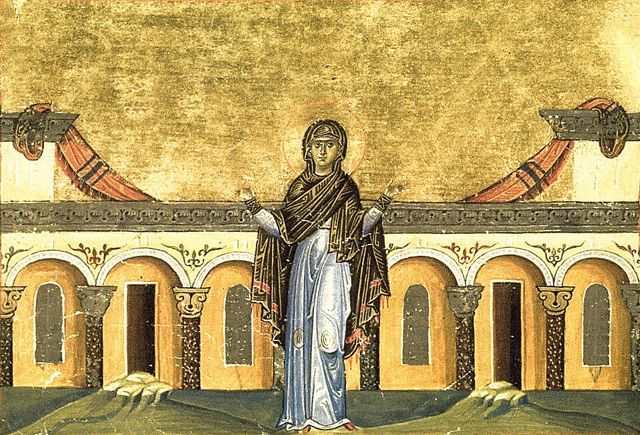
St. Syncletica

January 5 · Virgin
← All 1726 saints in the library
Sources & notes

Feast-day sources

Story sources

Sources

Credits

Image: Bayeux Tapestry scene1 EDWARD REX.jpg · Myrabella · Public domain, via Wikimedia Commons

From Sabine Baring-Gould, The Lives of the Saints, new and revised edition (Edinburgh: John Grant, 1914; first edition 1872). Public domain.

Image: Myrabella, Wikimedia Commons (Public domain)

From “Catholic Encyclopedia (1913)/St. Edward the Confessor,” The Catholic Encyclopedia (New York: Robert Appleton Company, 1907–1914), via Wikisource. Public domain. Matched by name and feast date; text unedited except for our bracketed notes in grey.

From Sabine Baring-Gould, The Lives of the Saints, new and revised edition (Edinburgh: John Grant, 1914; first edition 1872). Public domain in the United States. Reproduced unedited, except for short bracketed notes in grey that we added to explain names and terms (“S.” is the old abbreviation for Saint). Some history and judgments reflect 19th-century scholarship.