Faithfulness to Christ when it cost everything.
March 7
Not verified yet
Martyr
Thin entry · the 1897 book gives only 138 words. We have not filled the gap with invented detail.
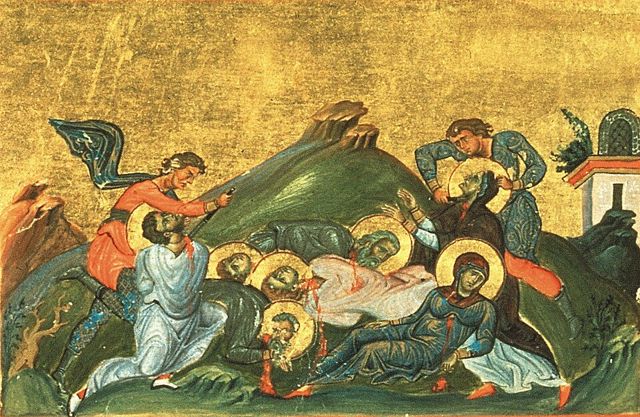
In the persecution in Palestine, carried out under the ferocious governor Firmilian, Adrian and Eubulus, natives of Manganæa, suffered. They came to Cæsarea, and were asked the cause of their coming, as they entered the gates of the city. They confessed that they had come to see and minister to the martyrs of Jesus Christ.
Stay faithful when it costs you. This account is about holding firm under pressure.
Learn from the kind of life it was. Faithfulness to Christ when it cost everything.
In the persecution in Palestine, carried out under the ferocious governor Firmilian, Adrian and Eubulus, natives of Manganæa, suffered. They came to Cæsarea, and were asked the cause of their coming, as they entered the gates of the city. They confessed that they had come to see and minister to the martyrs of Jesus Christ. They were at once apprehended and brought before Firmilian. He ordered them to be scourged and torn with hooks, and then to be devoured by the beasts. After the lapse of two days, on the third of the nones of March, Adrian was cast before a lion, and afterwards slain with the sword. Eubulus was also reserved to the nones of March, and was then cast to the beasts. He was the last to suffer for the faith at Cæsarea in that persecution.
Feast: March 7
One short email a day for nine days. The day's prayer, a line from St. Eubulus's story, and a nudge to keep going.
From Sabine Baring-Gould, The Lives of the Saints, new edition in 16 vols. (London: John C. Nimmo, 1897), digitized text from Project Gutenberg. Public domain.
From Sabine Baring-Gould, The Lives of the Saints, new edition in 16 vols. (London: John C. Nimmo, 1897), digitized text from Project Gutenberg. Public domain in the United States. Reproduced unedited, except for short bracketed notes in grey that we added to explain names and terms (“S.” is the old abbreviation for Saint). Some history and judgments reflect 19th-century scholarship.