St. Paul the Simple

Paul was called the Simple because of his lack of learning and his great humility.

Read the essentials →
March 7 · Hermit

St. Paul the Simple

St. Paul the Simple

Paul was called the Simple because of his lack of learning and his great humility.

Traditional feast

March 7
1914 / pre-1969 calendar, per Baring-Gould (1897)

Current feast

March 7
Secondary source · Wikipedia

Represents

Hermit

Their story

Adapted in modern English from Alban Butler's Lives of the Saints · Baring-Gould original below · little is known

Paul was called the Simple because of his lack of learning and his great humility. He lived a poor countryman's life until sixty, and his wife's unfaithfulness helped turn him from the world.

He travelled eight days into the desert to St Antony, who told him he was too old and shut the door. Paul fasted and prayed outside it until, on the fourth day, Antony opened it and accepted him.

Antony tested his obedience severely. Once, after Paul had worked hard all day making mats while praying, Antony disliked the work and told him to undo it and make it again. Paul did so without a word of complaint and without asking for food.

Early life

The book says little or nothing about early life. This is how the account begins.

Paul the Simple was one of the first disciples of S. Antony. He did not embrace the religious life till he was sixty, and then it was in consequence of the bad conduct of his wife. He had been a labourer in a village of the Thebaid, and was very ignorant.

What they represent

How they teach us to live

Drawn from themes in the original account

Pray a little every day. Prayer runs all through this account.

Make time for silence. Solitude and withdrawal to pray shape this life.

Read more

The full original · 407 words

Read Baring-Gould’s full account

Baring-Gould’s sources: Greek Menæa and Roman Martyrology on the same day. But some Latin Martyrologies on Dec. 18th, others on Jan. 11th. Authorities:—Palladius, in his Hist. Lausiaca; Ruffinus, in his Lives of the Fathers of the Desert; and Sozomen, Hist. Eccles., lib. i., c. 13.

Paul the Simple was one of the first disciples of S. Antony. He did not embrace the religious life till he was sixty, and then it was in consequence of the bad conduct of his wife. He had been a labourer in a village of the Thebaid [the desert region of Upper (southern) Egypt], and was very ignorant. He came to S. Antony, but the patriarch [the title of the bishops of the great ancient sees: Rome, Constantinople, Alexandria, Antioch, Jerusalem] of hermits refused to admit him, thinking him too old to adopt the monastic life. Paul, however, remained three days and nights outside the cell of Antony, and would not leave. Antony then came forth, and found that the man had no food; he, therefore, received him for a while, hoping to disgust him with the life of a hermit by the severity of his discipline. He set Paul to pray outside his door, and told him not to desist till he was released. The simple old labourer obeyed, and Antony observed him, unseen, praying with the blazing sun shining down on his head at noon-day, and the moon looking on him at night, as rigid and immoveable as one of the date palms of the desert. He then brought him into his cave, and gave him some platting to do. When it was accomplished he rebuked Paul for his having doing it badly, and bade him undo his work again. The postulant did as ordered without a murmur. Then Antony brought bread, and set the table in order for supper, and called the hungry Paul to it; then he said, "Before we eat, let us recite twelve psalms and twelve prayers," and he did so; and when the psalms and prayers were done, Antony said, "We have looked on the bread, that will suffice for supper; now let us retire to rest." Yet Paul murmured not; so Antony saw that he was qualified to be a monk.

Once, as Antony and some of his guests were discoursing on spiritual matters, Paul asked very simply, "Were the prophets before Jesus Christ, or Jesus Christ before the prophets?" Then Antony reddened, and bade him keep in the background, and hold his tongue. Now Paul at once obeyed, and remained for some time silent, and out of sight, and they told Antony of it. Then he said, "Oh, my brethren! learn from this man what our obedience towards God ought to be. If I say anything, he does it instantly and cheerfully, and we—do we thus behave towards our God?"

Feast days

Feast: March 7

Nine days · Free

Pray the novena
with us.

One short email a day for nine days. The day's prayer, a line from St. Paul the Simple's story, and a nudge to keep going.

Also on March 7
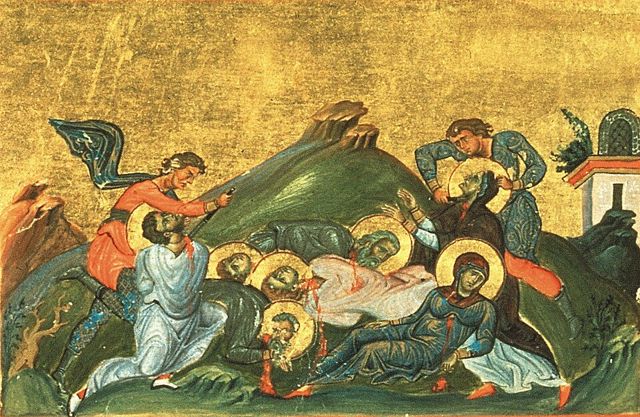
Sts. Perpetua, Felicitas and Companions

Sts. Perpetua

March 7 · Martyrs
E

St. Eubulus

March 7 · Martyr
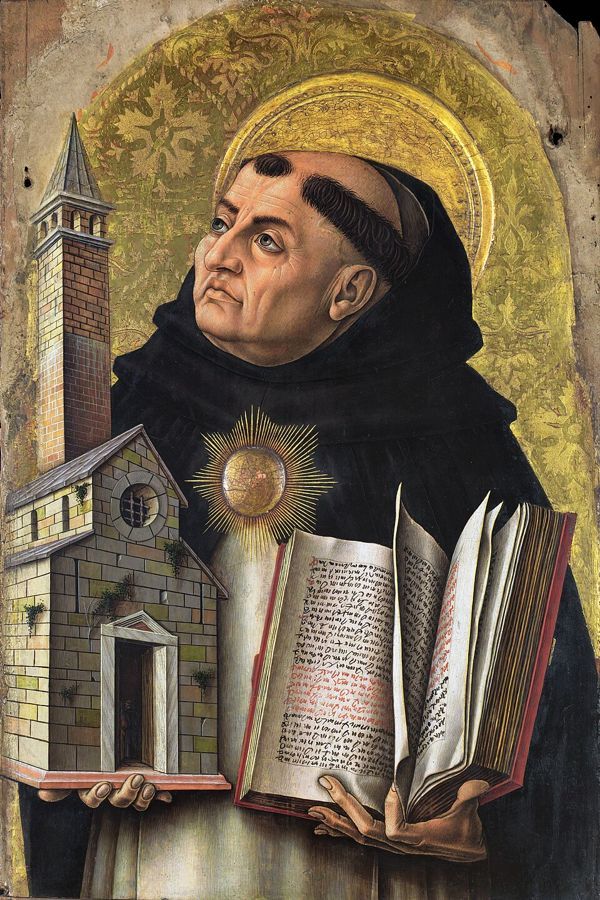
St. Thomas Aquinas

St. Thomas Aquinas

March 7 · Deacon, Priest
← All 1726 saints in the library
Sources & notes

Feast-day sources

Story sources

Sources

Credits

Image: Paul the Simple of Egypt (Menologion of Basil II).jpg · Authors of Menologion of Basil II (circa 985 AC, Constantinople), Byzantine manuscript illuminators[1]: Pantoleon with G · Public domain, via Wikimedia Commons

From Sabine Baring-Gould, The Lives of the Saints, new edition in 16 vols. (London: John C. Nimmo, 1897), digitized text from Project Gutenberg. Public domain.

Image: Authors of Menologion of Basil II (circa 985 AC, Constantinople), Byzantine manuscript illuminators[1]: Pantoleon with G, Wikimedia Commons (Public domain)

From Sabine Baring-Gould, The Lives of the Saints, new edition in 16 vols. (London: John C. Nimmo, 1897), digitized text from Project Gutenberg. Public domain in the United States. Reproduced unedited, except for short bracketed notes in grey that we added to explain names and terms (“S.” is the old abbreviation for Saint). Some history and judgments reflect 19th-century scholarship.