Faithfulness to Christ when it cost everything.
Read the essentials →Faithfulness to Christ when it cost everything.
April 30
April 30
Bishop
Martyr
Now it fell out that the governor had a daughter named Eustella, who having heard the Word, believed with all her heart And when her father heard it, he drave her from April jo.] 51 Marian^ James, & Comp. 371 his house, and she lodged near the hovel of the man of God.
Share your faith, in words and by example. Preaching and conversion are central here.
Learn from the kind of life it was. Faithfulness to Christ when it cost everything.
He had come from Rome with S. Denys, and now he sought to bring the people of the beautiful city to the knowledge of the true God. We follow the Saintes tradition, though we cannot place unqualified reliance in it The people of Saintes repulsed the apostle, and would not suffer him to dwell within their walls. Then he built himself a hut outside the city, and preached to such as passed by. Now it fell out that the governor had a daughter named Eustella, who having heard the Word, believed with all her heart And when her father heard it, he drave her from April jo.] 51 Marian^ James, & Comp. 371 his house, and she lodged near the hovel of the man of God. Then the governor full of wrath went forth with a company of soldiers, and despatched Eutropius, striking him on the head with an axe. And when he was dead Eustella reverently buried him in the ground under the hovel where he had lived. But in later ages S. Palladius, Bishop of Saintes, built a noble church over his tomb. Such is the tradition. The false Acts throw back the whole story to the 1 st century, and tell how Eutropius was the son of Xerxes, king of Babylon, and how as a boy he was sent to Jerusalem to be king Herod's page. He was present when Christ fed the five thousand with the five loaves, and believed. When Christ rode into Jerusalem, he went before strewing flowers and leaves. On the Feast of Pentecost he received the Holy Ghost along with the apostles, and then went with S. Simon and S. Thaddaeus to preach the Gospel at Babylon; there he converted his father and all his court, and placed them under the care of bishop Abdias. He witnessed and wrote the acts of the martyrdom of SS. Simon and Thaddaeus, and then came to Rome and was sent into Gaul [roughly modern France and Belgium] by S. Clement, After which follows the story given above. The Bollandists [Jesuit scholars who since the 1600s have critically studied the lives of the saints] regard these Acts as so utterly worthless that they have not even printed them.
Feast: April 30
One short email a day for nine days. The day's prayer, a line from St. Eutropius's story, and a nudge to keep going.
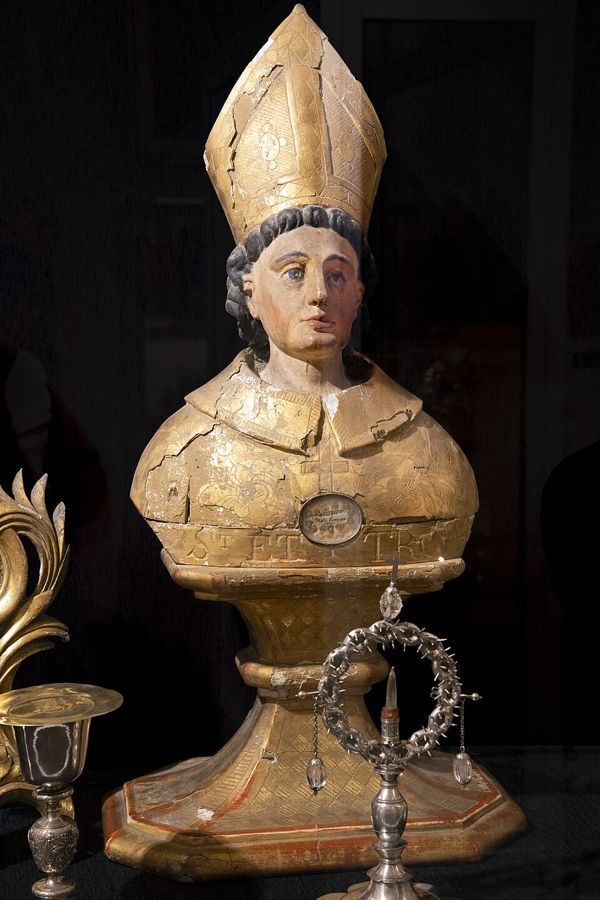
Image: 81 - Rabastens - Buste reliquaire de st Eutrope - Bois - Musée du Pays rabastinois PalissyPM81002046.jpg · Didier Descouens · Public domain, via Wikimedia Commons
From Sabine Baring-Gould, The Lives of the Saints, new edition in 16 vols. (London: John C. Nimmo, 1897–98); text from the Internet Archive scan (OCR, lightly cleaned; errors possible). Public domain.
Image: Didier Descouens, Wikimedia Commons (Public domain)
From Sabine Baring-Gould, The Lives of the Saints, new edition in 16 vols. (London: John C. Nimmo, 1897–98); text from the Internet Archive scan (OCR, lightly cleaned; errors possible). Public domain in the United States. Reproduced unedited, except for short bracketed notes in grey that we added to explain names and terms (“S.” is the old abbreviation for Saint). Some history and judgments reflect 19th-century scholarship.
