Faithfulness to Christ when it cost everything.
May 1
Not verified yet
Martyr
Thin entry · the 1897 book gives only 239 words. We have not filled the gap with invented detail.
…pursued them with several of his men, and overtook them about mid-day beside a fountain where they were reposing. He slew them all, and robbed them of their purses. The bodies were found by Pepin of Herstal, who was hunting in the wood, and he gave them decent burial.
Learn from the kind of life it was. Faithfulness to Christ when it cost everything.
Keep their day. Remember them on May 1 with a short prayer, and ask for their help.
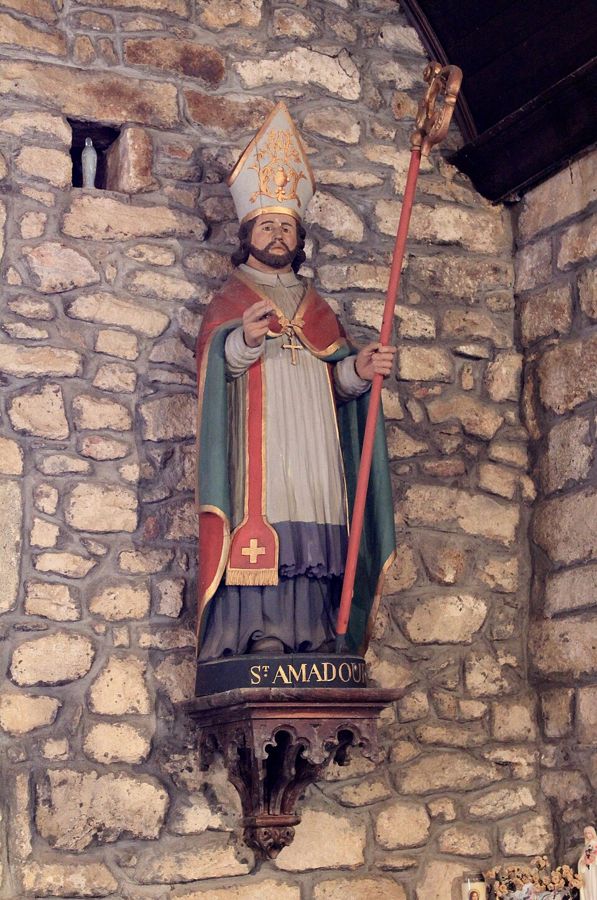
…pursued them with several of his men, and overtook them about mid-day beside a fountain where they were reposing. He slew them all, and robbed them of their purses. The bodies were found by Pepin of Herstal, who was hunting in the wood, and he gave them decent burial. A village rose about the tomb of S. Evermar, which was called Rothem, and is now called Russon. The relics [the bodily remains of a saint, or objects they used, kept with honor] of S. Evermar were placed in a chapel on the scene of the murder, in 1073. It has been lately restored. The chapel stands in a meadow surrounded by beech trees. The high altar is furnished with a painting representing the martyrdom,. and the two side altars are adorned with images, one of S. Mary, the other of S. Evermar. A very singular procession and spectacle is enacted here on the 1st of May every year. The procession is headed by two “ greenmen,” to represent savages, clothed in leaves, and armed with clubs. They are followed by seven men dressed as pilgrims, and behind them ride Hako and his robbers in suitable costume. On reaching the chapel high mass is sung, after which the martyrdom is enacted in the meadow near the fountain. One of the pilgrims runs away, and Hako brings him down with a shot from his pistol. Finally all the pilgrims are killed, but they soon revive, and wind up the evening in the village tavern.
Feast: May 1
One short email a day for nine days. The day's prayer, a line from St. Evermar's story, and a nudge to keep going.
From Sabine Baring-Gould, The Lives of the Saints, new edition in 16 vols. (London: John C. Nimmo, 1897–98); text from the Internet Archive scan (OCR, lightly cleaned; errors possible). Public domain.
From Sabine Baring-Gould, The Lives of the Saints, new edition in 16 vols. (London: John C. Nimmo, 1897–98); text from the Internet Archive scan (OCR, lightly cleaned; errors possible). Public domain in the United States. Reproduced unedited, except for short bracketed notes in grey that we added to explain names and terms (“S.” is the old abbreviation for Saint). Some history and judgments reflect 19th-century scholarship.