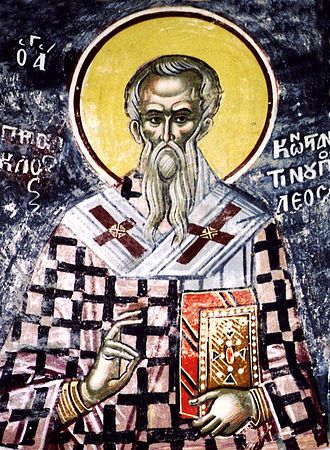
Baring-Gould’s sources: Roman Martyrology. Abyssinian Kalendar on June 27 and Nor. 29. uthorities: — A notice of S. Frumentius in the Abyssinian Synaxarium, another in the Chronicle of Axum; Nicephoros, ix. 18; Ruffinus, x. 9; Theodore t, i. 23. Ruffinus is specially trustworthy, as he met with iEdesius, the brother of Frumentius, at Antioch, and obtained the particulars from him.] The first rudiments of Christianity, it is said, were planted among the Hamyarites of Arabia Felix by the apostle Bartholomew. This is possible, but very doubtful. By some means or other Christianity reached Southern Arabia, but its existence there was unsuspected till a circumstance revealed its presence in the reign of Constantine. The details of the event are given by the historian Nicephorus. A Tyrian philosopher, named Meropius, emulating the travels of Plato and the ancient sages, and instigated by the example of Metrodorus, who had recently visited the Brahmins of India, determined to travel among the Hamyarites of Arabia Felix. He was accompanied by two young men, who were both his kinsmen and his disciples in philosophy. On their return in an Egyptian ship, they were compelled to put into one of the Hamyarite ports for a fresh supply of provisions. It happened that at this time the peninsula was in a state of warfare; and on landing they were treated by the natives as enemies, and either slain or made slaves. Amongst those who perished were the philosopher and most of his attendants. Of his two companions, who were carried Frumentius.
…to the king, one, named ^Edesius, was made the royal cupbearer; to the other, whose name was Frumentius, and in whom he perceived more than ordinary abilities and learning, the king entrusted the care of his books and treasures. Both having served him faithfully for some years, on the death of the monarch they were rewarded by his queen with their liberty, and received permission to go wherever they wished. Availing themselves of her liberality, they were preparing to return to their native city of Tyre, when the queen earnestly requested them to stay, and undertake the guardianship of her infant son, and of the kingdom, until he should arrive at a proper age to assume the administration. They obeyed, and the first use Frumentius made of his power was to cause strict search to be made for the few Christians who might live under his jurisdiction. Those whom he found he treated with great kindness; he built them a place of worship, and soon by his favour and encouragement increased the number of converts to the Christian faith. As soon as the young king was capable of ascending the throne, Frumentius and iEdesius returned to Tyre, when the latter was raised to the dignity of the priesthood. From Phoenicia Frumentius repaired to Alexandria, where he related his adventures to S. Athanasius [bishop of Alexandria (d. 373), great defender of the Nicene faith], then lately elevated to the head of that church, representing to him that many people in Hamyar were well inclined towards the true faith, and begging him immediately to furnish him with a supply of priests, and a bishop.
The primate [the leading bishop of a country], having consulted the bishops who were then in Alexandria, judged that no one could be better fitted to govern the Christian Church in Arabia than the man who had first introduced it there, and Frumentius returned as bishop to Hamyar, where he built many churches, and greatly conduced by the example of his own piety to the propagation of the Christian faith.
It is possible that he extended his labours as far as Abyssinia, and converted people at Axum, for he is regarded as the apostle of Abyssinia. But much reliance cannot be placed on the Axum chronicle, and less on the Abyssinian Senkessar, as they give evident tokens of knowing nothing about Frumentius and iEdesius except what was derived from Greek sources. They give the same facts that are related by Nicephoros, but nothing more.1 Of the doings of Frumentius when bishop they are profoundly ignorant. Probably Frumentius had nothing whatever to do with Abyssinia, but was apostle only of Hamyar, or Arabia Felix.