J
Sts. Julius and Aaron
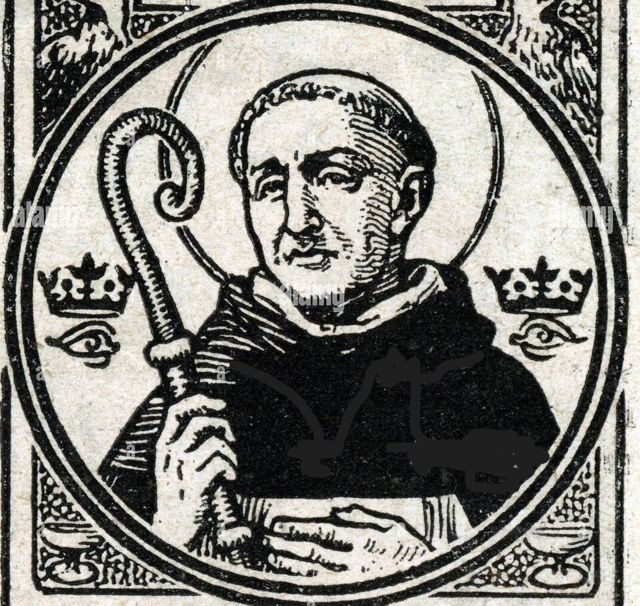
St. Theodoric
C
A shepherd who stayed with his people through hard times.
July 1
Not verified yet
Bishop
Gregory, on hearing that his son was in the monastery, said: “ He is my first-born, and I had hoped to see him well married; but if he desires to live to God alone and serve Him, then God's will, not mine, be done.” So the boy was received as a novice, and was tonsured. Gall had the most lovely voice for singing, and when his father died, and he inherited his large possessions, King Thierri insisted on his coming to court, where he made the lad sing to him, to the great delight of the king and the queen, both of whom loved him as their own son. One night, whilst the king was at Cologne, the young man set fire to a temple in which pagan rites were perpetrated. 1 The people chased him, armed with swords and spears, and he took refuge from them in the palace.
Build up the community you belong to. This life was lived with and for a community.
Learn from the kind of life it was. A shepherd who stayed with his people through hard times.
Gregory, on hearing that his son was in the monastery, said: “ He is my first-born, and I had hoped to see him well married; but if he desires to live to God alone and serve Him, then God's will, not mine, be done.” So the boy was received as a novice, and was tonsured. But after a while, the bishop, S. Quintinian, coming to the abbey, was taken with his engaging manners and pleasant exterior, and withdrew him from the monastery, that Gall might be his disciple, and that he might train him for the priesthood.
Gall had the most lovely voice for singing, and when his father died, and he inherited his large possessions, King Thierri insisted on his coming to court, where he made the lad sing to him, to the great delight of the king and the queen, both of whom loved him as their own son. At that time the king brought many of the clergy from Clermont and placed them in the church of Treves [Trier in Germany], but he would not give any preferment to Gall, as he was too much Jolj *.] Gall.
attached to him to bear to part with him. One night, whilst the king was at Cologne, the young man set fire to a temple in which pagan rites were perpetrated. 1 The people chased him, armed with swords and spears, and he took refuge from them in the palace. In after years he regarded his having run away as an act of cowardice, and regretted that he had not stayed near the burning temple to be killed.
On the occasion of his re-visiting Clermont in 527, the bishop, Quintinian, died, and the inhabitants assembled in the house of Impetratus, a priest, the uncle of Gall, to consult on the election of a successor. Impetratus was resolved that his nephew, Gall, then in deacon's orders, should have the bishopric; but he did not divulge his plan, but skilfully divided the meeting, so that it broke up ( without having come to any decision. Then hastening to his nephew he said: “My son, there must be no delay; fly to the king, and tell him what has taken place here, and if the Lord inspires him with the will to give you the bishopric, we will thank Him.” But Gall could not keep his counsel; he was lying in bed when a priest came in to speak to him, and began, as might be expected, to talk of the rumours afloat, touching who was to be the new bishop. “ What is the use of the people troubling their heads about it?” asked Gall, from his bed. “They are taking trouble for nothing. I am going to have the bishopric, and now I am off post-haste to the king; and mind, when you hear that I am on my return, bring forth the late bishop's horse to meet me, that I may ride into Clermont on its back.”
The priest was so indignant at the unblushing audacity of Gall, that he rebuked him sharply, and struck him, so 1 **Ibi, et... membra, secundum quod unumquemque dolor attigisset, sculpcbat In ligoa.”
that he hurt his side in rolling over against a projecting portion of the bed.* Gall reached the king, by making great exertions, before the envoys of the clergy of Clermont had arrived, with the name of the person chosen by them to fill the vacant see. The envoys found the bishopric already given away to Gall The young man was accordingly ordained priest, and, by order of the king, a great dinner was given to the citizens at the cost of the royal treasury, to put them all in good humour, and make them forget this somewhat high-handed interference with their liberties. S. Gall [Irish companion of Columbanus, founder of the Swiss monastery that bears his name] afterwards boasted, at a time when simony was making inroads into the Church of France, that his bishopric had only cost him a trifle, 8 which he had given to the cook who catered to the guests at this banquet The king then sent the bishop designate in company with two bishops who were to consecrate him, on his way to Clermont The priest, Viventius, who had rebuked him, came, much crest-fallen, to meet him, leading the late. prelate's horse. The bishop designate took a bath at a convenient station outside Clermont, and during the bath rebuked the poor priest for having hurt his side against the bed-post, and showed him the bruised spot But Viventius escaped with nothing more serious than this lecture delivered from the bath.
After this Gall dressed, and mounting the horse, entered Clermont amidst bells ringing and the song of clergy. It can hardly be considered creditable that the saint should have thus secured the bishopric, and it is fortunate that 1 “ Sanctus Gallus... Irruente in se Spiritu Sancto (It) ait: Quid hi mussltant, quid cursitant, quid tractant? Vacuum est opus eorum; ego ero Episcopus. Tu rero cum me redire present ia Regis audieris, accipe equum decessoris mei stratum, et egrediens, te obviam exhibe mihi... Cumque bee loqueretur, supet lectulum decumbebat. Tunc iratus contra cum clericus, cum multa exprobraret elisum super spondam iecti latus suum lesit, turb idusque discessit.” July i.] 6 *. Eparchius.
an episcopate so begun should have been good in the sequel. That there was anything scandalous in the manner in which it was acquired seems hardly to have struck the nephew of S. Gall, who wrote his life. But the times were evil; and the appointment of bishops disorderly. About the year 546 a dreadful disease 1 ravaged the south of Gaul [roughly modern France and Belgium], especially the province of Arles, and great numbers died of it S. Gall fearing for his people, instituted MidLent rogation processions in Clermont to the church of S. Julian the martyr. The disorder did not enter the diocese of Clermont, and this was attributed by the people to their processions, and the prayers of their holy bishop. In the twenty-seventh year of his episcopate, at the age of sixty-five, Gall was attacked by fever. Feeling himself death-struck, he convoked all the people, and having said mass in his cathedral church, communicated them. Three days after, on a Sunday, as the day began to whiten, he heard the distant chanting in the church, and asked what was being sung. He was told that it was the benediction. Then he lifted up his voice and sang the 50th Psalm (a.v. 51), “Miserere mei,” and the benediction, the alleluia and the little chapter, thus closing the office of matins. Then he said, “Now farewell, my brothers 1 ” and stretching forth his limbs expired.
Feast: July 1
One short email a day for nine days. The day's prayer, a line from St. Gall of Clermont's story, and a nudge to keep going.
From Sabine Baring-Gould, The Lives of the Saints, new edition in 16 vols. (London: John C. Nimmo, 1897–98); text from the Internet Archive scan (OCR, lightly cleaned; errors possible). Public domain.
From Sabine Baring-Gould, The Lives of the Saints, new edition in 16 vols. (London: John C. Nimmo, 1897–98); text from the Internet Archive scan (OCR, lightly cleaned; errors possible). Public domain in the United States. Reproduced unedited, except for short bracketed notes in grey that we added to explain names and terms (“S.” is the old abbreviation for Saint). Some history and judgments reflect 19th-century scholarship.