St. Grata

A whole life given to God with an undivided heart.

Read the essentials →
September 4 · Virgin

St. Grata

St. Grata

A whole life given to God with an undivided heart.

Traditional feast

September 4
1914 / pre-1969 calendar, per Baring-Gould (1897)

Current feast

Not verified yet

Represents

Virgin

Their story

Adapted in modern English from Baring-Gould (1897–98) · original text below

(The surviving account on this page begins partway through the story.)

In the legend, a German king married Grata of Bergamo to his son, who died young, and she came home. When Alexander of the Theban legion was martyred at Bergamo, she buried him on her grandfather Crotacius's land, built a church over him, and fed the workers with a roast pig, which the steward then found alive in its sty.

Duke Lupus and Duchess Aleydis built churches in Bergamo, and Grata founded a hospital. Baring-Gould says she cannot have lived as early as claimed: Aleydis and Lupus (Wolf) are Germanic names, probably Lombard, and there were no local dukes in 4th-century Italy. They probably lived after the Lombard invasion of 568–570.

Grata built a church over Alexander's grave at Plotacius, where her grandfather was buried. Aleydis built the churches of St. Mary and St. Michael and died in holiness, and Lupus, buried in his church of the Saviour, became a local saint after miracles at his tomb. Grata died loved by all. The story comes from the writer Pinamonte, and Crotacius is dated to 270.

Early life

The book says little or nothing about early life. This is how the account begins.

Now there was in Germany a mighty king, and he, hearing of the beauty and virtue of Grata, sent to Bergamo for the damsel to be married to his son. Her married life was brief, the prince died early, and Grata, having learnt the vanity of earthly pleasures, returned to her native place. At this time there were few Christians at Bergamo, and Alexander, standard-bearer of the Theban legion, was there martyred at this time,1 in the place called Plotacius, where 1 See S. Alexander, Aug. 26.

What they represent

How they teach us to live

Drawn from themes in the original account

Learn from the kind of life it was. A whole life given to God with an undivided heart.

Keep their day. Remember them on September 4 with a short prayer, and ask for their help.

Read more

The full original · 378 words

Read Baring-Gould’s full account

Baring-Gould’s sources: Not in any ancient Martyrologies. Venerated at Bergamo from the beginning of the nth cent. Authority Her Life by F. Pinamonte, O.P., prior of the Dominican convent at Bergamo in 1266, from the mouths of the people, as her acts were lost. Consequently they are purely legendary, and of no historical value. An office was granted to the Bergamese in 1706 in her honour, and nine lections appointed to be read from this life by Pinamonte, and the 4th Sept, was appointed by the Sacred Congregation of Rites to be her festival.] In the days of S. Marcellus, pope and martyr (a.d. 308310) says the biographer of our saint, there lived in Bergamo a man of royal race named Lupus, who was constituted Duke of Bergamo. He was married to a noble wife, Aleydis or Adelheid by name, and they had a daughter whom they called Grata.

Now there was in Germany a mighty king, and he, hearing of the beauty and virtue of Grata, sent to Bergamo for the damsel to be married to his son. Her married life was brief, the prince died early, and Grata, having learnt the vanity of earthly pleasures, returned to her native place. At this time there were few Christians at Bergamo, and Alexander, standard-bearer of the Theban legion, was there martyred at this time,1 in the place called Plotacius, where 1 See S. Alexander, Aug. 26.

S. Grata. Crotacius, grandfather of Grata, had erected a villa and was buried. Grata buried the body of the martyr, and built over it a church; and then ordered her steward to kill a pig and roast the flesh, and regale those who had laboured at burying the martyr. The steward accordingly slaughtered the pig, and the mourning Christians consoled themselves on a banquet of pork; but what was the amazement of the steward when he returned to the stye, to find the pig, or one uncommonly like him, grunting there as usual, and clamorous for his barley meal.

Duke Lupus and the Duchess Aleydis now erected in Bergamo the church of the Saviour, and on the death of the duke he was buried in it, and becoming famous for miracles wrought at his tomb, is regarded as one of the local saints. His widow Aleydis built two more churches, those of S. Mary and S. Michael, and died in the odour of sanctity. S. Grata erected a hospital, and died beloved and admired by all.

Such is the story. It is impossible to admit that S. Grata was, as is said, a contemporary with S. Marcellus. Crotacius, said to be her grandfather, lived in a.d. 270. But Aleydis or Adelheid is a Teutonic name, and Lupus is probably the Latin form of Wolf. Both were apparently Lombards [a Germanic people who ruled much of Italy from 568 to 774], perhaps Wolf was the first Duke of Bergamo; there certainly were no dukes with local titles in the 4th century in Italy. The fact of Lupus, Aleydis, and Grata being regarded as founders of several of the churches in Bergamo, point to their having lived long subsequent to the date attributed to them by Pinamonte, probably after the Lombard invasion in a.d. 568-570.
Feast days

Feast: September 4

Nine days · Free

Pray the novena
with us.

One short email a day for nine days. The day's prayer, a line from St. Grata's story, and a nudge to keep going.

Also on September 4
St. Hermione

St. Hermione

September 4 · Feast
M

St. Marcellus

September 4 · Martyr
M

St. Monessa

September 4 · Virgin
← All 1726 saints in the library
Sources & notes

Feast-day sources

Story sources

Sources

Credits

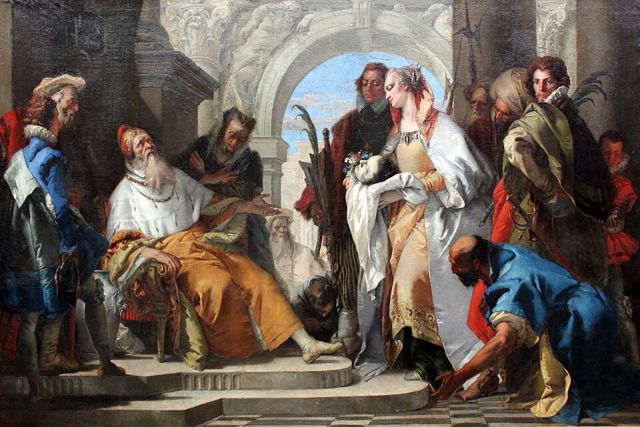
Image: 1750 Tiepolo Die Heiligen der Familie Crotta anagoria.JPG · Giovanni Battista Tiepolo · Public domain, via Wikimedia Commons

From Sabine Baring-Gould, The Lives of the Saints, new edition in 16 vols. (London: John C. Nimmo, 1897–98); text from the Internet Archive scan (OCR, lightly cleaned; errors possible). Public domain.

Image: Giovanni Battista Tiepolo, Wikimedia Commons (Public domain)

From Sabine Baring-Gould, The Lives of the Saints, new edition in 16 vols. (London: John C. Nimmo, 1897–98); text from the Internet Archive scan (OCR, lightly cleaned; errors possible). Public domain in the United States. Reproduced unedited, except for short bracketed notes in grey that we added to explain names and terms (“S.” is the old abbreviation for Saint). Some history and judgments reflect 19th-century scholarship.