St. Hugh of Lincoln

A shepherd who stayed with his people through hard times.

Read the essentials →
November 17 · Bishop

St. Hugh of Lincoln

St. Hugh of Lincoln

A shepherd who stayed with his people through hard times.

Traditional feast

November 17
1914 / pre-1969 calendar, per Baring-Gould (1897)

Current feast

November 17 (also listed: November 16)
Secondary source · Wikipedia

Represents

Bishop

Their story

Adapted in modern English from the Catholic Encyclopedia (1913) · original text below

Hugh was born around 1135 at the castle of Avalon in Burgundy, the son of William, Lord of Avalon. After his wife's death William entered the Augustinian (religious who follow the Rule of St. Augustine) monastery of Villard-Benoît near Grenoble and took his son with him. Hugh became a canon there and was ordained deacon at nineteen. Longing for a more fully contemplative life, he visited the Grande Chartreuse. His superior, alarmed at the thought of losing him, made him vow to give up the idea. Hugh later concluded that a vow made without proper thought and under strong emotion did not bind him, and he entered the Grande Chartreuse as a novice. After ten years as a Carthusian he was made procurator.

Henry II had founded Witham in Somerset, the first Carthusian house in England, partly to make up for failing to go on the crusade imposed on him as penance for the murder of St Thomas of Canterbury. The first two priors had given way under terrible hardships, and at the king's request Hugh was sent as prior. He built the charterhouse, insisting that the king fully compensate the tenants evicted to make room for it, and he fearlessly rebuked Henry for keeping bishoprics vacant to take their revenues.

Later the canons of Lincoln, who had been without a bishop for about sixteen years, chose the king's nominee: Hugh. He refused because the election had not been free, and he accepted only after a second, canonical election and his superior's consent. As bishop he fought the unjust forest laws, excommunicated the king's chief forester, and refused to install a courtier as a canon. He tended lepers with his own hands, chose his clergy with care, and once a year retreated to Witham to pray. He protected the Jews of Lincoln during the violence against them at the start of Richard I's reign. He refused Richard money and knights for foreign wars, then went to Normandy, won the king's forgiveness and rebuked him to his face. Richard said that if all prelates were like Hugh, no king in Christendom would dare raise his head before a bishop.

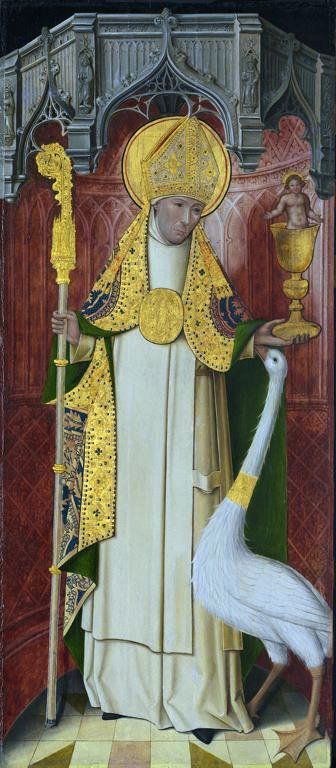
Hugh rebuilt Lincoln Cathedral after the earthquake of 1185, beginning with its choir. On his way back from the Grande Chartreuse in 1200 he caught a fever, and he died at the Old Temple in London on 16 November 1200. King John helped carry his coffin at Lincoln. He was canonized (officially declared a saint by the pope) in 1220. His emblem is a white swan, after the story of the swan of Stowe that became his friend and guarded him as he slept.

Struggles & surrender

What they wrestled with, and how they gave it to God

  • A vow pressed on him ·
    When Hugh wanted to become a Carthusian, his superior made him vow to give up the idea. Hugh obeyed at first and later concluded that a vow made without proper thought and under strong emotion did not bind him.

Early life

The book says little or nothing about early life. This is how the account begins.

King Henry II. had founded the first Carthusian house in England at Witham, in Somersetshire. It had not thriven under its two first priors, and he sent Reginald, bishop of Bath to the Grande Chartreuse to summon thence one thoroughly imbued with the spirit of the order, under whom the colony at Witham might be nursed into a thriving community. Hugh was chosen.

What they represent

How they teach us to live

Drawn from themes in the original account

Build up the community you belong to. This life was lived with and for a community.

Be a peacemaker. Making peace is part of this story.

Learn from the kind of life it was. A shepherd who stayed with his people through hard times.

From the Catholic Encyclopedia

1913 · 1758 words

Born about the year 1135 at the castle of Avalon, near Pontcharra, in Burgundy; died at London, 16 Nov., 1200. His father, William, Lord of Avalon, was sprung from one of the noblest of Burgundian houses; of his mother, Anna, very little is known. After his wife's death, William retired from the world to the Augustinian [religious following the Rule of St. Augustine] monastery of Villard-Benoît, near Grenoble, and took his son Hugh, with him. Hugh became a religious and was ordained deacon at the age of nineteen. In about the year 1159 he was sent as a prior to the cell, or dependent priory, of St-Maximin, not far from his ancestral home of Avalon, where his elder brother, William had succeeded his father. At St-Maximin, Hugh laboured assiduously in preaching and whatever parochial duties might be discharged by a deacon. Becoming more and more desirous to give himself to the complete contemplative life, he visited in company with the prior of Villard-Benoît the solitude of the Grande Chartreuse. Dom Basil was then head of the Chartreuse, and to him Hugh confided his desire of submitting to the Carthusian [a strict order of hermit-monks founded by St. Bruno in 1084] rule. To test his vocation the prior refused him any encouragement, and his own superior, alarmed at the idea of losing the flower of his community, took him back quickly to Villard-Benoît, and made him vow to give up his intention of joining the Carthusians. He submitted and made the promise, acting, as his historian assures us, "in good faith and purity of intention, placing his confidence in God, and trusting that God would bring about his deliverance"; his call to a higher life was yet doubtful, his obedience to one who was still his superior was a certain duty, and not a "sinful act", as thinks his modern Protestant biographer. Realizing that his vow, made without proper deliberation and under strongest emotion, was not binding, he returned to the Grande Chartreuse as a novice in 1153. Soon after his profession the prior entrusted him with the care of a very old and infirm monk from whom he received the instruction necessary to prepare him for the priesthood. He was probably ordained at thirty, the age then required by canon law. When he had been ten years a Carthusian he was entrusted with the important and difficult office of procurator, which he retained till the year 1180, leaving the Grande Chartreuse then to become prior of Witham in England, the first Carthusian house in that country. It was situated in Somerset and had been founded by Henry II in compensation for his having failed to go on the crusade imposed as a penance for the murder of St. Thomas of Canterbury. The first two priors had succumbed to the terrible hardships encountered at the new foundation, where the monks had not even a roof to cover them, and it was by the special request of the English king that St. Hugh, whose fame had reached him through one of the nobles of Maurienne, was made prior. His first attention was given to the building of the Charterhouse. He prepared his plans and submitted them for royal approbation, exacting full compensation from the king for any tenants on the royal estate who would have to be evicted to make room for the building. Long delay was occasioned by the king's parsimony, but the Charterhouse, an exact copy of the Grande Chartreuse, was at last finished. Henry placed the greatest confidence in St. Hugh, frequently visiting Witham, which was on the borders of Selwood forest, one of the monarch's favourite hunting-places. The saint was fearless in reproving Henry's faults, especially his violation of the rights of the Church. His keeping of sees vacant in order to appropriate their revenues, and the royal interference in elections to ecclesiastical posts evoked the sternest reproach from St. Hugh.

In May, 1180, Henry summoned a council of bishops and barons at Eynsham Abbey to deliberate on the affairs of the state in general. The filling of vacant bishoprics was determined on, and, among others, the canons of Lincoln, who had been without a bishop for about sixteen years, were ordered to hold an election. After some discussion, their choice fell on the king's nominee, Hugh, prior of Witham. He refused the bishopric because the election had not been free. A second election was held with due observance of canon law - this time at Lincoln, and not in the king's private chapel - and Hugh, though chosen unanimously, still refused the bishopric till the prior of the Grande Chartreuse, his superior, had given his consent. This being obtained by a special embassy in England, he was consecrated in St. Catherine's chapel, Westminster Abbey, on 21 September, 1181, by Archbishop Baldwin of Canterbury. He was enthroned in Lincoln cathedral on 29 Sept. The new bishop at once set to the work of reform. He attacked the iniquitous forest laws, and excommunicated the king's chief forester. In addition to this, and almost at the same time, he refused to install a courtier whom Henry had recommended as a prebendary of Lincoln. The king summoned him to appear at Woodstock, where the saint softened the enraged monarch by his ready wit, making him approve of his forester's excommunication and the refusal of his prebend's stall. He soon became conspicuous for his unbounded charity to the poor, and it was long remembered how he used to tend with his own hands people afflicted with leprosy then so common in England. He was a model episcopate. He rarely left the diocese, became personally acquainted with the priests, held regular canonical visitations, and was most careful to chose worthy men for the care of souls; his canons were to reside in the diocese, and if not present at Lincoln were to appoint vicars to take their place at the Divine Office. Once a year he retired to Witham to give himself to prayer, far from the work and turmoil of his great diocese.

In July, 1188, he went on an embassy to the French king, and was in France at the time of Henry's death. He returned the following year and was present at Richard I's coronation; in 1191 he was in conflict with Longchamp, Bishop of Ely and justiciar, whose unjust commands he refused to obey, and in 1194-5 was a prominent defender of Archbishop Geoffrey of York, in the dispute between that prelate and his chapter. Hugh was also prominent in trying to protect the Jews, great numbers of whom lived in Lincoln, in the persecution they suffered at the beginning of Richard's reign, and he put down popular violence against them in several places. In Richard I Hugh found a more formidable person to deal with than his predecessor had been. His unjust demands, however, he was resolute in opposing. In a council held at Oxford, in 1198, the justiciar, Archbishop Hubert, asked from the bishops and barons a large grant of money and a number of knights for the king's foreign wars. Hugh refused on the ground that he was not bound to furnish money or soldiers for wars undertaken outside of England. His example was followed by Herbert of Salisbury, and the archbishop had to yield. Richard flew into one of his fits of rage, and ordered the confiscation of Hugh's property, but no one dared to lay hands on it. The saint journeyed to Normandy, met Richard at Chateau-Gaillard and, having won the monarch's forgiveness and admiration by his extraordinary courage, proceeded to rebuke him fearlessly for his faults - his infidelity to his wife, and encroachments on the Church's rights. "Truly", said Richard to his courtiers, " if all the prelates of the Church were like him, there is not a king in Christendom who would dare to raise his head in the presence of a bishop." Once more St. Hugh had to oppose Richard in his demands. This time it was claim for money from the chapter of Lincoln. Crossing again to Normandy he arrived just before the king's death, and was present at his obsequies at Fontevrault. He attended John's coronation at Westminster in May, 1199, but was soon back in France aiding the king in the affairs of state. He visited the Grande Chartreuse in the summer of 1200 and was received everywhere on the journey with tokens of extraordinary respect and love. While returning to England he was attacked by a fever, and died a few months afterwards at the Old Temple, the London residence of the bishops of Lincoln. The primate [the leading bishop of a country] performed his obsequies in Lincoln cathedral, and King John assisted in carrying the coffin to its resting-place in the north-east transept. In 1220 he was canonized by Honorius III, and his remains were solemnly translated in 1280 to a conspicuous place in the great south transept. A magnificent golden shrine contained his relics [the bodily remains of a saint, or objects they used, kept with honor], and Lincoln became the most celebrated centre of pilgrimage in the north of England. It is not known what became of St. Hugh's relics at the Reformation; the shrine and its wealth were a tempting bait to Henry VIII, who confiscated all its gold, silver and precious stones, "with which all the simple people be moch deceaved and broughte into greate supersticion and idolatrye". St. Hugh's feast is kept on 17 November. In the Carthusian Order he is second only to St. Bruno, and the great modern Charterhouse at Parkminster, in Sussex, is dedicated to him.

Read the rest of the article

Like most of the great prelates who came to England from abroad, St. Hugh was a mighty builder. He rebuilt Lincoln cathedral, ruined by the great earthquake of 1185 and, though much of the minister which towers over Lincoln is of later date, St. Hugh is responsible for the for the four bays of the choir, one of the finest examples of the Early English pointed style. He also began the great hall of the bishop's palace. St. Hugh's emblem is a white swan, in reference to the beautiful story of the swan of Stowe which contracted a deep and lasting friendship for the saint, even guarding him while he slept.

Magna Vita S. Hugonis Epis Linconiensis, ed. Dimock (London, 1864); Giraldus Cambrensis, Opera, VII, ed. Dimock (London, 1877); Chronicles of Henry II, Richard I and John, ed. Howlett (London, 1885); Roger of Hoveden, Historia, ed. Stubbs (London, 1870); Thurston, The Life of St. Hugh of Lincoln (London, 1898); Perry, Life of St. Hugh of Lincoln (London, 1879); Adams, Political History of England 1066-1216 (London, 1905); Stephens, History of the English Church from 1066-1272 (London, 1904).
Read more

The full original · 1091 words

Read Baring-Gould’s full account

Baring-Gould’s sources: Roman Martyrology. Canonized by Honorius III. in 12S0. Saram Kalendar and Anglican Reformed Kalendar. Authority: — A Life by an anonymous writer in Pez, Bibliotheca ascetica, Ratisb. 1733, abbreviated in Surius; Roger of Wendover, sub. an. 1200.] Hugh was the son of a Burgundian knight; he was de' “ Fergustus Episcopus Scotiae Pictus huic constituto a nobis promulgate subscripsi.’' prived of his mother when very young, and at eight years old was sent by his father to a convent of Regular Canons, at no great distance from his home, to be educated for the religious life. a Every opportunity of joking and playing was denied him, and he was exhorted to a gravity beyond his years. His master said to him, ‘ Hugh, I bring you up for Christ. No jokes for you/” He bent under this rigorous discipline, which would have crushed some young spirits, and became another Samuel, guileless, meek, loving, and obedient. When he was nineteen years old his master took him to the Grande Chartreuse, near Grenoble. The solemn grandeur of the situation of the monastery in its basin of green Alp, surrounded by sombre pine-clad heights towering up to perennial snow, impressed his boyish spirit with awe and admiration, and he entreated to be allowed to enter the Carthusian House. His companions endeavoured to dissuade him from embracing a life of such severity. But the impression of that Alpine scene could not be eradicated from his heart; he felt drawn to the mountain retreat, from the rich but monotonous plains of Burgundy; and, escaping from his convent, he made his way to the Grande Chartreuse, asked to be admitted, and with delight saw himself vested in the habit, and settled in the solitude of the mountains. Ten happy years were spent there, during which he heard the thunder of the avalanche, saw the gentians break out over the smooth sward, the Alpine rose blush on the rocks, the pasture sprinkled with the delicate snow-flake, the lily of the Alps; saw the evening glow in autumn turn the Grand Som to a pyramid of fire; and then his call came to leave all this world of loveliness for the dull commonplace of a Somersetshire valley, the prelude to a more hideous change — the desolate flats of Lincolnshire, where, in place of the dark blue sky and crisp air of the mountains, he would be called to endure the hazy sky and raw fogs of English fens. S. HUGH OF LINCOLN. After Cahier.

King Henry II. had founded the first Carthusian [a strict order of hermit-monks founded by St. Bruno in 1084] house in England at Witham, in Somersetshire. It had not thriven under its two first priors, and he sent Reginald, bishop of Bath to the Grande Chartreuse to summon thence one thoroughly imbued with the spirit of the order, under whom the colony at Witham might be nursed into a thriving community. Hugh was chosen. He struggled to escape the charge; but when he saw that duty called him, he crushed his rebellious wishes, and, with a sigh and last look at the glorious solitude, descended the gorge that leads to the outer world, and set his face for doleful England. On reaching Witham, Hugh set diligently to work to enlarge and improve the buildings; he carried the stones on his shoulder, and kneaded the mortar with his own hands. In the neighbourhood were landed gentry and nobles, who disliked the introduction of a new religious community into England; they were prejudiced against a rule which they regarded as excessive in its strictness. But the sweet face, the gentle courtesy, the halting English in which Hugh expressed his kind wishes, united to break down all dislike, and to win the hearts of everyone with whom he had dealings. The house of Witham began to fill with postulants; and harmony, activity, and devotion reigned in the holy community.

The see of Lincoln [a bishop’s “see” is his diocese, named from his seat (Latin sedes)] had been vacated in 1184 by Walter de Constantiis, who had been translated to Rouen. Henry II. kept it vacant for two years, receiving the revenues during the vacancy for his own use; but as he could not venture to leave the see in widowhood any longer, he bade the chapter elect, and recommended them to choose Hugh the Carthusian. Henry had conceived a great respect for the prior, and this respect was deepened by a recent incident, for, in a storm at sea, when crossing from Normandy, he had cried to heaven, “O God whom the prior of Witham serves, by his merits and intercession save me” He was not shipwrecked, and attributed his deliverance to the prayers of S. Hugh.

The chapter dutifully elected the king’s nominee, but Hugh refused to accept the mitre on such an election; it was not free; if the chapter wished him, they must choose him unconstrained by the king’s command. The chapter met again, and again elected the prior of Witham.

As bishop, Hugh was fearless in restraining the lawless, and in redressing wrongs. The royal foresters, or overseers of the royal chases, were tyrannical and insolent. They treated the unfortunate peasants in his diocese with injustice and cruelty. Hugh excommunicated the chief of them. Henry II. was angry, and remonstrated; but Hugh was firm. Soon after, the king asked the bishop to give a prebendal stall to one of his courtiers. “No,” answered the saint, “these places are to be conferred on clerks, not on courtiers. The king has the means of rewarding his own servants without burdening the Church with them.”

Hugh zealously prosecuted the building of the transept and choir of his cathedral. The exquisite work, so pure and beautiful that it has scarce any to surpass it in England, was done under his supervision. He had a favourite swan, which he fed; and when he walked by his moat the swan flew or swam to him, and put its head caressingly up his sleeve to be stroked. The swan disappeared at breeding time, when it went off to the fens, but returned invariably to the moat of the palace. As the return of the swan coincided on one oi two occasions with that of Hugh from a Lenten retreat, it was thought by the superstitious that the coming of the swan was an infallible token of the return of the bishop. S. Hugh opposed the raising of a subvention for the prosecution of war in France, when demanded by Richard I. He refused to have it levied in his diocese. The Cceur de Lion was furious when he heard of this, and sent some men to Lincoln to arrest and eject the bishop. Hugh had all the bells rung as they arrived, and they were solemnly excommunicated. Seeing all Lincoln stirring, they felt themselves not strong enough to get possession of the person of the bishop, and withdrew. When Richard came to England, Hugh went to meet him. The king was angry with the bishop, and would not salute him. Then Hugh went up to Richard, and said, “Give me a kiss.” “No/’ answered King Richard, “ you have not deserved one.” “ I have,” said Hugh; “ for I have come a long way to see you. You owe me a kiss,” and he pulled the king’s cloak, and drawing him towards him, extorted the salutation which Richard had at first refused. The king laughed at his pertinacity, and gave way.

They began to talk together. “ How stands your conscience ?” asked the bishop; “ you are my parishioner, and I must give an answer for it.” “ My conscience is fairly easy,” answered Richard, “but I admit it is ruffled with anger against those who are hostile to my sovereignty.” “ Ha !” said Hugh, “is that all ? And yet I hear daily complaints of the poor oppressed, the innocent afflicted, and the land crushed with exactions. Nor is that everything. I hear that you have not kept your marriage vows.” The king started up, angry and aghast; and Hugh took his leave. “ If all the bishops in my realm were like that man,” said Richard, when he left, “kings and princes would be powerless against them.” Hugh got the nickname of Hammerking because he had dealt both Henry and Richard some hard knocks.

Hugh was sent by King John on an embassy to Philip Augustus, to conclude a peace between England and France. He took the opportunity for revisiting the Grande Chartreuse. On his return, he fell ill of a quartan fever in London, and died there in peace. His body was translated to Lincoln, and is said to have wrought many miracles. In art he is represented as a bishop with a swan at his feet, and holding a ciborium, above which is a host with a child in the midst of the wafer, as he is said to have been favoured with a vision of this sort to confirm his faith in the Real Presence.

THE PRESENTATION IN THE TEMPLE. After a Fresco by Giotto at Padua. Nov.— Part II. S. Romanics.

Feast days

Feast: November 17

Nine days · Free

Pray the novena
with us.

One short email a day for nine days. The day's prayer, a line from St. Hugh of Lincoln's story, and a nudge to keep going.

Also on November 17
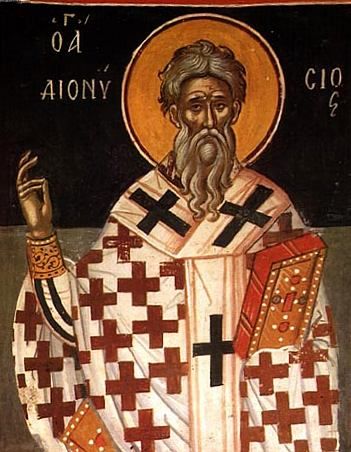
St. Dionysius of Alexandria

St. Dionysius of…

November 17 · Bishop
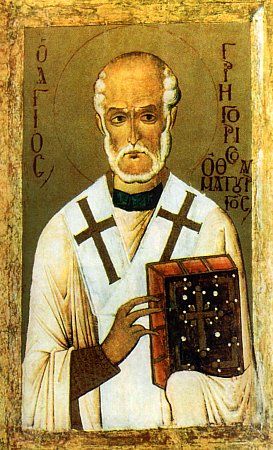
St. Gregory the Wonder-Worker

St. Gregory the…

November 17 · Bishop
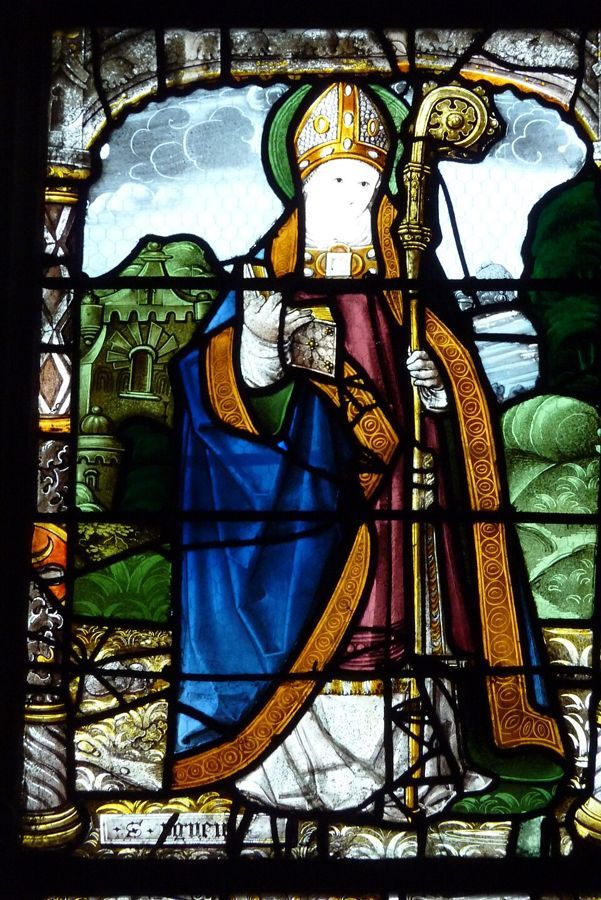
St. Aignan of Orleans

St. Aignan of Orleans

November 17 · Bishop
← All 1726 saints in the library
Sources & notes

Feast-day sources

Story sources

Sources

Credits

Image: Hug-lin-pi.jpg · Unknown authorUnknown author · Public domain, via Wikimedia Commons

From Sabine Baring-Gould, The Lives of the Saints, new edition in 16 vols. (London: John C. Nimmo, 1897–98); text from the Internet Archive scan (OCR, lightly cleaned; errors possible). Public domain.

Image: Unknown authorUnknown author, Wikimedia Commons (Public domain)

From “Catholic Encyclopedia (1913)/St. Hugh of Lincoln,” The Catholic Encyclopedia (New York: Robert Appleton Company, 1907–1914), via Wikisource. Public domain. Matched by name and feast date; text unedited except for our bracketed notes in grey.

From Sabine Baring-Gould, The Lives of the Saints, new edition in 16 vols. (London: John C. Nimmo, 1897–98); text from the Internet Archive scan (OCR, lightly cleaned; errors possible). Public domain in the United States. Reproduced unedited, except for short bracketed notes in grey that we added to explain names and terms (“S.” is the old abbreviation for Saint). Some history and judgments reflect 19th-century scholarship.