H

Hyginus was Bishop of Rome around 138 to 142, after Telesphorus.

Read the essentials →
January 11 · —

St. Hyginus

St. Hyginus, Pope

Hyginus was Bishop of Rome around 138 to 142, after Telesphorus.

Traditional feast

January 11
1914 / pre-1969 calendar, per Baring-Gould (1914)

Current feast

Not verified yet

Represents

Feast

Their story

Adapted in modern English from the Catholic Encyclopedia (1913) · original text below · little is known

Hyginus was Bishop of Rome around 138 to 142, after Telesphorus. The Liber Pontificalis (the early medieval 'Book of the Popes', not always reliable for the earliest ones) says he was a Greek. In his time the Gnostic teachers Valentine and Cerdo came to Rome. Cerdo recanted and was received back, then fell away again.

The ancient sources do not say he died a martyr. He was buried on the Vatican Hill near St. Peter.

Early life

Selected sentences from the original account, unaltered.

Thin entry · the 1914 book gives only 76 words. We have not filled the gap with invented detail.

He is said to have been a Greek, and to have been educated in philosophy.

What they represent

How they teach us to live

Drawn from themes in the original account

Stay faithful when it costs you. This account is about holding firm under pressure.

Keep their day. Remember them on January 11 with a short prayer, and ask for their help.

From the Catholic Encyclopedia

1913 · 305 words

Reigned about 138-142; succeeded Pope Telesphorus, who, according to Eusebius [Eusebius of Caesarea (d. c. 339), the first historian of the Church] (Hist. eccl., IV, xv), died during the first year of the reign of the Emperor Antonius Pius — in 138 or 139, therefore. But the chronology of these bishops of Rome cannot be determined with any degree of exactitude by the help of the authorities at our disposal to-day. According to the "Liber Pontificalis", Hyginus was a Greek by birth. The further statement that he was previously a philosopher is probably founded on the similarity of his name with that of two Latin authors. Irenaeus says (Adv. haereses, III, iii) that the Gnostic Valentine came to Rome in Hyginus's time, remaining there until Anicetus became pontiff. Cerdo, another Gnostic and predecessor of Marcion, also lived at Rome in the reign of Hyginus; by confessing his errors and recanting he succeeded in obtaining readmission into the bosom of the Church, but eventually he fell back into the heresies and was expelled from the Church. How many of these events took place during the time of Hyginus is not known. The "Liber Pontificalis" also relates that this pope organized the hierachy and established the order of ecclesiastical precedence (Hic clerum composuit et distribuit gradus). This general observation recurs also in the biography of Pope Hormisdas; it has no historical value, and according to Duchesne, the writer probably referred to the lower orders of the clergy. Eusebius (Hist. eccl. IV, xvi) claims that Hyginus's pontificate lasted four years. The ancient authorities contain no information as to his having died a martyr. At his death he was buried on the Vatican Hill, near the tomb of St. Peter. His feast is celebrated on 11 January.

DUCHESNE, (ed.) Liber Pontificalis, I, 131; Acta Ss., Jan. I, 665; HARNACK, Geschichte der altchristl. Literatur, II: Die Chronologie, I (Leipzig, 1897), 144 sq.
Read more

The full original · 76 words

Read Baring-Gould’s full account

Of this Pope, who succeeded S. Telesphorus, little is known. Eusebius [Eusebius of Caesarea (d. c. 339), the first historian of the Church] informs us that he sat four years in the chair of S. Peter. He brought the church in Rome into more complete organization than heretofore, taking advantage of the repose after persecution, enjoyed under the mild Emperor Antoninus [Antoninus Pius, Roman emperor 138–161] Pius. He is said to have been a Greek, and to have been educated in philosophy. In his reign the heretics Cerdo and Valentine came to Rome.

Feast days

Feast: January 11

Nine days · Free

Pray the novena
with us.

One short email a day for nine days. The day's prayer, a line from St. Hyginus's story, and a nudge to keep going.

Also on January 11
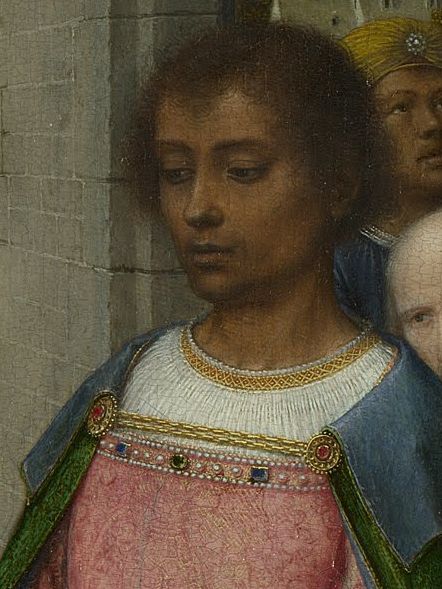
St. Balthazar

St. Balthazar

January 11 · King
P

St. Palæmon

January 11 · Hermit
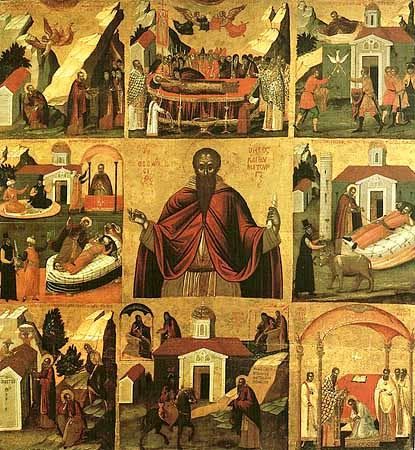
St. Theodosius, the Cœnobiarch

St. Theodosius

January 11 · Hermit
← All 1726 saints in the library
Sources & notes

Feast-day sources

Story sources

Sources

Credits

From Sabine Baring-Gould, The Lives of the Saints, new and revised edition (Edinburgh: John Grant, 1914; first edition 1872). Public domain.

From “Catholic Encyclopedia (1913)/Pope St. Hyginus,” The Catholic Encyclopedia (New York: Robert Appleton Company, 1907–1914), via Wikisource. Public domain. Matched by name and feast date; text unedited except for our bracketed notes in grey.

From Sabine Baring-Gould, The Lives of the Saints, new and revised edition (Edinburgh: John Grant, 1914; first edition 1872). Public domain in the United States. Reproduced unedited, except for short bracketed notes in grey that we added to explain names and terms (“S.” is the old abbreviation for Saint). Some history and judgments reflect 19th-century scholarship.