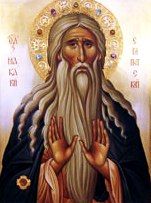
I

A life spent serving ordinary people.

Read the essentials →
January 15 · Priest

St. Isidore of Alexandria

St. Isidore of Alexandria

A life spent serving ordinary people.

Traditional feast

January 15
1914 / pre-1969 calendar, per Baring-Gould (1914)

Current feast

Not verified yet

Represents

Priest

Their story

Adapted in modern English from Alban Butler's Lives of the Saints · Baring-Gould original below · little is known

Isidore was taken from his cell in the desert, ordained priest and made hospitaller of Alexandria by St. Athanasius, caring for the poor and strangers.

He often wept at table, saying that he, made to enjoy God, ate the food of beasts. Palladius came to him for advice before taking up the ascetic life.

He was persecuted by the Arian (followers of Arius's teaching that the Son is a created being, not fully God) Lucius and later by Theophilus, who accused him of Origenism, and died at Constantinople under the protection of St. Chrysostom. Butler gives 403; Baring-Gould, the text on this page, gives 404. The sources differ.

Early life

The book says little or nothing about early life. This is how the account begins.

Thin entry · the 1914 book gives only 90 words. We have not filled the gap with invented detail.

S. Isidore, priest and monk, lived in Alexandria as hospitaller, that is, in charge of a hospital for the reception of strangers and the poor. He suffered many persecutions, first from Lucius, the Arian Bishop, who ill-treated the two Macarii, and afterwards from the orthodox bishop, Theophilus, who, moved by some jealousy, unjustly charged him with favouring the views of Origen. He took refuge at Constantinople with S. John Chrysostom, where he repudiated the heresy of Origen, declaring that he was falsely accused of holding it, and died in 404.

What they represent

How they teach us to live

Drawn from themes in the original account

Look after people who are sick or suffering. The sick come up again and again in this story.

Welcome guests and strangers. Hospitality shows up in this account.

Stay faithful when it costs you. This account is about holding firm under pressure.

Learn from the kind of life it was. A life spent serving ordinary people.
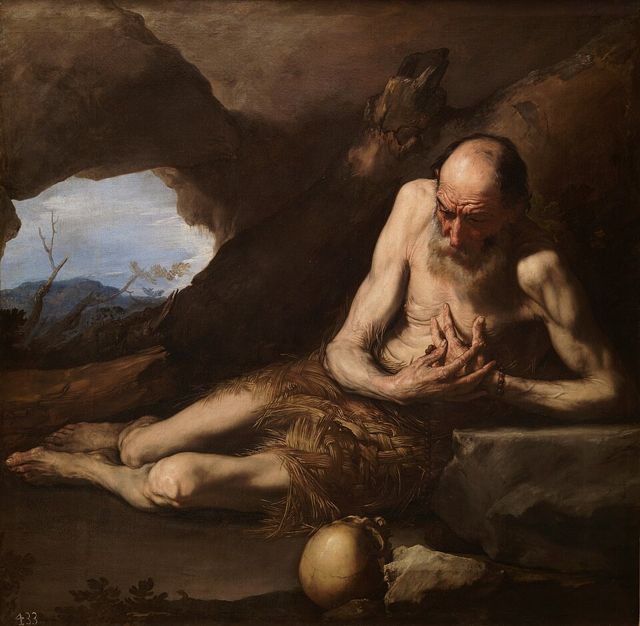
Read more

The full original · 90 words

Read Baring-Gould’s full account

Baring-Gould’s sources: Almost all the ancient Martyrologies commemorate S. Isidore on the same day as S. Macarius the Elder. Authorities for his life, same as for S. Macarius.

S. Isidore, priest and monk, lived in Alexandria as hospitaller, that is, in charge of a hospital for the reception of strangers and the poor. He suffered many persecutions, first from Lucius, the Arian [followers of Arius, who taught that the Son is a created being, not fully God] Bishop, who ill-treated the two Macarii, and afterwards from the orthodox bishop, Theophilus, who, moved by some jealousy, unjustly charged him with favouring the views of Origen. He took refuge at Constantinople with S. John Chrysostom, where he repudiated the heresy of Origen, declaring that he was falsely accused of holding it, and died in 404.

Feast days

Feast: January 15

Nine days · Free

Pray the novena
with us.

One short email a day for nine days. The day's prayer, a line from St. Isidore of Alexandria's story, and a nudge to keep going.

Also on January 15
St. Paul, the First Hermit in Egypt

St. Paul

January 15 · Feast
St. Macarius of Egypt

St. Macarius of Egypt

January 15 · Abbot
A

St. Alexander of the…

January 15 · Feast
← All 1726 saints in the library
Sources & notes

Feast-day sources

Story sources

Sources

Credits

From Sabine Baring-Gould, The Lives of the Saints, new and revised edition (Edinburgh: John Grant, 1914; first edition 1872). Public domain.

From Sabine Baring-Gould, The Lives of the Saints, new and revised edition (Edinburgh: John Grant, 1914; first edition 1872). Public domain in the United States. Reproduced unedited, except for short bracketed notes in grey that we added to explain names and terms (“S.” is the old abbreviation for Saint). Some history and judgments reflect 19th-century scholarship.