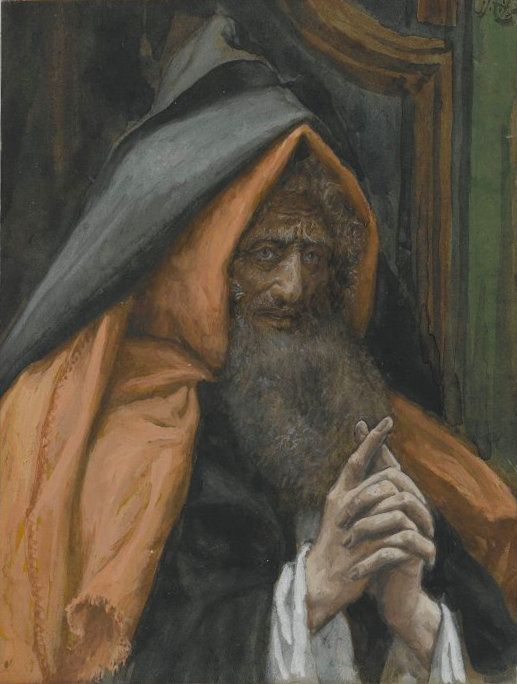
St. Joseph of Arimathæa

Everything known for certain about Joseph comes from the Gospels.

Read the essentials →
March 17 · —

St. Joseph of Arimathæa

St. Joseph of Arimathæa

Everything known for certain about Joseph comes from the Gospels.

Traditional feast

March 17
1914 / pre-1969 calendar, per Baring-Gould (1897)

Current feast

July 31 (also listed: August 1, August 31)
Secondary source · Wikipedia

Represents

Feast

Their story

Adapted in modern English from the Catholic Encyclopedia (1913) · original text below

Everything known for certain about Joseph comes from the Gospels. He came from Arimathea, 'a city of Judea', probably the same place as Ramatha, the birthplace of the prophet Samuel. He was a wealthy Israelite, 'a good and a just man', 'looking for the kingdom of God', and a member of the Sanhedrin, the Jews' supreme council. He was a disciple of Jesus but kept it secret 'for fear of the Jews'. Because of this hidden loyalty he did not consent to the council's condemnation of Jesus, and he was most likely absent from the meeting that sentenced him to death.

The crucifixion quickened Joseph's faith and love. Ignoring the considerable danger, he boldly asked Pilate for the body of Jesus, and Pilate granted it. Joined by Nicodemus, who brought abundant spices, he wrapped the body in fine linen, laid it in his own new tomb, cut out of the rock in a nearby garden, and rolled a great stone across the entrance. In this the source sees Isaiah's prophecy fulfilled, that the Messiah's grave would be with a rich man.

Nothing reliable is known of his later life or death. The source dismisses the details in the apocryphal (outside the Bible and not accepted as Scripture) Acts of Pilate as unworthy of belief. It calls fabulous the legend that he came to Gaul in AD 63 and then to Britain, where he was supposed to have founded the first Christian oratory at Glastonbury. It also judges unreliable the late story that his body was moved from Jerusalem to Moyenmoutier. The Roman Church keeps his feast on 17 March and the Greek Church on 31 July.

Early life

Selected sentences from the original account, unaltered.

Thin entry · the 1897 book gives only 239 words. We have not filled the gap with invented detail.

Joseph, a native of Arimathæa, said by S. Matthew to have been rich, and called by S. Mark a counsellor, appears to have lived in Jerusalem, where he possessed a garden. According to S. John, he was a disciple in secret of the Son of God; that he was a just man, we are told by S. Luke.

What they represent

How they teach us to live

Drawn from themes in the original account

Keep their day. Remember them on March 17 with a short prayer, and ask for their help.

From the Catholic Encyclopedia

1913 · 439 words

All that is known for certain concerning him is derived from the canonical Gospels. He was born at Arimathea — hence his surname — "a city of Judea" (Luke, xxiii, 51), which is very likely identical with Ramatha, the birthplace of the Prophet Samuel, although several scholars prefer to identify it with the town of Ramleh. He was a wealthy Israelite (Matt., xxvii, 57), "a good and a just man" (Luke, xxiii, 50), "who was also himself looking for the kingdom of God" (Mark, xv, 43). He is also called by St. Mark and by St. Luke a bouleutes, literally, "a senator", whereby is meant a member of the Sanhedrin or supreme council of the Jews. He was a disciple of Jesus, probably ever since Christ's first preaching in Judea (John, ii, 23), but he did not declare himself as such "for fear of the Jews" (John, xix, 38). On account of this secret allegiance to Jesus, he did not consent to His condemnation by the Sanhedrin (Luke, xxiii, 51), and was most likely absent from the meeting which sentenced Jesus to death (cf. Mark, xiv, 64).

The Crucifixion of the Master quickened Joseph's faith and love, and suggested to him that he should provide for Christ's burial before the Sabbath began. Unmindful therefore of all personal danger, a danger which was indeed considerable under the circumstances, he boldly requested from Pilate the Body of Jesus, and was successful in his request (Mark, xv, 43-45). Once in possession of this sacred treasure, he — together with Nicodemus, whom his courage had likewise emboldened, and who brought abundant spices — wrapped up Christ's Body in fine linen and grave bands, laid it in his own tomb, new and yet unused, and hewn out of a rock in a neighbouring garden, and withdrew after rolling a great stone to the opening of the sepulchre (Matt., xxvii, 59, 60; Mark, xv, 46; Luke, xxiii, 53; John, xix, 38-42). Thus was fulfilled Isaiah's prediction that the grave of the Messias would be with a rich man (Is., liii, 9). The Greek Church celebrates the feast of Joseph of Arimathea on 31 July, and the Roman Church on 17 March. The additional details which are found concerning him in the apocryphal "Acta Pilati", are unworthy of credence. Likewise fabulous is the legend which tells of his coming to Gaul [roughly modern France and Belgium] A.D. 63, and thence to Great Britain, where he is supposed to have founded the earliest Christian oratory at Glastonbury. Finally, the story of the translation [the solemn moving of a saint’s relics to a new shrine] of the body of Joseph of Arimathea from Jerusalem to Moyenmonstre (Diocese of Toul) originated late and is unreliable.

Read more

The full original · 239 words

Read Baring-Gould’s full account

Baring-Gould’s sources: Roman Martyrology, inserted by Baronius, because observed as a double by the Canons of the Vatican, who possess an arm of the saint. In Liege, where other relics are preserved, on Feb. 22nd; by the Greeks on July 31st.

When Christ came into the world, one Joseph took Him into his arms and cherished Him in His infancy; another Joseph received Him when He was dead, and ministered to His inanimate body. Joseph, a native of Arimathæa, said by S. Matthew to have been rich, and called by S. Mark a counsellor, appears to have lived in Jerusalem, where he possessed a garden. According to S. John, he was a disciple in secret of the Son of God; that he was a just man, we are told by S. Luke. After the Crucifixion he cast aside the fears which had restrained him from professing openly his conviction, and going boldly to Pilate, he craved of him the body of Jesus. He then bought the winding sheet, and going to Calvary, detached from the Cross the dead body of Christ, assisted by S. John the Evangelist, S. Mary Magdalene, and Mary the wife of Cleopas. Joseph and Nicodemus anointed the body with myrrh and aloes, and laid it in the sepulchre of Joseph.

Many strange traditions have attached themselves to Joseph of Arimathæa, as that he came to Britain, and planted his staff at Glastonbury; but as these legends are wholly worthless, they must be here passed over.

His body is said to have been buried by Fortunatus, patriarch [the title of the bishops of the great ancient sees: Rome, Constantinople, Alexandria, Antioch, Jerusalem] of Grado, in the abbey of Moyen-Moutier; but no relics [the bodily remains of a saint, or objects they used, kept with honor] of it now remain there, though some are shown elsewhere.

Feast days

Feast: July 31
Traditional: March 17

Nine days · Free

Pray the novena
with us.

One short email a day for nine days. The day's prayer, a line from St. Joseph of Arimathæa's story, and a nudge to keep going.

Also on March 17
M

Sts. Martyrs in the…

March 17 · Feast
A

St. Agricola of…

March 17 · Bishop
P

St. Patrick of Ireland

March 17 · Apostle
← All 1726 saints in the library
Sources & notes

Feast-day sources

Story sources

Sources

Credits

Image: Brooklyn Museum - Joseph of Arimathaea (Joseph d'Arimathie) - James Tissot.jpg · James Tissot · Public domain, via Wikimedia Commons

From Sabine Baring-Gould, The Lives of the Saints, new edition in 16 vols. (London: John C. Nimmo, 1897), digitized text from Project Gutenberg. Public domain.

Image: James Tissot, Wikimedia Commons (Public domain)

From “Catholic Encyclopedia (1913)/Joseph of Arimathea,” The Catholic Encyclopedia (New York: Robert Appleton Company, 1907–1914), via Wikisource. Public domain. Matched by name and feast date; text unedited except for our bracketed notes in grey.

From Sabine Baring-Gould, The Lives of the Saints, new edition in 16 vols. (London: John C. Nimmo, 1897), digitized text from Project Gutenberg. Public domain in the United States. Reproduced unedited, except for short bracketed notes in grey that we added to explain names and terms (“S.” is the old abbreviation for Saint). Some history and judgments reflect 19th-century scholarship.