P

The precise time at which Christianity was originally introduced into Ireland cannot be ascertained.

Read the essentials →
March 17 · Apostle

St. Patrick of Ireland

St. Patrick of Ireland

The precise time at which Christianity was originally introduced into Ireland cannot be ascertained.

Traditional feast

March 17
1914 / pre-1969 calendar, per Baring-Gould (1897)

Current feast

Not verified yet

Represents

Apostle

Their story

Adapted in modern English from the Catholic Encyclopedia (1913) · original text below

According to the Catholic Encyclopedia, Patrick was the son of Calphurnius, a Roman official in Britain. At sixteen Irish raiders carried him off and sold him as a slave to the chieftain Milchu in Antrim. For six years he tended flocks, praying, as his own Confession says, up to a hundred times a day and as often at night, in snow, frost and rain. Warned in a dream, he fled about two hundred miles to a ship and returned home.

He spent time at Tours and Lérins (a famous island monastery off Cannes) and studied for years under St Germain of Auxerre, who ordained him. In visions he heard the children of Focluth calling, 'O holy youth, come back to Erin.' Germain commended him to Pope Celestine I, who sent him to Ireland after Palladius had abandoned the mission. Consecrated bishop on the way, he landed probably in 433. The chieftain Dichu drew his sword against him, was won over, and gave him a barn at Saul, his first church.

The later lives tell of his most famous moment, which the source accepts but much of which belongs to tradition. On Easter Eve he lit the Paschal fire on the hill of Slane in defiance of King Leoghaire's order that no fire burn before the royal blaze at Tara. The druids failed to put it out. On Easter Day he went in procession to Tara and pleaded for the faith before the king and his chieftains, and he is said to have used a shamrock there to explain the Trinity. The king allowed him to preach throughout Ireland. His prayer known as the Breastplate is traditionally linked to this time.

He baptized the king's brother Conall, remembered in the old calendars as 'the beginning of the Baptism of Erin', and paid fifteen slaves' worth for safe conduct to Connaught. There he smashed the idol Crom Cruach and spent seven years forming parishes and dioceses. He made the mountain now called Croagh Patrick his place of retreat. From 440 he worked in Ulster, and Daire granted him the site for his church at Armagh. He went on to Leinster, where his charioteer Odhran died in his place under a lance meant for him, and to Munster, where he baptized the prince at Cashel. With Auxilius and Isserninus he held a synod whose canons survive.

The Catholic Encyclopedia gives his death at Saul on 17 March 493. St Tassach gave him the last sacraments, and tradition says he was wrapped in a shroud woven by St Brigid.

This is the library version, retold from the Catholic Encyclopedia (1913). Our main profile has the fuller story, prayers and sources: St. Patrick of Ireland →

Early life

Selected sentences from the original account, unaltered.

From this and other circumstances, it seems probable that he was a native of that country. The variety of opinions, and the many questions that have been agitated, concerning the country and time of the birth of S. Patrick, render it necessary to clear up these disputed points before proceeding with the main story of his life. It would be a waste of time to examine all the various opinions, that have been started on this subject, such as his having been born in Cornwall, in Pembrokeshire, or, what is strangest of all, in Ireland itself.

What they represent

How they teach us to live

Drawn from themes in the original account

Share your faith, in words and by example. Preaching and conversion are central here.

Feed your mind with Scripture and good books. Learning and the Scriptures matter in this life.

Pray a little every day. Prayer runs all through this account.

From the Catholic Encyclopedia

1913 · 6385 words

Apostle of Ireland, born at Kilpatrick, near Dumbarton, in Scotland, in the year 387; died at Saul, Downpatrick, Ireland, 17 March, 493.

He had for his parents Calphurnius and Conchessa. The former belonged to a Roman family of high rank and held the office of decurio in Gaul [roughly modern France and Belgium] or Britain. Conchessa was a near relative of the great patron of Gaul, St. Martin of Tours. Kilpatrick still retains many memorials of Saint Patrick, and frequent pilgrimages continued far into the Middle Ages to perpetuate there the fame of his sanctity and miracles.

In his sixteenth year, Patrick was carried off into captivity by Irish marauders and was sold as a slave to a chieftan named Milchu in Dalriada, a territory of the present county of Antrim in Ireland, where for six years he tended his master's flocks in the valley of the Braid and on the slopes of Slemish, near the modern town of Ballymena. He relates in his "Confessio" that during his captivity while tending the flocks he prayed many times in the day: "the love of God", he added,

Read the rest of the article

and His fear increased in me more and more, and the faith grew in me, and the spirit was roused, so that, in a single day, I have said as many as a hundred prayers, and in the night nearly the same, so that whilst in the woods and on the mountain, even before the dawn, I was roused to prayer and felt no hurt from it, whether there was snow or ice or rain; nor was there any slothfulness in me, such as I see now, because the spirit was then fervent within me.

In the ways of a benign Providence the six years of Patrick's captivity became a remote preparation for his future apostolate. He acquired a perfect knowledge of the Celtic tongue in which he would one day announce the glad tidings of Redemption, and, as his master Milchu was a druidical high priest, he became familiar with all the details of Druidism from whose bondage he was destined to liberate the Irish race.

Admonished by an angel he after six years fled from his cruel master and bent his steps towards the west. He relates in his "Confessio" that he had to travel about 200 miles; and his journey was probably towards Killala Bay and onwards thence to Westport. He found a ship ready to set sail and after some rebuffs was allowed on board. In a few days he was among his friends once more in Britain, but now his heart was set on devoting himself to the service of God in the sacred ministry. We meet with him at St. Martin's monastery at Tours, and again at the island sanctuary of Lérins which was just then acquiring widespread renown for learning and piety; and wherever lessons of heroic perfection in the exercise of Christian life could be acquired, thither the fervent Patrick was sure to bend his steps. No sooner had St. Germain entered on his great mission at Auxerre than Patrick put himself under his guidance, and it was at that great bishop's hands that Ireland's future apostle was a few years later promoted to the priesthood. It is the tradition in the territory of the Morini that Patrick under St. Germain's guidance for some years was engaged in missionary work among them. When Germain commissioned by the Holy See proceeded to Britain to combat the erroneous teachings of Pelagius, he chose Patrick to be one of his missionary companions and thus it was his privilege to be associated with the representative of Rome in the triumphs that ensued over heresy and Paganism, and in the many remarkable events of the expedition, such as the miraculous calming of the tempest at sea, the visit to the relics [the bodily remains of a saint, or objects they used, kept with honor] at St. Alban's shrine, and the Alleluia victory. Amid all these scenes, however, Patrick's thoughts turned towards Ireland, and from time to time he was favoured with visions of the children from Focluth, by the Western sea, who cried to him: "O holy youth, come back to Erin, and walk once more amongst us."

Pope St. Celestine I, who rendered immortal service to the Church by the overthrow of the Pelagian [followers of Pelagius, who taught people could be good without God’s grace] and Nestorian [Nestorius (d. c. 451), whose teaching split Christ into two persons; condemned at Ephesus in 431] heresies, and by the imperishable wreath of honour decreed to the Blessed Virgin in the General Council of Ephesus, crowned his pontificate by an act of the most far-reaching consequences for the spread of Christianity and civilization, when he entrusted St. Patrick with the mission of gathering the Irish race into the one fold of Christ. Palladius (q.v.) had already received that commission, but terrified by the fierce opposition of a Wicklow chieftain had abandoned the sacred enterprise. It was St. Germain, Bishop of Auxerre, who commended Patrick to the pope. The writer of St. Germain's Life in the ninth century, Heric of Auxerre, thus attests this important fact: "Since the glory of the father shines in the training of the children, of the many sons in Christ whom St. Germain is believed to have had as disciples in religion, let it suffice to make mention here, very briefly, of one most famous, Patrick, the special Apostle of the Irish nation, as the record of his work proves. Subject to that most holy discipleship for 18 years, he drank in no little knowledge in Holy Scripture from the stream of so great a well-spring. Germain sent him, accompanied by Segetius, his priest, to Celestine, Pope of Rome, approved of by whose judgement, supported by whose authority, and strengthened by whose blessing, he went on his way to Ireland." It was only shortly before his death that Celestine gave this mission to Ireland's apostle and on that occasion bestowed on him many relics and other spiritual gifts, and gave him the name "Patercius" or "Patritius", not as an honorary title, but as a foreshadowing of the fruitfulness and merit of his apostolate whereby he became pater civium (the father of his people). Patrick on his return journey from Rome received at Ivrea the tidings of the death of Palladius, and turning aside to the neighboring city of Turin received episcopal consecration at the hands of its great bishop, St. Maximus, and thence hastened on to Auxerre to make under the guidance of St. Germain due preparations for the Irish mission.

It was probably in the summer months of the year 433, that Patrick and his companions landed at the mouth of the Vantry River close by Wicklow Head. The Druids were at once in arms against him. But Patrick was not disheartened. The intrepid missionary resolved to search out a more friendly territory in which to enter on his mission. First of all, however, he would proceed towards Dalriada, where he had been a slave, to pay the price of ransom to his former master, and in exchange for the servitude and cruelty endured at his hands to impart to him the blessings and freedom of God's children. He rested for some days at the islands off the Skerries coast, one of which still retains the name of Inis-Patrick, and he probably visited the adjoining mainland, which in olden times was known as Holm Patrick. Tradition fondly points out the impression of St. Patrick's foot upon the hard rock — off the main shore, at the entrance to Skerries harbour. Continuing his course northwards he halted at the mouth of the River Boyne. A number of the natives there gathered around him and heard with joy in their own sweet tongue the glad tidings of Redemption. There too he performed his first miracle on Irish soil to confirm the honour due to the Blessed Virgin, and the Divine birth of our Saviour. Leaving one of his companions to continue the work of instruction so auspiciously begun, he hastened forward to Strangford Loughand there quitting his boat continued his journey over land towards Slemish. He had not proceeded far when a chieftain, named Dichu, appeared on the scene to prevent his further advance. He drew his sword to smite the saint, but his arm became rigid as a statue and continued so until he declared himself obedient to Patrick. Overcome by the saint's meekness and miracles, Dichu asked for instruction and made a gift of a large sabhall (barn), in which the sacred mysteries were offered up. This was the first sanctuary dedicated by St. Patrick in Erin. It became in later years a chosen retreat of the saint. A monastery and church were erected there, and the hallowed site retains the name Sabhall (pronounced Saul) to the present day. Continuing his journey towards Slemish, the saint was struck with horror on seeing at a distance the fort of his old master Milchu enveloped in flames. The fame of Patrick's marvelous power of miracles preceeded him. Milchu, in a fit of frenzy, gathered his treasures into his mansion and setting it on fire, cast himself into the flames. An ancient record adds: "His pride could not endure the thought of being vanquished by his former slave".

Returning to Saul, St. Patrick learned from Dichu that the chieftains of Erin had been summoned to celebrate a special feast at Tara by Leoghaire, who was the Ard-Righ, that is, the Supreme Monarch of Ireland. This was an opportunity which Patrick would not forego; he would present himself before the assembly, to strike a decisive blow against the Druidism that held the nation captive, and to secure freedom for the glad tidings of Redemption of which he was the herald. As he journeyed on he rested for some days at the house of a chieftain named Secsnen, who with his household joyfully embraced the Faith. The youthful Benen, or Benignus, son of the chief, was in a special way captivated by the Gospel doctrines and the meekness of Patrick. Whilst the saint slumbered he would gather sweet-scented flowers and scatter them over his bosom, and when Patrick was setting out, continuing his journey towards Tara, Benen clung to his feet declaring that nothing would sever him from him. "Allow him to have his way", said St. Patrick to the chieftain, "he shall be heir to my sacred mission." Thenceforth Benen was the inseparable companion of the saint, and the prophecy was fulfilled, for Benen is named among the "comhards" or successors of St. Patrick in Armagh. It was on 26 March, Easter Sunday, in 433, that the eventful assembly was to meet at Tara, and the decree went forth that from the preceeding day the fires throughout the kingdom should be extinguished until the signal blaze was kindled at the royal mansion. The chiefs and Brehons came in full numbers and the druids too would muster all their strength to bid defiance to the herald of good tidings and to secure the hold of their superstition on the Celtic race, for their demoniac oracles had announced that the messenger of Christ had come to Erin. St. Patrick arrived at the hill of Slane, at the opposite extremity of the valley from Tara, on Easter Eve, in that year the feast of the Annunciation, and on the summit of the hill kindled the Paschal fire. The druids at once raised their voice. "O King", (they said) "live for ever; this fire, which has been lighted in defiance of the royal edict, will blaze for ever in this land unless it be this very night extinguished." By order of the king and the agency of the druids, repeated attempts were made to extinguish the blessed fire and to punish with death the intruder who had disobeyed the royal command. But the fire was not extinguished and Patrick shielded by the Divine power came unscathed from their snares and assaults. On Easter Day the missionary band having at their head the youth Benignus bearing aloft a copy of the Gospels, and followed by St. Patrick who with mitre and crozier was arrayed in full episcopal attire, proceeded in processional order to Tara. The druids and magicians put forth all their strength and employed all their incantations to maintain their sway over the Irish race, but the prayer and faith of Patrick achieved a glorious triumph. The druids by their incantations overspread the hill and surrounding plain with a cloud of worse then Egyptian darkness. Patrick defied them to remove that cloud, and when all their efforts were made in vain, at his prayer the sun sent forth its rays and the brightest sunshine lit up the scene. Again by demoniac power the Arch-Druid Lochru, like Simon Magus of old, was lifted up high in the air, but when Patrick knelt in prayer the druid from his flight was dashed to pieces upon a rock. Thus was the final blow given to paganism in the presence of all the assembled chieftains. It was, indeed, a momentous day for the Irish race. Twice Patrick pleaded for the Faith before Leoghaire. The king had given orders that no sign of respect was to be extended to the strangers, but at the first meeting the youthful Erc, a royal page, arose to show him reverence; and at the second, when all the chieftains were assembled, the chief-bard Dubhtach showed the same honour to the saint. Both these heroic men became fervent disciples of the Faith and bright ornaments of the Irish Church. It was on this second solemn occasion that St. Patrick is said to have plucked a shamrock from the sward, to explain by its triple leaf and single stem, in some rough way, to the assembled chieftains, the great doctrine of the Blessed Trinity. On that bright Easter Day, the triumph of religion at Tara was complete. The Ard-Righ granted permission to Patrick to preach the Faith throughout the length and breadth of Erin, and the druidical prophecy like the words of Balaam of old would be fulfilled: the sacred fire now kindled by the saint would never be extinguished.

The beautiful prayer of St. Patrick, popularly known as "St. Patrick's Breast-Plate", is supposed to have been composed by him in preparation for this victory over Paganism. The following is a literal translation from the old Irish text:

The strong virtue of the Invocation of the Trinity:

The virtue of the Incarnation of Christ with His Baptism,

The virtue of His coming on the Judgement Day.

Against the spells of women, and smiths, and druids,

Against every knowledge that binds the soul of man.

Christ in the heart of everyone who thinks of me,

Christ in the mouth of everyone who speaks to me,

The strong virtue of an invocation of the Trinity,

St. Patrick remained during Easter week at Slane and Tara, unfolding to those around him the lessons of Divine truth. Meanwhile the national games were being celebrated a few miles distant at Tailten (now Telltown) in connection with the royal feast. St. Patrick proceeding thither solemnly administered baptism to Conall, brother of the Ard-Righ Leoghaire, on Wednesday, 5 April. Benen and others had already been privately gathered into the fold of Christ, but this was the first public administering of baptism, recognized by royal edict, and hence in the ancient Irish Kalendars to the fifth of April is assigned "the beginning of the Baptism of Erin". This first Christian royal chieftain made a gift to Patrick of a site for a church which to the present day retains the name of Donagh-Patrick. The blessing of heaven was with Conall's family. St. Columba is reckoned among his descendants, and many of the kings of Ireland until the eleventh century were of his race. St. Patrick left some of his companions to carry on the work of evangelization in Meath, thus so auspiciously begun. He would himself visit the other territories. Some of the chieftains who had come to Tara were from Focluth, in the neighbourhood of Killala, in Connaught, and as it was the children of Focluth who in vision had summoned him to return to Ireland, he resolved to accompany those chieftains on their return, that thus the district of Focluth would be among the first to receive the glad tidings of Redemption. It affords a convincing proof of the difficulties that St. Patrick had to overcome, that though full liberty to preach the Faith throughout Erin was granted by the monarch of Leoghaire, nevertheless, in order to procure a safe conduct through the intervening territories whilst proceeding towards Connaught he had to pay the price of fifteen slaves. On his way thither, passing through Granard he learned that at Magh-Slecht, not far distant, a vast concourse was engaged in offering worship to the chief idol Crom-Cruach. It was a huge pillar-stone, covered with slabs of gold and silver, with a circle of twelve minor idols around it. He proceeded thither, and whith his crosier smote the chief idol that crumbled to dust; the others fell to the ground. At Killala he found the whole people of the territory assembled. At his preaching, the king and his six sons, with 12,000 of the people, became docile to the Faith. He spent seven years visiting every district of Connaught, organizing parishes, forming dioceses, and instructing the chieftains and people. One the occasion of his first visit to Rathcrogan, the royal seat of the kings of Connaught, situated near Tulsk, in the County of Roscommon, a remarkable incident occurred, recorded in many of the authentic narratives of the saint's life. Close by the clear fountain of Clebach, not far from the royal abode, Patrick and his venerable companions had pitched their tents and at early dawn were chanting the praises of the Most High, when the two daughters of the Irish monarch — Ethne, the fair, and Fedelm, the ruddy — came thither, as was their wont, to bathe. Astonished at the vision that presented itself to them, the royal maidens cried out: "Who are ye, and whence do ye come? Are ye phantoms, or fairies, or friendly mortals?" St. Patrick said to them: "It were better you would adore and worship the one true God, whom we announce to you, than that you would satisfy your curiosity by such vain questions." And then Ethne broke forth into the questions:

"Are His daughters dear and lovely to the men of this world?"

"In the sea, in rivers, in mountains, in valleys?"

"Make Him known to us. How is He to be seen?"

"How is He to be loved? How is He to be found?"

"Is it in youth or is it in old age that He may be found?"

But St. Patrick, filled with the Holy Ghost, made answer:

"God, whom we announce to you, is the Ruler of all things."

"The God of heaven and earth, of the sea and the rivers."

"The God of the sun, and the moon, and all the stars."

"The God of the high mountains and of the lowlying valleys."

"The God who is above heaven, and in heaven, and under heaven."

"His dwelling is in heaven and earth, and the sea, and all therein."

"He has made wells in the dry land, and islands in the ocean."

"He has appointed the stars to serve the greater lights."

"And the Father is not older than the Son."

"The Father and the Son and the Holy Ghost are undivided."

"But I desire by Faith to unite you to the Heavenly King, as you are daughters of an earthly king."

The maidens, as if with one voice and one heart, said: "Teach us most carefully how we may believe in the Heavenly King; show us how we may behold Him face to face, and we will do whatsoever you shall say to us." And when he had instructed them he said to them: "Do you believe that by baptism you put off the sin inherited from the first parents."

"Do you believe in life after death?" Do you believe in resurrection on the Day of Judgement?"

"Do you believe in the unity of the Church?"

Then they were baptized, and were clothed in white garments. And they besought that they might behold the face of Christ. And the saint said to them: "You cannot see the face of Christ unless you taste death, and unless you receive the Sacrifice." They answered: "Give us the Sacrifice, so that we may be able to behold our Spouse." And the ancient narrative adds: "when they received the Eucharist of God, they slept in death, and they were placed upon a couch, arrayed in their white baptismal robes."

In 440 St. Patrick entered on the special work of the conversion of Ulster. Under the following year, the ancient annalists relate a wonderful spread of the Faith throughout the province. In 444 a site for a church was granted at Armagh by Daire, the chieftain of the district. It was in a valley at the foot of a hill, but the saint was not content. He had special designs in his heart for that district, and at length the chieftain told him to select in his territory any site he would deemmost suitable for his religious purpose. St. Patrick chose that beautiful hill on which the old cathedral of Armagh stands. As he was marking out the church with his companions, they came upon a doe and fawn, and the saint's companions would kill them for food; but St. Patrick would not allow them to do so, and, taking the fawn upon his shoulders, and followed by the doe, he proceeded to a neighbouring hill, and laid down the fawn, and announced that there, in future times, great glory would be given to the Most High. It was precisely upon that hill thus fixed by St. Patrick that, a few years ago, there was solemnly dedicated the new and beautiful Catholic cathedral of Armagh. A representative of the Holy See presided on the occasion, and hundreds of priests and bishops were gathered there; and, indeed, it might truly be said, the whole Irish race on that occasion offered up that glorious cathedral to the Most High as tribute to their united faith and piety, and their never-failing love of God.

From Ulster St. Patrick probably proceeded to Meath to consolidate the organization of the communities there, and thence he continued his course through Leinster. Two of the saint's most distinguished companions, St. Auxilius and St. Iserninus, had the rich valley of the Liffey assigned to them. The former's name is still retained in the church which he founded at Killossy, while the latter is honoroured as the first Bishop of Kilcullen. As usual, St. Patrick's primary care was to gather the ruling chieftains into the fold. At Naas, the royal residence in those days, he baptised two sons of the King of Leinster. Memorials of the saint still abound in the district — the ruins of the ancient church which he founded, his holy well, and the hallowed sites in which the power of God was shown forth in miracles. At Sletty, in the immediate neighborhood of Carlow, St. Fiacc, son of the chief Brehon, Dubthach, was installed as bishop, and for a considerable time that see continued to be the chief centre of religion for all Leinster. St. Patrick proceeded through Gowran into Ossory; here he erected a church under the invocation of St. Martin, near the present city of Kilkenny, and enriched it with many precious relics which he had brought from Rome. It was in Leinster, on the borders of the present counties of Kildare and Queen's, that Odhran, St. Patrick's charioteer, attained the martyr's crown. The chieftain of that district honoured the demon-idol, Crom Cruach, with special worship, and, on hearing of that idol being cast down, vowed to avenge the insult by the death of our apostle. Passing through the territory, Odhran overheard the plot that was being organized for the murder of St. Patrick, and as they were setting out in the chariot to continue their journey, asked the saint, as a favour, to take thereins, and to allow himself, for the day, to hold the place of honour and rest. This was granted, and scarcely had they set out when a well-directed thrust of a lance pierced the heart of the devoted charioteer, who thus, by changing places, saved St. Patrick's life, and won for himself the martyr's crown.

St. Patrick next proceeded to Munster. As usual, his efforts were directed to combat error in the chief centres of authority, knowing well that, in the paths of conversion, the kings and chieftains would soon be followed by their subjects. At "Cashel of the Kings" he was received with great enthusiasm, the chiefs and Brehons and people welcoming him with joyous acclaim. While engaged in the baptism of the royal prince Aengus, son of the King of Munster, the saint, leaning on his crosier, peirced with its sharp point the prince's foot. Aengus bore the pain unmoved. When St. Patrick, at the close of the ceremony, saw the blood flow, and asked him why he had been silent, he replied, with genuine heroism, that he thought it might be part of the ceremony, a penalty for the joyous blessings of the Faith that were imparted. The saint admired his heroism, and, taking the chieftain's shield, inscribed on it a cross with the same point of the crozier, and promised that that shield would be the signal of countless spiritual and temporal triumphs. Our apostle spent a considerable time in the present County of Limerick. The fame of his miracles and sanctity had gone before him, and the inhabitants of Thomond and northern Munster, crossing the Shannon in their frail coracles, hastened to receive his instruction. When giving his blessing to them on the summit of the hill of Finnime, looking out on the rich plains before him, he is said to have prophesied the coming of St. Senanus: "To the green island in the West, at the mouth of the sea [i.e., Inis-Cathaigh, now Scattery Island, at the mouth of the Shannon, near Kilrush], the lamp of the people of God will come; he will be the head of counsel to all this territory." At Sangril (now Singland), in Limerick, and also in the district of Gerryowen, the holy wells of the saint are pointed out, and the slab of rock, which served for his bed, and the altar on which every day he offered up the Holy Sacrifice. On the banks of the Suit, and the Blackwater, and the Lee, wherever the saint preached during the seven years he spent in Munster, a hearty welcome awaited him. The ancient Life attests: "After Patrick had founded cells and churches in Munster, and had ordained persons of every grade, and healed the sick, and resuscitated the dead, he bade them farewell, and imparted his blessing to them." The words of this blessing, which is said to have been given from the hills of Tipperary, as registered in the saint's Life, to which I have just referred, are particularly beautiful:

St. Patrick continued until his death to visit and watch over the churches which he had founded in all the provinces in Ireland. He comforted the faithful in their difficulties, strengthened them in the Faith and in the practice of virtue, and appointed pastors to continue his work among them. It is recorded in his Life that he consecrated no fewer than 350 bishops. He appointed St. Loman to Trim, which rivalled Armaugh itself in its abundant harvest of piety. St. Guasach, son of his former master, Milchu, became Bishop of Granard, while the two daughters of the same pagan chieftan founded close by, at Clonbroney, a convent of pious virgins, and merited the aureola of sanctity. St. Mel, nephew of our apostle, had the charge of Ardagh; St. MacCarthem, who appears to have been patricularly loved by St. Patrick, was made Bishop of Clogher. The narrative in the ancient Life of the saint regarding his visit to the district of Costello, in the County of Mayo, serves to illustrate his manner of dealing with the chieftains. He found, it says, the chief, Ernasc, and his son, Loarn, sitting under a tree, "with whom he remained, together with his twelve companions, for a week, and they received from him the doctrine of salvation with attentive ear and mind. Meanwhile he instructed Loarn in the rudiments of learning and piety." A church was erected there, and, in after years, Loarn was appointed to its charge.

The manifold virtues by which the early saints were distinguished shone forth in all their perfection in the life of St. Patrick. When not engaged in the work of the sacred ministry, his whole time was spent in prayer. Many times in the day he armed himself with the sign of the Cross. He never relaxed his penitential exercises. Clothed in a rough hair-shirt, he made the hard rock his bed. His disinterestedness is specially commemorated. Countless converts of high rank would cast their precious ornaments at his feet, but all were restored to them. He had not come to Erin in search of material wealth, but to enrich her with the priceless treasures of the Catholic Faith. From time to time he withdrew from the spiritual duties of his apostolate to devote himself wholly to prayer and penance. One of his chosen places of solitude and retreat was the island of Lough Derg, which, to our own day, has continued to be a favourite resort of pilgrims, and it is known as St. Patrick's Purgatory. Another theatre of his miraculous power and piety and penetential austerities in the west of Ireland merits particular attention. In the far west of Connaught there is a range of tall mountains, which, arrayed in rugged majesty, bid defiance to the waves and storms of the Atlantic. At the head of this range arises a stately cone in solitary grandeur, about 4000 feet in height, facing Crew Bay, and casting its shadow over the adjoining districts of Aghagower and Westport. This mountain was known in pagan times as the Eagle Mountain, but ever since Ireland was enlightened with the light of Faith it is known as Croagh Patrick, i.e. St. Patrick's mountain, and is honoured as the Holy Hill, the Mount Sinai, of Ireland. St. Patrick, in obedience to his guardian angel, made this mountain his hallowed place of retreat. In imitation of the great Jewish legislator on Sinai, he spent forty days on its summit in fasting and prayer, and other penetential exercises. His only shelter from the fury of the elements, the wind and rain, the hail and snow, was a cave, or recess, in the solid rock; and the flagstone on which he rested his weary limbs at night is still pointed out. The whole purpose ofhis prayer was to obtain special blessings and mercy for the Irish race, whom he evangelized. The demons that made Ireland their battlefield mustered all their strength to tempt the saint and disturb him in his solitude, and turn him away, if possible, from his pious purpose. They gathered around the hill in the form of vast flocks of hideous birds of prey. So dense were their ranks that they seemed to cover the whole mountain, like a cloud, and they so filled the air that Patrick could see neither sky nor earth nor ocean. St. Patrick besought God to scatter the demons, but for a time it would seem as if his prayers and tears were in vain. At length he rang his sweet-sounding bell, symbol of his preaching of the Divine truths. Its sound was heard all over the valleys and hills of Erin, everywhere bringing peace and joy. The flocks of demons began to scatter, He flung his bell among them; they took to precipitate flight, and cast themselves into the ocean. So complete was the saint's victory over them that, as the ancient narrative adds, "for seven years no evil thing was to be found in Ireland." The saint, however, would not, as yet, descend from the mountain. He had vanquished the demons, but he would now wrestle with God Himself, like Jacob of old, to secure the spiritual interests of his people. The angel had announced to him that, to reward his fidelity in prayer and penance, as many of his people would be gathered into heaven as would cover the land and sea as far as his vision could reach. Far more ample, however, were the aspirations of the saint, and he resolved to persevere in fasting and prayer until the fullest measure of his petition was granted. Again and again the angel came to comfort him, announcing new concessions; but all these would notsuffice. He would not relinquish his post on the mountain, or relax his penance, until all were granted. At length the message came that his prayers were heard:

Such were the extraordinary favors which St. Patrick, with his wrestling with the Most High, his unceasing prayers, his unconquerable love of heavenly things, and his unremitting penetential deeds, obtained for the people whom he evangelized.

It is sometimes supposed that St. Patrick's apostolate in Ireland was an unbroken series of peaceful triumphs, and yet it was quite the reverse. No storm of persecution was, indeed stirred up to assail the infant Church, but the saint himself was subjected to frequent trials at the hands of the druids and of other enemies of the Faith. He tells us in his "Confessio" that no fewer than twelve times he and his companions were seized and carried off as captives, and on one occasion in particular he was loaded with chains, and his death was decreed. But from all these trials and sufferings he was liberated by a benign Providence. It is on account of the many hardships which he endured for the Faith that, in some of the ancient Martyrologies, he is honoured as a martyr. St. Patrick, having now completed his triumph over Paganism, and gathered Ireland into the fold of Christ, prepared for the summons to his reward. St. Brigid came to him with her chosen virgins, bringing the shroud in which he would be enshrined. It is recorded that when St. Patrick and St. Brigid were united in their last prayer, a special vision was shown to him. He saw the whole of Ireland lit up with the brightest rays of Divine Faith. This continued for centuries, and then clouds gathered around the devoted island, and, little by little, the religious glory faded away, until, in the course of centuries, it was only in the remotest valleys that some glimmer of its light remained. St. Patrick prayed that the light would never be extinguished, and, as he prayed, the angel came to him and said: "Fear not: your apostolate shall never cease." As he thus prayed, the glimmering light grew in brightness, and ceased not until once more all the hills and valleys of Ireland were lit up in their pristine splendour, and then the angel announced to St. Patrick: "Such shall be the abiding splendour of Divine truth in Ireland." At Saul (Sabhall), St. Patrick received the summons to his reward on 17 March, 493. St. Tassach administered the last sacraments to him. His remains were wrapped in the shroud woven by St. Brigid's own hands. The bishops and clergy and faithful people from all parts crowded around his remains to pay due honour to the Father of their Faith. Some of the ancient Lives record that for several days the light of heaven shone around his bier. His remains were interred at the chieftan's Dun or Fort two miles from Saul, where in after times arose the cathedral of Down.

The "Confessio" and the "Epistola ad Coroticum" are recognized by all modern critical writers as of unquestionable genuineness. The best edition, with text, translation, and critical notes, is by Rev. Dr. White for the Royal Irish Academy, in 1905. The 34 canons of a synod held before the year 460 by St. Patrick, Auxilius, and Isserninus, though rejected by Todd and Haddan, have been placed by Professor Bury beyond the reach of controversy. Another series of 31 ecclesiastical canons entitled "Synodus secunda Patritii", though unquestionably of Irish origin and dating before the close of the seventh century, is generally considered to be of a later date than St. Patrick. Two tracts (in P.L., LIII), entitled "De abusionibus saeculi", and "De Tribus habitaculis", were composed by St. Patrick in Irish and translated into Latin at a later period. Passages from them are assigned to St. Patrick inthe "Collectio Hibernensis Canonum", which is of unquestionable authority and dates from the year 700 (Wasserschleben, 2nd ed., 1885). This "Collectio Hibernensis" also assigns to St. Patrick the famous synodical decree: "Si quae quaestiones in hac insula oriantur, ad Sedem Apostolicam referantur." (If any difficulties arise in this island, let them be referred to the Apostolic See). The beautiful prayer, known as "Faeth Fiada", or the "Lorica of St. Patrick" (St. Patrick's Breast-Plate), first edited by Petrie in his "History of Tara", is now universally accepted as genuine. The "Dicta Sancti Patritii", or brief sayings of the saint, preserved in the "Book of Armagh", are accurately edited by Fr. Hogan, S.J., in "Documenta de S. Patritio" (Brussels, 1884). The old Irish text of "The Rule of Patrick" has been edited by O'Keeffe, and a translation by Archbishop Healy in the appendix to his Life of St. Patrick (Dublin, 1905). It is a tract of venerable antiquity, and embodies the teaching of the saint.

The Trias thaumaturga (gol., Louvain, 1647) of of the Franciscan COLGAN is the most completecollection of the ancient Lives of the saint. The Kemare Life of Saint Patrick (CUSACK, Dublin, 1869) presents from the pen of HENNESSY the translation [the solemn moving of a saint’s relics to a new shrine] of the Irish Tripartite Life, with copious notes. WHITLEY STOKES, in the Rolls Series (London, 1887), has given the textand translation of the Vita Tripartita, together with many original documents from the Book ofAmragh and other sources. The most noteworthy works of later years are SHEARMAN, Loca Patriciana (Dublin, 1879); TODD, St. Patrick, Apostle of Ireland (Dublin, 1864); BURY, Life of St. Patrick (London, 1905); HEALY, The Life and Writings of St. Patrick (Dublin, 1905).

Read more

The full original · 6232 words

Read Baring-Gould’s full account

Baring-Gould’s sources: Roman, and almost all Western Martyrologies, Bede, Usuardus, Ado, &c. Authorities:—The most authentic are S. Patrick's Confession, and his letter against Coroticus, Fiech's hymn, or metrical sketch of the life of the saint, and the life by Probus. The hymn is attributed to Fiech, bishop of Sletty, who lived in the 5th cent. The Bollandists and other critics doubt his having been the author of it; but at any rate it is very ancient, and not later than the 7th, or perhaps the 6th cent. Probus is supposed to have been teacher of a school at Slane, who was burnt in a tower fired by the Danes, in 950. There is also a hymn attributed to Secundinus, one of S. Patrick's first companions, in which the saint is spoken of as still living. A very interesting document, of the early part of the 7th cent., is a litany in Anglo-Saxon characters, published by Mabillon, in which S. Patrick is invoked. The Antiphonarium Benchorense, apparently of the 8th cent., contains a hymn in honour of S. Patrick. There exist some notes or scholia on Fiech's metrical life, which are usually quoted under the title of Fiech's Scholiast. They were written partly in Irish, and partly in Latin. These notes are of various dates, and by different hands, and consequently of very different values. Colgan gives some lives, which he calls the second, third, and fourth, but these are full of fables, and seem to have been copied either from each other, or from some common original. Here and there they contain facts, but these are smothered in fable. Colgan is utterly wrong in assigning to them a high antiquity. The Tripartite Life, so called because it is divided into three parts, is published by Colgan, and attributed by him wrongly to S. Evin, who lived in the 6th cent. This work, though founded on older lives, was really put together in the 10th century, as certain persons are named in it who lived about that period. With the exception of certain fables it contains, it is a very useful work, and contains a much greater variety of details concerning the proceedings of S. Patrick during his mission in Ireland than any other of his lives. It is not to be confounded with a Latin work quoted by Usher under the same title, and which belongs to a later period. Of all the lives of S. Patrick this is the worst, though it has been published oftener than the others. "So wretched a composition is scarcely worth attending to," says Dr. Lanigan. Another authority is Jocelin of Furness, who flourished about 1185, and compiled S. Patrick's life at the request of Thomas, archbishop of Armagh, Malachias (another Irish prelate) and John de Courcy, the conqueror of Ulster. It is of little historical value compared with the earlier and more authentic sources of information, which it not unfrequently contradicts on the authority of some idle legend.

The precise time at which Christianity was originally introduced into Ireland cannot be ascertained. Nor is it to be wondered at, that, while the first establishment of Christian Churches in Britain, Gaul [roughly modern France and Belgium], and Spain, is enveloped in obscurity, a similar difficulty should meet those seeking the origin of the Irish Church. Palladius, according to Prosper, was the first bishop sent from Rome to Ireland. He was a deacon of the Roman Church, who had already distinguished himself by his exertions in delivering Britain from the Pelagian [followers of Pelagius, who taught people could be good without God’s grace] heresy. From this and other circumstances, it seems probable that he was a native of that country. He was consecrated bishop and sent into Ireland, accompanied by some missionaries, four of whom, Sylvester, Solonius, Augustine, and Benedict, are mentioned by name in some of the lives of S. Patrick [apostle of Ireland (5th century)]. It seems that his arrival was early in the year 431. The most authentic accounts of his mission agree in stating that, besides having baptized some persons, he erected three churches; and the news of his success, perhaps magnified in its transit, excited such a confident assurance in Rome of his complete conquest of the island to the Cross, that Prosper did not hesitate to say that, through the exertion of pope Celestine, Ireland was become a Christian country. This book "Against Cassian," was written not long after the mission of Palladius, and before he had heard of the reverses which that pioneer of the Gospel had met with. The success Palladius had met with alarmed the heathen, and he was denounced to the king of that part of Ireland in which he then was, as a dangerous person, and he was ordered to quit the country. He sailed from Ireland towards the latter end of the same year, 431, in which he had landed, and arriving in Britain, died, not long after, as is commonly reported, at Fordun, in the district of Mearns, in Scotland.

The great work of the general conversion of the people of Ireland was reserved for the ministry of S. Patrick, according to the Irish adage that, "Not to Palladius, but to Patrick, did God grant the conversion of Ireland."

The variety of opinions, and the many questions that have been agitated, concerning the country and time of the birth of S. Patrick, render it necessary to clear up these disputed points before proceeding with the main story of his life. It would be a waste of time to examine all the various opinions, that have been started on this subject, such as his having been born in Cornwall, in Pembrokeshire, or, what is strangest of all, in Ireland itself. The prevalent opinion since Usher's time has been that he was born at Kilpatrick, near Dumbarton. Usher was led astray by the scholiast on Fiech's hymn. Fiech says that S. Patrick was born at Nemthur (the holy tower) in Britain, and the scholiast identified this place with Alcwith, now Dumbarton. The scholiast guessed this, not knowing that the term Britain also applied to the whole of the North of Gaul, inhabited by the Armorican Gauls. Indeed Probus calls S. Patrick's country, and the town where his family lived, Arimuric, or Armorica [Brittany in north-west France]. In the life of S. Fursey, we are told that this saint crossed the sea into the province of Britain, and proceeded through Ponthieu. Now Ponthieu is a maritime tract in Picardy, near Boulogne; and it is also to be observed that this district is said in the life of S. Fursey "to be called by the moderns Normandy." But S. Patrick in his confession says, "My father was Calpurnius, a deacon, son of Potitus, a priest, of the town of Bonavem Taberniæ. He had near the town a small villa Enon, where I became a captive." Bonavem (Ben-avon, British , the headland above the river) is the modern Boulogne-sur-mer, and the district of Taberniæ is Terouanne, in which it is situated. Boulogne was the Bonona of the Romans, and its Gallic name Ben-avon, exactly describes its situation on the summit of a hill. On the very edge of the cliff, a little east of the port, are the remains of the tower built by Caligula ( A.D. 40), when he marched to the shore of the channel with an army of 100,000 men, boasting that he intended to invade the opposite coast of Britain, but contenting himself with gathering a few shells, which he called the spoils of the ocean. The tower is supposed to have been intended for a lighthouse, and its modern name La Tour d'Orde, a corruption of Turris Ardens , points it out as having been used for this purpose. A very good case is, however, made out for a site on the Roman Wall, in which case Patrick would be the son of one of the Roman colonists or defenders of the wall, and a native of Cumberland. In his epistle against Coroticus, S. Patrick tells us he was of an honourable family according to the flesh, his father having held the office of decurion, which conferred a certain amount of nobility. Clerks were not then forbidden to hold such offices. He calls the Romans his fellow citizens, and this circumstance, coupled with the fact, that the names of S. Patrick, of his father, and of his grandfather, are purely Latin, points to the conclusion that the family was of Roman extraction; but his mother, whose name was Conchessa, was the daughter of Erkbalius, or Ocbasius, (Erkbald?) a Frank.

March 17.

His birth took place about the year 387, for at his consecration to the episcopate, a person divulged a fault he had committed thirty years before, when a boy of fifteen; and he was consecrated at the end of 431, or the beginning of 432; when the news of the death of Palladius reached him.

When S. Patrick was sixteen years old, Nial Navigiallach, or Nial of the Nine Hostages, an Irish king, in ravaging the coasts of Great Britain and Gaul, entered the port of Bonona, in 403, and carried off S. Patrick and many other youths captive. On being brought to Ireland, S. Patrick became the servant or slave of a man named Miliac, or Milcho, who lived in Dalrhidia, which is now comprised within the county of Antrim. Some say that he was a prince; others that he was a magus , that is, invested with a religious function; and others represent him only as a rich man. S. Patrick calls his master merely "a man," without adding anything concerning his situation in life. With that profound humility, which every line written by this truly great saint breathes, he tells us that he had been very careless about religion when a boy; but that, when he found himself in the misery of slavery, God opened his eyes to behold the wondrous things of His law. His occupation was to tend sheep on the wild brown bogs; and amidst snow, frost, or rain, he rose before daylight, that he might "prevent the day-break" with his prayers.

One night, after he had been in service for six years, as he slept, he heard a voice cry to him, "Thou fastest well, and soon shalt return to thy country." Presently once more the voice said, "Behold, a ship is ready for thee." He tells this story himself. Moreover he heard that the ship was far off on the coast, a great many miles from where he then lived. So he betook himself to flight. "And by God's power," he adds, "I came to a good end; and I was under no apprehension until I reached the ship. She was then clearing out and I asked for a passage. The master of the vessel angrily bade me not think of going with him. On hearing this I retired to the hut where I had been received and lodged, and on my way prayed. But, before I had finished my prayer, I heard one of the men shouting after me, 'Come along! they are asking for thee.' So I returned immediately. And they said, 'Come, we will take thee on trust, ( i.e. , on the chance of getting paid the fare on reaching Bononia); we are about to sail, and hope to reach land in three days.'"

They at once set sail, and reached the coast of Gaul in three days, at Treguier, in Brittany. They travelled for twenty-eight days through a country rendered desolate by the ravages of the Franks [the Germanic people who ruled Gaul and gave France its name]. Whilst on their way, he and his fellow travellers were near perishing for want of food; and then the master of the ship or merchant, who had received Patrick and given him a passage, and who was now travelling along the same road with his wares, exclaimed, "Christian! thy God is powerful. Pray for us, for we are starving." The saint desired them to turn with faith to the Lord, and he prayed, and suddenly a drove of swine appeared crashing through the bushes, and they chased and killed many of them, and halted two days to recover and refresh themselves. The merchants gave thanks to the God of Patrick, and shortly after, finding some wild honey, they gave him a part, saying, "This is an offering. God be thanked."

A very curious story of this journey is told by the saint in his Confession. Having feasted on the pork, after long hunger, the natural result was an attack of night-mare, that same night, which he says seemed to him in his dream like Satan rolling a great rock upon his chest. In an ecstasy of fear he screamed out "Elias, Elias!" and thereupon he says, "Lo! the splendour of the sun shone on me, and dispelled all the burden on me." Dr. Lanigan says this is evidence of his invoking a saint. There can be little doubt that every well-instructed Christian of the time would have invoked a saint, but it seems probable here that this was not an invocation of the prophet Elias, but an invocation common perhaps among the heathen and half-converted Roman settlers, of "Helios!" the sun, which had passed into an exclamation; and this will explain the passage which immediately follows about the sun at once shining upon him. Patrick at this time was not well instructed in Christianity, and he had been stolen as a thoughtless boy from his home, before his education was complete, or his mind had turned to the truths of Christianity. In his old age he related this anecdote of himself, but it is impossible to conclude from the context what he meant by the exclamation.

S. Patrick reached home about the year 409, and remained there for a while. He was then aged twenty-two. Perhaps it was soon after this that he went to Tours and studied for four years. He then returned home to Bonona, and was again made captive, probably by a roving band of Frank marauders; but his captivity was of short duration, lasting only sixty days. His friends entreated him not to leave them, after all he had endured, but he relates that he saw in a vision of the night a man named Victoricius bringing him a letter, at the head of which were the words, "The voice of the Irish." And then he thought he heard the cry of many persons from one of the Irish forests, where they strayed in darkness and error, "We entreat thee, O holy boy, come and walk still in the midst of us!" And greatly affected, Patrick awoke.

About the year 418, he placed himself under the direction of S. Germain of Auxerre. After this period it is difficult, if not impossible, to arrange correctly the succeeding transactions of his life, until near the time of his mission. Nine years he spent in retirement in an island which has been conjectured to be Lerins. It was during the same interval, that S. Patrick accompanied S. Germain and S. Lupus of Troyes in their spiritual expedition to Great Britain, in the year 429, for the purpose of extirpating the Pelagian heresy, which had taken root in that island. This is stated in some accounts of S. Patrick's proceedings; and the lives, though they are silent about it, give nothing which might tend to invalidate it SS. Germain and Lupus returned to Gaul at Easter, in 430. It is very probable that the information which they might have obtained, during their residence in Great Britain, concerning the wants of the Irish Christians, was communicated to pope Celestine, who either had already determined on sending a bishop to Ireland, or was advised to do so by these prelates. And who was better calculated to take part in this mission than Patrick, who had lived six years in Ireland, and had acquired a sufficient knowledge of the language of that country? In 431, he was sent to Rome by S. Germain, recommended by him to the pope as a person fit to be employed in the work, of which Palladius was appointed the chief. Whether he arrived in Rome before Palladius set out, or not long after, cannot be ascertained. From the pope he received a benediction for the great mission which he was about to undertake; but he does not appear to have received episcopal ordination at Rome, for Palladius was already consecrated, and the news of his banishment had not as yet arrived. It appears, also, from the "Confession" of S. Patrick that he was consecrated not far from his own country. The account of S. Patrick's consecration by Celestine is not to be met with in any of the lives except those two compilations of legendary matter, Jocelin's and the Tripartite; whence it made its way into certain Breviaries. S. Patrick left Rome either late in 431, or early in 432. He was perhaps accompanied by Auxilius and Serenus or Iserninus. These were certainly afterwards in Ireland with S. Patrick, but whether they accompanied him from Rome, or were selected by him from among his acquaintance in Gaul, cannot be ascertained; and it is not certain that they came to Ireland till some years later.

We next hear of Patrick at Eboria (Eborica), Evreux, where he heard the news of the failure of the mission of Palladius. On receiving this information, it became necessary for him to be consecrated, and for this purpose he applied to a bishop resident in the neighbourhood, and from him received episcopal orders. His relations and friends hurried to Evreux to prevent his ordination; he was insensible to their entreaties, and then, hoping to raise a prejudice against him, a friend divulged a fault Patrick had committed when a boy. But all their efforts were in vain, for God was with him, and had marked him out for his great work.

Everything being arranged, S. Patrick embarked, probably at the mouth of the Seine, and had a prosperous voyage to Great Britain. According to Probus and some of the lives he crossed that country without stopping on the way.

He landed in Wicklow some time after April in 432. Pope Celestine was dead, and Sixtus III. sat in the Chair of S. Peter. Having landed, Patrick went to a place in the neighbourhood which cannot now be identified, and being repulsed by the natives, was obliged again to go on board his ship. He landed again at Lecale in the county of Down. A herdsman, thinking it was a party of marauders, ran to the lord of the district, named Dichu, and informed him of the arrival of a party of strangers. Dichu armed his retainers and hasted to the shore, but the peaceable appearance of the missioners disarmed him, and he brought them to his house, which was at the place now called Saul, and hospitably entertained them. There the saint had an opportunity of announcing to him the Christian faith, and Dichu was the first-fruits of his mission. All his family followed his example, and likewise became Christians; and S. Patrick celebrated divine worship in the barn of Dichu, which in after times became known as Sabhall Padruic, or the Barn of Patrick; and in after years it was converted into a church, and a monastery was attached to it.

S. Patrick did not remain many days at the house of Dichu, and left his ship or boat in the care of this new convert, until he should return. He then set out by land for the place where his old master, Milcho, lived. He was an obstinate unbeliever, and on hearing of S. Patrick's approach, was determined not to see and receive him.

S. Patrick, finding his efforts for the conversion of Milcho unavailing, returned to the district in which Dichu resided, and remained there for several days, preaching the Gospel with great success. One of his principal converts on this occasion was Ross, son of Trichem, who lived near the present town of Downpatrick. In this neighbourhood he met a youth, called Mochoe, whom, after instruction, he baptized and tonsured, thus dedicating him to the ecclesiastical state. He also gave him the book of the Gospels and some sacred vessels. This must not, however, be understood as having all taken place during the present stay of S. Patrick at Lecale.

S. Patrick resolved on celebrating the Easter of 433 near Tarah, where the princes and nobles of the whole kingdom were to be assembled about that time. He, therefore, left his friend and convert, Dichu, and sailing southwards, arrived at Colp, in the mouth of the Boyne, and leaving his boat there, set out with his companions on foot for the plain of Bry, in which the city of Tarah was situated. On their way they passed the night in the house of a man of substance, named Seschuen, who became obedient to the faith, and was baptized, with all his house, by S. Patrick. A son of his, whom at his baptism our saint, considering his sweet disposition, called Benignus, became so attached to him that he insisted on accompanying S. Patrick, and he became one of the saint's most favourite disciples, and was afterwards consecrated archbishop of Armagh. It is not, however, to be supposed that the baptism of Seschuen and his family was accomplished on that occasion, but probably took place after the Paschal solemnity, which was near at hand.

On Easter-eve, S. Patrick arrived at Slane. He pitched his tent, and made preparations for celebrating the festival of Easter, and accordingly lighted the Paschal fire about night-fall. It happened that at this very time the king Leogaire (Lear) and the assembled princes were celebrating a religious festival in honour of the return of the sun to power and heat. Part of the ritual of this festival consisted in every fire being extinguished for some days previous, that all might be relighted from the sacred fire in the palace or temple of Temora, on Tarah hill, which was kindled on a certain day, now near at hand. Twilight had settled over the great plain, and all men waited for the red flame to shoot up on Tarah hill, a signal that the festival was begun, and that all might rekindle their hearth fires from the consecrated blaze. But a spark shone out far away on the plain, from the tent of Patrick, and consternation at this sacrilege and infringement of precedent became general. The king at once galloped to Slane, followed by a crowd, and accompanied by two priests, who assured him that unless this fire were extinguished, it would overpower their fires, and bring the kingdom to its downfall. On arriving within a short distance of the tent and fire, the king dismounted, seated himself, ordered his followers to seat themselves, and not to rise or show any respect to the violator of their laws, and then ordered Patrick to be brought before him. On his presenting himself, one alone rose and saluted him, breaking the king's command; this was the little lad Herc, son of Drogo, and the saint thereupon blessed him. He was afterwards bishop of Slane, and celebrated for his sanctity. He was ordered to declare his object in coming to Ireland, and contend with the wise men, or priests, next day. On Easter-day, therefore, he preached before the king and his nobles, and strove with the captious objections of the Wise-men. It was then, probably, when explaining the mystery of the Trinity, and when questioned as to the triple Personality of the One God, that he stooped and plucked a shamrock, and exhibited it as a symbol of the Catholic doctrine of the Triune God.

Passing over certain contests between S. Patrick and the Wise-men, which are absurd parodies of those between Moses and the Egyptian enchanters, we find Dubtach, an eminent bard, boldly submitting to the faith, and dedicating his poetic talents to Christ. Some of his works are still extant. The king was not converted, but he permitted Patrick to preach freely the Word of God. From Tarah the saint proceeded to Tailten, where public games were celebrated; and it seems that the chiefs lately assembled for the religious solemnity at Tarah had adjourned thither. The apostle preached to Carlre, a brother of Leogaire, but was badly received by him. The conduct of Conall, another brother, was different; he listened to S. Patrick with delight, believed, and was baptized. To this memorable Easter week, which was the first that occurred since the saint's arrival on his mission, must be referred the origin of the festival of "S. Patrick's Baptism," anciently held in Ireland on April 5th.

Henceforth it becomes extremely difficult and next to impossible to arrange, with chronological accuracy, the subsequent transactions of S. Patrick's mission. After having celebrated Easter week, he set out on the following Monday for other places in Meath, in which he seems to have passed a considerable time. He tells us in his Confession, that to gain the goodwill of the chieftains, he used to make presents to them, and take some of their sons with him to educate them. When on the point of quitting for some time these parts of Ireland, after having established many flourishing colonies of Christians, and ordained priests to minister to them, he turned a little northward for the purpose of destroying the Crom-cruach (crooked-heap), a monument dedicated to the sun; probably a great Druidical pile of stones, superposed on uprights, standing in a plain near Feanagh, in the county of Leitrim. After this, probably in 435, he set out for Connaught, and crossing the Shannon, arrived at Dumha-graidh, where a remarkable incident occurred.

As he was advancing into the plain of Connaught, he stopped with his companions at a fountain near the royal residence Cruachan (now Croghan, near Elphin), and at break of day began to chant the praises of the Lord.

Ethnea the fair, and Fethlima the ruddy, daughters of king Leogaire, were there, and had come very early to the fountain for the purpose of washing themselves, when, looking up, they saw men clothed in white garments, holding books in their hands, advance, chanting. The damsels, full of wonder, asked them what manner of men they were, and Patrick seized the opportunity of announcing to them the true God. They asked him many strange questions, as to where God dwelt, whether he was rich, and young or old, and how he was to be revered; and Patrick explained to them the principal truths of the Christian religion in answer to their questions. Delighted with his discourse, they declared themselves ready to adopt this new and wondrous creed, so beautiful and awful, and besought the stranger to instruct them further. He did so, and on their having professed their belief in the doctrines he had propounded, he baptized them. Then they told him that they desired to see, face to face, that dear Lord who had come on earth for them on Mary's knee, and had died on Calvary top so cruel a death; so Patrick explained to them that great answer of the heart of Jesus to the heart of man, crying to see Him—the Eucharistic Presence.

"Give us the Sacrifice of the Body and Blood of Christ," they asked, "that we may be freed from the corruption of the flesh, and see our Spouse who is in heaven."

Then S. Patrick celebrated Mass, and communicated them. He proceeded west to Sligo and Roscommon, making many converts, and building several churches, to which he attached priests. In Lent [the forty days of fasting before Easter], he ascended Croagh Aigle, now Croagh Padrig, in Mayo, for meditation and prayer. He preached at Firawley to an assembly of seven princes, and baptized them and 1,200 of their subjects. Passing through North Connaught, he continued his course through West Cashel, to Ulster. Thus ended his mission in Connaught, which lasted seven years. In 443, he entrusted bishop Secundinus, who, with Iserninus and Auxilius, had received consecration in Great Britain or Gaul, with the oversight of his converts in Meath and North Ireland, while he went on a mission through East Leinster and Munster.

In Leinster he baptized two princes. In Wicklow he was ill-received by prince Deichin, but was hospitably entertained by Killan, a poor man, who slew his only cow to feed Patrick and his followers. Dubtach having recommended Fiech, his pupil in bardic lore, as a fit person for ordination, Fiech received the tonsure [shaving part of the head as a sign of entering the clergy or monastic life] and books for study from S. Patrick, and afterwards became chief bishop of the district, and fixed his seat at Sletty.

Entering Munster, in 445, S. Patrick went straight to Cashel; and the king came forth to meet him. His son Ængus was converted, and afterwards baptized, when he came to the throne on the death of his father. During the performance of the Sacrament, as the bishop raised his hands above the head of the king, he allowed his pastoral staff to fall unintentionally on the foot of Ængus, and the sharp point wounded him. The king made no remark, but bore the pain without flinching, supposing this act formed a portion of the ceremony.

S. Patrick here made many converts. He spent seven years in Munster, and set out, in 432, to return to Leinster. He was followed by many chieftains, and by much people, desiring his parting blessing, and to take a last look of the dear face of him who had brought them out of darkness into the clear light of the glorious Gospel of Christ. Moved by their love, Patrick ascended a hill, and spreading forth his arms, gave his apostolic benediction to the whole of Munster. Thus was he parted from their sight in the act of blessing, like to his Divine Master, who ascended out of His disciples' sight, with his hands extended in benediction.

During his stay in Munster, Secundinus had died, the first bishop who had expired in Ireland. An alphabetical hymn, in honour of S. Patrick is, with good reason, attributed to him.

About the same time also, Cerotian, or Caradoc, a Welsh prince, made a descent on the coast, and carried off captives. This called forth from S. Patrick a letter, which is still extant. The particulars of this inroad have been elsewhere related (March 23rd, S. Fingar), and need not be repeated here.

Neither need we repeat here the escape of S. Patrick from a chieftain in Leinster who sought his death, through the generous self-sacrifice of his charioteer, Odran (Feb. 19th).

When S. Patrick reached Sabhall, his favourite retreat in Ulster, he would not take that rest he so much needed, but spent his time in completing the conversion of the natives, and building churches. But the time had come for fixing on a spot for a metropolitan [the archbishop who heads a group of dioceses] see. He, therefore, went through the land, and coming into the district where is the present Armagh, a man, named Macka, offered him a site on an eminence. There he built a church and a monastery. A legend in the Book of Armagh is too good not to be true; it could hardly have been invented. According to this book, the owner of the hill was one Daeri, and Patrick having set his heart on the site, asked for it; but it was refused, and a portion of the valley offered him instead. One day the noble brought to S. Patrick a large cauldron of foreign manufacture, and presented it to him, saying, "There! this cauldron is thine." "Gratias agam (I thank thee)," answered the saint in Latin. Daeri went home muttering, "What a fool that fellow is to say only 'Gratzacham,' for a wonderful cauldron containing three firkins. Ho! slaves, go and fetch it back to me again." So the thralls went and brought back the vessel. "Well, what said he to you, churls?" "He said 'Gratzacham' again," they replied, "Gratzacham when I give, and Gratzacham when I take away! The saying is so good, that for these Gratzachams he shall have his cauldron back again. Ho! slaves, take the vessel back to Patrick." Daeri accompanied the cauldron, and praised the saint for his imperturbable self-possession; and then, in a fit of good-nature, gave him the hill which he had at first refused him. Patrick went forth to view the site, and found a roe with her fawn lying on the place where the altar of the Northern Church now is. His companions would have killed it, but the saint raised the fawn and laid it on his shoulders, and the roe trotted after him, till he laid the fawn down in another place.

He held two Synods at Armagh, at which canons for the whole of Ireland were drawn up.

S. Patrick having thus established the see of Armagh [a bishop’s “see” is his diocese, named from his seat (Latin sedes)], spent the remainder of his life between it and his favourite retreat of Sabhul or Saul. He may have made excursions to some of the districts adjacent to both places; but we do not find any account that can be depended upon, of his having thenceforth visited again the other provinces of Ireland, much less of having undertaken any long journey. For we are not to listen to Jocelin, who says that he then set out for Rome with the intention of getting the privileges of the new metropolis confirmed by the Holy See; and that when he arrived there, the pope decorated him with the pallium [a woolen band the pope gives to archbishops as a sign of their authority], and appointed him his legate [an official representative sent by the pope] in Ireland. This pretended tour to Rome, and the concomitant circumstances are all set aside by the testimony of S. Patrick himself, who gives us to understand that from the commencement of his mission he constantly remained in Ireland, until he published his Confession, which was not written till after the foundation of Armagh; and that he did not leave it afterwards is equally plain, from his telling us that he was afraid to be out of Ireland even for as much time as would serve for paying a visit to his relations, because in that case he would be disobeying the orders of Christ, who had commanded him to stay among the Irish for the remainder of his life.

A singular fact is related as having occurred about the time of the building of Armagh, which shows how strictly the fasting rules were observed by the ancient Irish. One of the disciples of S. Patrick, named Colman, having been one day greatly fatigued by getting in the harvest, became exceedingly thirsty, but from fear of breaking the rule of fasting till vesper-time, would not taste a drop of water. The consequence was that he died of exhaustion. Had the saint been apprized of the danger in which Colman was, he would certainly have dispensed with his observance of the rule on this occasion.

At length we come to the last days of S. Patrick. In his extreme old age he wrote his Confession, and he seems to have felt that his dissolution was close at hand, for he concludes with these words: "And this is my confession before I die"; and provides how the work is to be carried on after his death. He had been through every province of Ireland, and he speaks of the bulk of the nation as then Christian, and of his having ordained clergy everywhere. His object in writing it was to return thanks to the Almighty for his singular mercies to himself and to the Irish people, and to confirm them in their faith, by proving that God had assisted him in a most remarkable way. He also wished that all the world, and particularly his relatives on the continent, who had so urgently opposed his going to Ireland, should know how that the Almighty had prospered his handiwork. For this reason he composed his book in Latin, apologizing, however, for the rudeness of the style; for his long sojourn in Ireland, and constant use of the Erse language, had blunted his ease in expressing himself in his native tongue.

He was at Saul when attacked with his last illness. Perceiving that his departure was at hand, he desired to go to Armagh, there to breathe his last and lay his bones. But he is said to have been arrested on his way thither by an angel, who ordered him to return to Saul. Be this as it may, to that place he went back, and there he died seven days after, on the 17th March, A.D. 465. In Fiech's hymn we read that his soul joined that of another Patrick, and that they proceeded together to heaven. In this singular passage the author alludes to a second Patrick, who, as he supposed, died just about the same time. Who this Patrick was we do not know.

It is curious to notice a mistake which has crept into some martyrologies, where we find a Patrick, bishop of Avernia, or Auvergne, mentioned on March 16th. But no such a Patrick is known in Auvergne; and this Patrick is simply due to a mistake of some copyist, who wrote Avernia for Hivernia or Hibernia, and so got his name into the martyrologies as a separate saint, and, to avoid confusion, this Patrick of Auvergne was placed on a different day.

There was also, or was supposed to be, a Patrick Senior, who is commemorated on August 4th. This Patrick, according to Ranulph of Chester (Polychronicron, lib. v. c. 4) was an Irish abbot, who in 850 retired to Glastonbury, and there died on the 25th of August. But that being S. Bartholomew's day there, his festival was put back to the day before. A great confusion arose, partly from this and partly from S. Patrick being spoken of in the Annals as Sen Patrick, or Senex Patrick, the old man Patrick, dying in 458. Now, some of the writers of the Lives were determined to give to S. Patrick a long life, equal to that of Moses, just as they made the contest of Moses and the magicians a model for a contest of Patrick and the Wise-men; so they made this

Sen Patrick into a Patrick the elder, distinct from the great apostle. And this mistake has found its way into the catalogues of the archbishops of Armagh, which has, besides S. Patrick, a namesake of his surnamed Senior . But this subject has been further obscured by the fables concerning Glastonbury, as the monks there, having a body of a Patrick of Ireland, supposed or pretended that it was the body of the great S. Patrick, and they asserted that he had come over to Glastonbury, and had died and been buried there. The Irish writers finding themselves puzzled by these Glastonbury stories, and unwilling to allow the Glastonians the honour of having among them the remains of S. Patrick, endeavoured to compromise the matter by giving them, instead of the apostle, Sen-Patrick, or Patrick Senior. This, however, was not what those monks wished for. They insisted on having the right S. Patrick, and him alone they understood by the name of Patrick Senior.

As soon as the news of the saint's death had spread throughout Ireland, the clergy flocked from all quarters to celebrate his funeral. This they did with extraordinary pomp and great profession of lights, insomuch that for a considerable time, during which the obsequies were continued, both day and night, we are told, darkness was dispelled, and the whole time seemed one continuous day. This expression of the ancient hymn of Fiech has given source to a legend that on this eventful occasion the sun went not down, but real daylight lasted for the whole function. It is said that a furious contest was very near breaking out concerning the place in which S. Patrick's remains should be deposited. To prevent bloodshed, matters were providentially so managed that his body was interred at Down. It is said to have been discovered and translated in 1185.

In art, S. Patrick is usually represented expelling serpents and other reptiles from the island with his pastoral staff, or holding a shamrock leaf. He is said to have had the golden rod of Jesus, given him by a hermit in Gaul, wherewith he smote and slew the Peishta-More, or Monster of the Lakes, and this is also frequently represented in art.
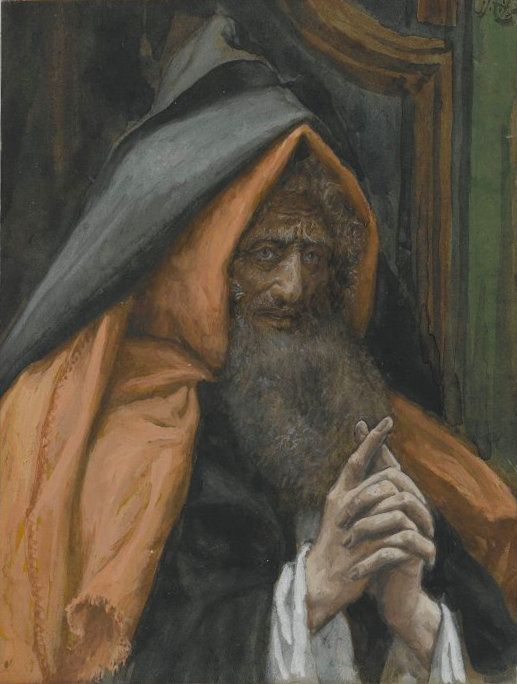
Feast days

Feast: March 17

Nine days · Free

Pray the novena
with us.

One short email a day for nine days. The day's prayer, a line from St. Patrick of Ireland's story, and a nudge to keep going.

Also on March 17
St. Joseph of Arimathæa

St. Joseph of Arimathæa

March 17 · Feast
M

Sts. Martyrs in the…

March 17 · Feast
A

St. Agricola of…

March 17 · Bishop
← All 1727 saints in the library
Sources & notes

Feast-day sources

Story sources

Sources

Credits

From Sabine Baring-Gould, The Lives of the Saints, new edition in 16 vols. (London: John C. Nimmo, 1897), digitized text from Project Gutenberg. Public domain.

From “Catholic Encyclopedia (1913)/St. Patrick,” The Catholic Encyclopedia (New York: Robert Appleton Company, 1907–1914), via Wikisource. Public domain. Matched by name and feast date; text unedited except for our bracketed notes in grey.

From Sabine Baring-Gould, The Lives of the Saints, new edition in 16 vols. (London: John C. Nimmo, 1897), digitized text from Project Gutenberg. Public domain in the United States. Reproduced unedited, except for short bracketed notes in grey that we added to explain names and terms (“S.” is the old abbreviation for Saint). Some history and judgments reflect 19th-century scholarship.