L

Bishop Maximinus of Treves died in 349 while visiting relatives in Aquitaine, and his successor, St. Paulinus, sent Lubentius to bring back the body.

Read the essentials →
October 13 · Priest, Confessor

St. Lubentius

St. Lubentius

Bishop Maximinus of Treves died in 349 while visiting relatives in Aquitaine, and his successor, St. Paulinus, sent Lubentius to bring back the body.

Traditional feast

October 13
1914 / pre-1969 calendar, per Baring-Gould (1897)

Current feast

Not verified yet

Represents

Priest
Confessor

Their story

Adapted in modern English from Baring-Gould (1897–98) · original text below

(The surviving account on this page begins partway through the story.)

Bishop Maximinus of Treves died in 349 while visiting relatives in Aquitaine, and his successor, St. Paulinus, sent Lubentius to bring back the body. Not knowing where it lay, Lubentius wandered until he heard a shepherd boy swear at a sheep "by St. Maximin." The boy pointed to the nearest church.

Saying nothing to arouse suspicion, Lubentius and his companions crept in at night, took the keys from the sleeping custodian, and carried the body off to Treves. He then returned to his parish at Cobern on the Moselle, where he died. The legend says his body would not budge when the people of Cobern tried to keep it. They grew angry, until a reverend man suggested putting it in a boat to choose its own resting place.

The boat drifted past Winningen, Moselweis and Coblenz, then turned up the Rhine and into the Lahn, past Ems, Nassau, Diez and Limburg, and grounded at the rock of Dietkirchen, where he still lies. Baring-Gould calls this a romantic legend that probably replaces an ordinary transfer of relics.

Early life

Selected sentences from the original account, unaltered.

Maximin I will, if you leave the flock again ! ” Lubentius rushed upon the young shepherd and insisted on being told where lay the body of the Maximin by whom he swore.

What they represent

How they teach us to live

Drawn from themes in the original account

Keep their day. Remember them on October 13 with a short prayer, and ask for their help.

Read more

The full original · 463 words

Read Baring-Gould’s full account

Baring-Gould’s sources: Venerated in the diocese of Treves, and specially at Cobem on the Moselle. Authority: — A Life by an anonymous writer, and of uncertain date, in the passionale of the monastery of Amstein.] S. Lubentius was given by his parents when a little child, to S. Martin at Tours, and was by him baptized and adopted as his son. He was afterwards committed to S. Maximinus, Bishop of Trfeves, to be by him educated for holy orders, and when Lubentius had reached a suitable age, Maximinus ordained him priest.

Maximinus died in 349 when visiting his relatives in Aquitain, and his successor, S. Paulinus, ordered Lubentius to proceed to Aquitain and recover the body of the bishop. He seems to have been ignorant of the whereabouts of the place where Maximinus was buried, and as Aquitain was a large district, he rambled about it in great uncertainty. One day, however, he heard a shepherd boy swear at a straying sheep that he would rattle his stick about its sides, “ By S. Ltibentius.

Maximin I will, if you leave the flock again ! ” Lubentius rushed upon the young shepherd and insisted on being told where lay the body of the Maximin by whom he swore. The lad indicated the nearest church.

Lubentius said nothing more on the matter, lest he should excite suspicion, but he and his companions in the night got into the room of the sleeping custodian, stole the church keys, unlocked the doors, made off with the dead body, and conveyed it safely to Trfeves. Having accomplished this task, he returned to his pastoral charge at Cobem on the Moselle, where he died in the odour of sanctity. When he was dead, the people of Cobem, delighted at the prospect of having the body of a saint in their church, proceeded to the house and endeavoured to remove the body. But no. The dead man lay immovable. Nothing could persuade him to stir an inch. The people prayed, but he remained inflexible. Then they got angry, and would have fallen on the corpse and battered it, had not a certain reverend man interposed and advised that the body should be placed in a boat and allowed to float up or down the Moselle as it liked, and pick its own place of burial. This was done. Below the town the banks were lined with people, excited, eager, hoping the boat would ground at their respective villages. But no; it drifted on with the dead man in it, past Winningen, Moselweis, and did not even rest at Coblenz. But now, marvellous to relate, the skiff, instead of descending the Rhine, when it had entered that river, headed up it, and attracted by the beauties of the Lahn, the dead Lubentius steered up that rapid' river. Ems was unsuitable. Nassau, a lovely green meadow between rocks covered with birch and beech, did not arrest it. Diez, one day to be crowned by a picturesque castle; Limburg rock, which a cathedral would surmount with seven spires, was refused; and when the scenery was dull, and the hills fell away, the skiff grounded before the solitary rock of Dietkirchen; and there Lubentius lies at this present day. Such is the romantic legend which takes the place of probably a very prosaic translation.
Feast days

Feast: October 13

Nine days · Free

Pray the novena
with us.

One short email a day for nine days. The day's prayer, a line from St. Lubentius's story, and a nudge to keep going.

Also on October 13
C

St. Carpus

October 13 · Feast
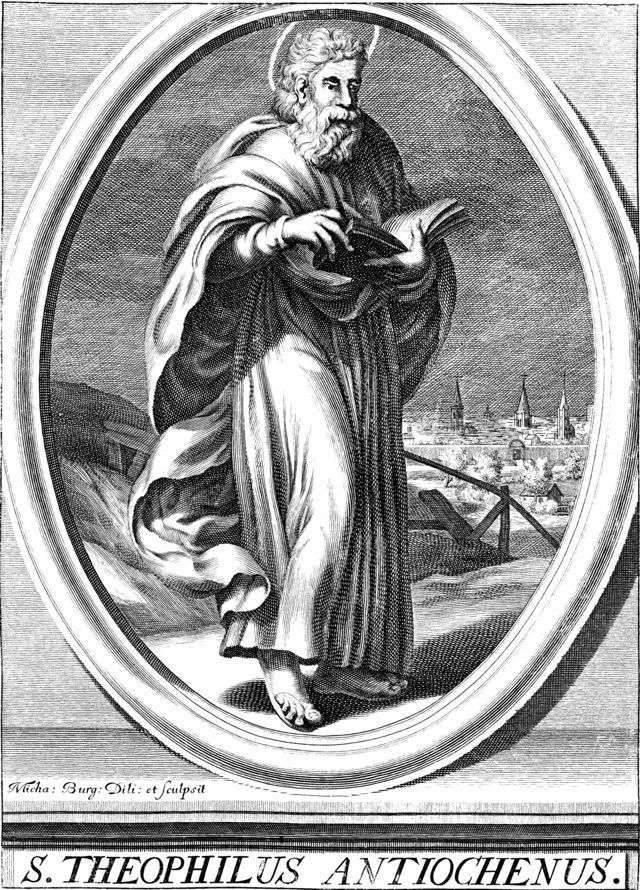
St. Theophilus of Antioch. I

St. Theophilus of…

October 13 · Bishop
F

Sts. Faustus

October 13 · Martyr
← All 1726 saints in the library
Sources & notes

Feast-day sources

Story sources

Sources

Credits

From Sabine Baring-Gould, The Lives of the Saints, new edition in 16 vols. (London: John C. Nimmo, 1897–98); text from the Internet Archive scan (OCR, lightly cleaned; errors possible). Public domain.

From Sabine Baring-Gould, The Lives of the Saints, new edition in 16 vols. (London: John C. Nimmo, 1897–98); text from the Internet Archive scan (OCR, lightly cleaned; errors possible). Public domain in the United States. Reproduced unedited, except for short bracketed notes in grey that we added to explain names and terms (“S.” is the old abbreviation for Saint). Some history and judgments reflect 19th-century scholarship.