Their story
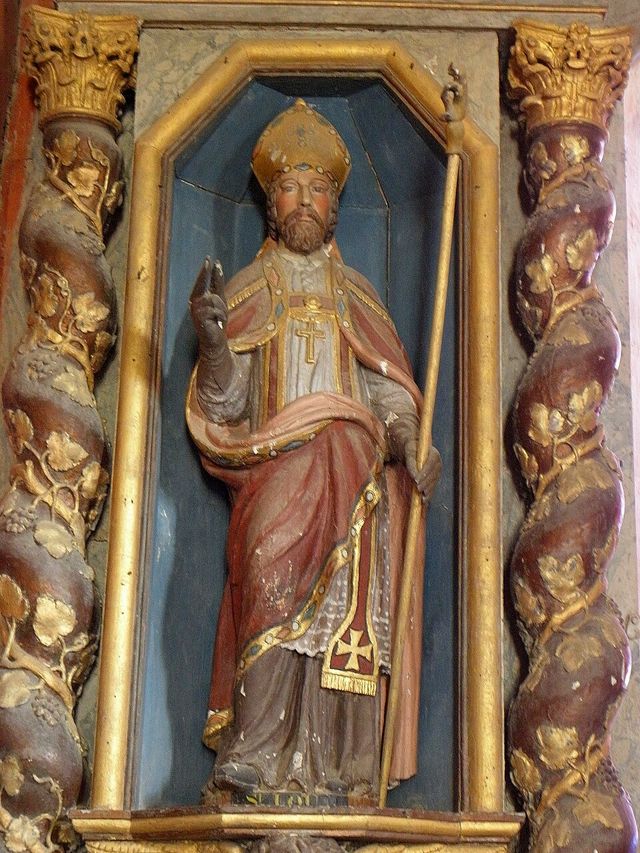
Lupus, called Saint Loup in French, was born of a noble family at Toul and was a successful lawyer. He married Pimeniola, sister of St Hilary of Arles. After six years they agreed to separate and live in continence. Lupus spent a year at the abbey of Lerins under St Honoratus. When he went to Mâcon to give an estate to charity, envoys from Troyes met him: the church there had chosen him bishop in 426, and his resistance was useless.
As bishop he wore sackcloth and a single tunic, slept on boards, spent every second night in prayer, and sometimes went three days without food. When the Pelagian (the teaching of Pelagius that people can be good without God's grace) heresy spread in Britain, an assembly of bishops, probably at Arles in 429, sent him there with St Germanus of Auxerre, and Butler says they banished it by prayer, preaching and miracles. St Sidonius Apollinaris called him 'the father of fathers and bishop of bishops'.
When Attila's army approached Troyes, which had neither walls nor garrison, Lupus went out in procession behind a cross. 'I am the scourge of God,' Attila said. Lupus answered that if he was the scourge God used to punish them, he should do only what God allowed. Attila spared the city. After his defeat he took Lupus with him as far as the Rhine as a kind of safeguard. Roman commanders suspected the bishop of helping the enemy escape, and he had to leave Troyes for two years, which he spent in prayer. He then returned and died in 479, having been bishop for fifty-two years.