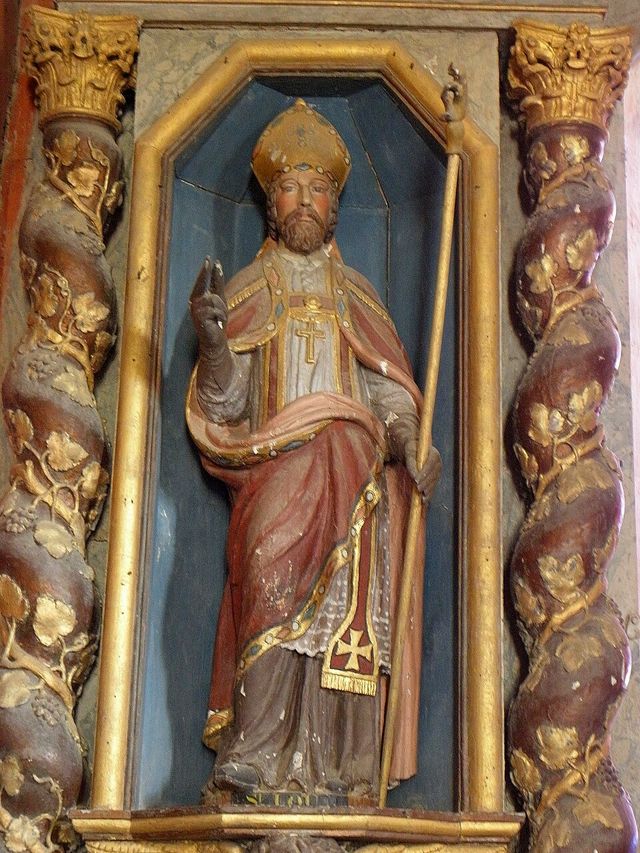
St. Lupus of Troyes

A shepherd who stayed with his people through hard times.

Read the essentials →
July 29 · Bishop

St. Lupus of Troyes

St. Lupus of Troyes

A shepherd who stayed with his people through hard times.

Traditional feast

July 29
1914 / pre-1969 calendar, per Baring-Gould (1897)

Current feast

July 29
Secondary source · Wikipedia

Represents

Bishop

Their story

Adapted in modern English from Alban Butler's Lives of the Saints

Lupus, called Saint Loup in French, was born of a noble family at Toul and was a successful lawyer. He married Pimeniola, sister of St Hilary of Arles. After six years they agreed to separate and live in continence. Lupus spent a year at the abbey of Lerins under St Honoratus. When he went to Mâcon to give an estate to charity, envoys from Troyes met him: the church there had chosen him bishop in 426, and his resistance was useless.

As bishop he wore sackcloth and a single tunic, slept on boards, spent every second night in prayer, and sometimes went three days without food. When the Pelagian (the teaching of Pelagius that people can be good without God's grace) heresy spread in Britain, an assembly of bishops, probably at Arles in 429, sent him there with St Germanus of Auxerre, and Butler says they banished it by prayer, preaching and miracles. St Sidonius Apollinaris called him 'the father of fathers and bishop of bishops'.

When Attila's army approached Troyes, which had neither walls nor garrison, Lupus went out in procession behind a cross. 'I am the scourge of God,' Attila said. Lupus answered that if he was the scourge God used to punish them, he should do only what God allowed. Attila spared the city. After his defeat he took Lupus with him as far as the Rhine as a kind of safeguard. Roman commanders suspected the bishop of helping the enemy escape, and he had to leave Troyes for two years, which he spent in prayer. He then returned and died in 479, having been bishop for fifty-two years.
Struggles & surrender

What they wrestled with, and how they gave it to God

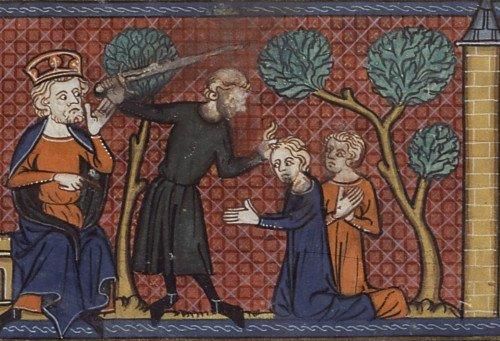
  • Suspected of treason ·
    After Attila's defeat, Roman commanders suspected him of helping the king escape, and he had to leave Troyes for two years which he spent in retirement and austerity before returning to his church.

Early life

The book says little or nothing about early life. This is how the account begins.

Thin entry · the 1897 book gives only 0 words. We have not filled the gap with invented detail.

What they represent

How they teach us to live

Drawn from themes in the original account

Learn from the kind of life it was. A shepherd who stayed with his people through hard times.

Keep their day. Remember them on July 29 with a short prayer, and ask for their help.

Read more

The full original · 0 words

Read Baring-Gould’s full account

Baring-Gould’s sources: Roman Martyrology, Marty rology of Bede, Hrabanus, Ado, Notker, Wandelbert, Gallican Martyrologies. Authorities. A Letter of Sidonius Apollinaris (Lib. vi. ep. 1) to S. Lupus, mention in other of his letters. A Life of the saint written by some one who was acquainted with his disciples; a second and longer Life, written at the end of the 8th or beginning of the 9th cent. This cannot be trusted.] S. Lupus was born at Tulle in Gaul, about the year 383, and was the stin of Epirichius, a nobleman, perhaps of British race. He married Pimeniola, sister of S. Hilary of Arles, and spent seven years with her in great love. Then he retired to the island of Lerins, and placed himself under the direction of S. Honoratus What became of his wife is not stated. When S. Honoratus was made bishop of Arles, he went to Macon, in Burgundy, to dispose of an estate he possessed there, and was preparing to return, when he was met by the deputies of the church of Troyes, which had just lost its bishop, a.d. 426, to announce to him that he had been elected to the episcopal throne of that church. In an assembly held at Arles in 429, it was decided to send S. Germain of Auxerre and S, Lupus of Troyes to Britain to oppose the Pelagian heresy, which had greatly spread in the island. The history of that mission is reHe saved Troyes from being sacked by Attila, king of the Huns, when Gaul was overrun with the barbarian horde, and died in 47 9, In Welsh his name is Bleiddian, in French Lieu, 636 Lives 0/ the Saints. truly 39.

Feast days

Feast: July 29

Nine days · Free

Pray the novena
with us.

One short email a day for nine days. The day's prayer, a line from St. Lupus of Troyes's story, and a nudge to keep going.

Also on July 29
St. Martha

St. Martha

July 29 · Virgin
Sts. Beatrix, Simplicius and Faus-

Sts. Beatrix

July 29 · Feast
F

St. Felix II.

July 29 · Feast
← All 1726 saints in the library
Sources & notes

Feast-day sources

Story sources

Sources

Credits

Image: Le Lou-du-Lac (35) Église 19.JPG · GO69 · CC BY-SA 4.0, via Wikimedia Commons

From Sabine Baring-Gould, The Lives of the Saints, new edition in 16 vols. (London: John C. Nimmo, 1897–98); text from the Internet Archive scan (OCR, lightly cleaned; errors possible). Public domain.

Image: GO69, Wikimedia Commons (CC BY-SA 4.0)

From Sabine Baring-Gould, The Lives of the Saints, new edition in 16 vols. (London: John C. Nimmo, 1897–98); text from the Internet Archive scan (OCR, lightly cleaned; errors possible). Public domain in the United States. Reproduced unedited, except for short bracketed notes in grey that we added to explain names and terms (“S.” is the old abbreviation for Saint). Some history and judgments reflect 19th-century scholarship.