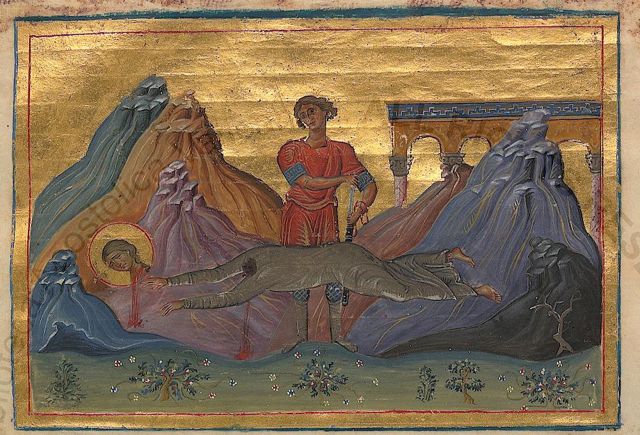
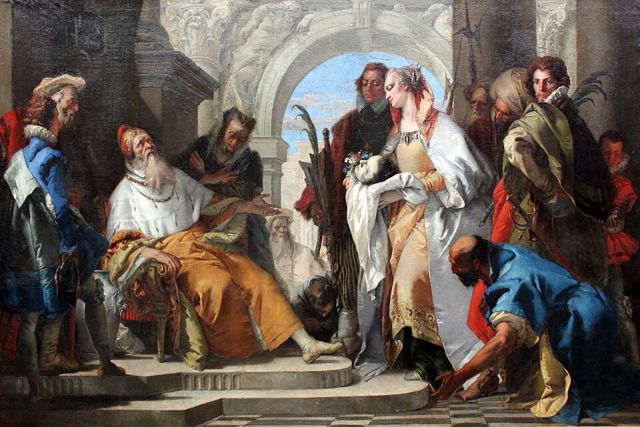
Baring-Gould’s sources: Gallican and Roman Martyrologies, that of Worms of 1576, Wandelbert, Hrabanus, Ado, and Notker. Authority: — The ancient Acts, apparently trustworthy, though not contemporary. Another and later edition of the Acts exists, written apparently in the 6th cent., it is much amplified.] In the reign of the Emperor Marcus Aurelius, when persecution was raging at Lyons, two Christians of that city, Marcellus and Valerian, having been taken, succeeded in S. Marcellus.
…effecting their escape from prison, and fled the town. Valerian [Roman emperor 253–260, who persecuted bishops and clergy] took the road to Autun, and Marcellus that of Chalonssur-Saone. The latter was kindly lodged by a Latin gentleman resident in the district. The zeal of Marcellus was aroused by seeing his host offer incense to some bronze statues of Mars on horseback, Mercury and Minerva, which stood in his vestibule, and he spoke to him against idolatry. The gentleman listened, and Marcellus succeeded in convincing him of his error, and leading him to the true faith.
After awhile Marcellus, no longer deeming it safe for himself or for his host that he should remain there, started on foot for Strasburg. He had not gone far before he met Priscus the governor of the district, with a party of servants and soldiers, on their way to the country villa of the governor. After the courteous, hospitable manner of the times, Priscus invited the wayfarer to rest at his villa and partake of his food. He was about to offer a solemn sacrifice.
Then Marcellus, weary of concealment, and shrinking from giving an evasive or false excuse, declined on the ground that he was a Christian, and could not partake of the table of devils.
This led to an outcry among the attendants of the governor. “ Let the fellow be tied by hands and feet to the tops of two young poplars bent down, and then relax them, and he will be rent asunder.”
Priscus declined to execute judgment in this peremptory and illegal fashion. He would hear Marcellus in his court, properly constituted.
Marcellus was led off bound, and on the first opportunity was brought before the governor and ordered to adore the images of the Sun and of Saturn, on the banks of the Saone. The martyr refused with such indignation that Priscus, in a lit of wrath, ordered him to be buried up to his waist, and allowed to die of starvation.
The relics [the bodily remains of a saint, or objects they used, kept with honor] of S. Marcellus were saved at the French Revolution, and are now preserved in a shrine in the church of S. Marcel-les-Chalons, near Chalons-sur-Saone, and on this day are visited by crowds of the faithful.