P

Palladius was a hermit and friend of Simeon the Ancient; the two often met to encourage each other in prayer and self-denial.

Read the essentials →
January 28 · Hermit

St. Palladius in Syria

St. Palladius in Syria

Palladius was a hermit and friend of Simeon the Ancient; the two often met to encourage each other in prayer and self-denial.

Traditional feast

January 28
1914 / pre-1969 calendar, per Baring-Gould (1914)

Current feast

November 29
Secondary source · Wikipedia

Represents

Hermit

Their story

Adapted in modern English from Baring-Gould (1914) · original text below · little is known

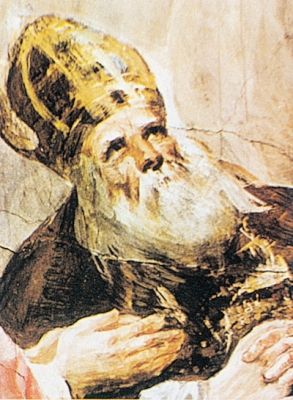
Palladius was a hermit and friend of Simeon the Ancient; the two often met to encourage each other in prayer and self-denial. Only one story of his life survives.

A merchant returning from a nearby market was robbed and murdered, and the killer left the body by Palladius's door. Next day the murderer stirred up a crowd, which broke in and accused the hermit. Palladius prayed, then told the dead man to name his killer. According to the account, the corpse rose and pointed at him, and the dead man's belongings were found on the murderer.

Struggles & surrender

What they wrestled with, and how they gave it to God

  • Falsely accused of murder ·
    Source: Baring-Gould, Lives of the Saints. A murderer left his victim at Palladius's door and stirred up a crowd that accused the hermit.

Early life

The book says little or nothing about early life. This is how the account begins.

Thin entry · the 1914 book gives only 166 words. We have not filled the gap with invented detail.

Palladius was a friend of Simeon the Ancient; they often met to encourage one another in the practice of self-denial and prayer. One incident in the life of this hermit has been alone transmitted to us. Not far from his cell was a frequented market.

What they represent

How they teach us to live

Drawn from themes in the original account

Pray a little every day. Prayer runs all through this account.

Make time for silence. Solitude and withdrawal to pray shape this life.

Stay faithful when it costs you. This account is about holding firm under pressure.
Read more

The full original · 166 words

Read Baring-Gould’s full account

Baring-Gould’s sources: This Palladius is not to be confounded with the author of the Historia Lausiaca. He is mentioned by Theodoret, who relates of him all that is known.

Palladius was a friend of Simeon the Ancient; they often met to encourage one another in the practice of self-denial and prayer. One incident in the life of this hermit has been alone transmitted to us. Not far from his cell was a frequented market. A merchant who had been at it was waylaid, robbed and murdered by a man who, after having done the deed, cast the body by the door of the hermit's cell. Next day a crowd assembled, instigated by the murderer, and with threatening looks and words, they broke open the hermit's door, and drew him forth, charging him with the murder. Then Palladius raised his hands and eyes to heaven and prayed. And when his prayer was concluded, he turned to the corpse and said, "Young man, designate the murderer!" Thereupon the dead man partly rose, raised his hand and pointed at him who had killed him; and when he was apprehended, articles belonging to the deceased were discovered upon him.

Feast days

Feast: November 29
Traditional: January 28

Nine days · Free

Pray the novena
with us.

One short email a day for nine days. The day's prayer, a line from St. Palladius in Syria's story, and a nudge to keep going.

Also on January 28
T

Sts. Thyrsus

January 28 · Martyrs
St. Valerius of Saragossa

St. Valerius of Saragossa

January 28 · Bishop
St. Cyril of Alexandria

St. Cyril of Alexandria

January 28 · Patriarch
← All 1726 saints in the library
Sources & notes

Feast-day sources

Story sources

Sources

Credits

From Sabine Baring-Gould, The Lives of the Saints, new and revised edition (Edinburgh: John Grant, 1914; first edition 1872). Public domain.

From Sabine Baring-Gould, The Lives of the Saints, new and revised edition (Edinburgh: John Grant, 1914; first edition 1872). Public domain in the United States. Reproduced unedited, except for short bracketed notes in grey that we added to explain names and terms (“S.” is the old abbreviation for Saint). Some history and judgments reflect 19th-century scholarship.