E
St. Eanswitha
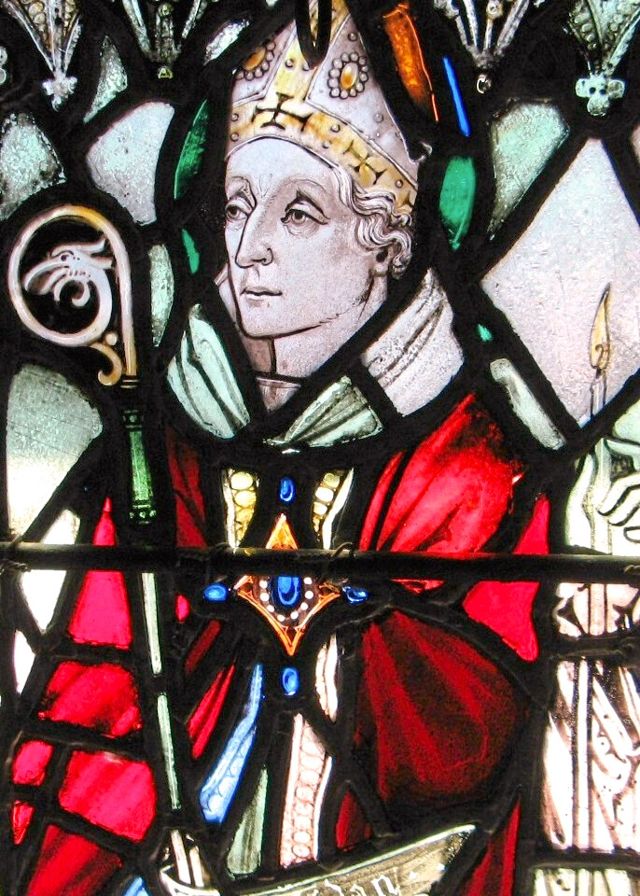
St. Aidan of Lindisfarne
R
A shepherd who stayed with his people through hard times.
Read the essentials →A shepherd who stayed with his people through hard times.
August 31
Not verified yet
Bishop
“ The letter is rank Arianism,” shouted Lucifer of Cagliari; “ there is no faith beside the Nicene, and all the soldiers of the Emperor will not prevent me from abhorring blasphemy.” “ Insolent man !” said Constantius, bursting with unblushing brow from behind his screen; “ is it your duty to school an Emperor?” The presence and tones of an Arian despot capable of any barbarity intimidated the majority of the bishops.
Stay faithful when it costs you. This account is about holding firm under pressure.
Learn from the kind of life it was. A shepherd who stayed with his people through hard times.
“ The letter is rank Arianism [followers of Arius, who taught that the Son is a created being, not fully God],” shouted Lucifer of Cagliari; “ there is no faith beside the Nicene, and all the soldiers of the Emperor will not prevent me from abhorring blasphemy.”
“ Insolent man !” said Constantius, bursting with unblushing brow from behind his screen; “ is it your duty to school an Emperor?”
The presence and tones of an Arian despot capable of any barbarity intimidated the majority of the bishops. They yielded, not only to sign the decree against Athanasius, but formally to profess union with the Arians. Dionysius, in a moment of weakness, yielded the first point in order to secure from the opponents a corresponding •S'. Eanswitha.
concession, which should leave the faith undisturbed. It is said that he repented of having yielded at all, and that Eusebius [Eusebius of Caesarea (d. c. 339), the first historian of the Church] “ very ingeniously" contrived to efface his signature. There is no doubt that Eusebius, Lucifer, and Paulinus were steadfast, and when Constantius answered their appeal to the canons by saying, “ Let my will serve you for a canon,” they lifted up their hands, protesting against his bringing his authority to bear on ecclesiastical affairs, and reminding him of the account he must render at the Day of Judgment.
They were instantly condemned to exile. Dionysius, who now cast in his lot with them, shared their sentence. S. Hilary was cruelly beaten and banished. Maximus of Naples, though weak from illness, stood firm, and died in exile. A pious bishop, Rufinianus, was compelled by a young Arian prelate, Epicetus of Centumcellse, to run before his chariot, until he died by bursting a blood-vessel. Lucifer was kept in a dark dungeon at Germanicia; Eusebius, at Scythopolis. Paulinus was banished to Phrygia, and died in exile.
His body was brought thence to Treves [Trier in Germany], where it received honourable burial, and the church of S. Paulinus, outside the Porta Nigra, was erected in the ninth century in his honour, and above his remains.
Feast: August 31
One short email a day for nine days. The day's prayer, a line from St. Paulinus of Treves's story, and a nudge to keep going.
From Sabine Baring-Gould, The Lives of the Saints, new edition in 16 vols. (London: John C. Nimmo, 1897–98); text from the Internet Archive scan (OCR, lightly cleaned; errors possible). Public domain.
From Sabine Baring-Gould, The Lives of the Saints, new edition in 16 vols. (London: John C. Nimmo, 1897–98); text from the Internet Archive scan (OCR, lightly cleaned; errors possible). Public domain in the United States. Reproduced unedited, except for short bracketed notes in grey that we added to explain names and terms (“S.” is the old abbreviation for Saint). Some history and judgments reflect 19th-century scholarship.