…who subscribed the decrees of the councils of Vaison and Carpentras, about A.D. 640.
Read the essentials →…who subscribed the decrees of the councils of Vaison and Carpentras, about A.D. 640.
Read the essentials →…who subscribed the decrees of the councils of Vaison and Carpentras, about A.D. 640.
June 25
June 25 (also listed: November 24)
Bishop
Thin entry · the 1897 book gives only 126 words. We have not filled the gap with invented detail.
…who subscribed the decrees of the councils of Vaison and Carpentras, about A.D. 640. There is little reliable ancient information in the life of Prosper of Reggio.] S. Prosper, bishop of Reggio, is said to have sold all his possessions on hearing read in the Gospel the words of our Lord, “ If thou wilt be perfect, go, sell all that thou hast, and give to the poor, and come and follow me.” He administered his diocese with great care for the poor, and for the spread of true religion. After having occupied the episcopal throne for twenty-two years, he died on June 25th, about the year 466, and was buried in the church of S. Apollinaris, which he had erected outside the walls of Reggio.
Give to people in need. The account records care for the poor.
Keep their day. Remember them on June 25 with a short prayer, and ask for their help.
…who subscribed the decrees of the councils of Vaison and Carpentras, about A.D. 640. There is little reliable ancient information in the life of Prosper of Reggio.] S. Prosper, bishop of Reggio, is said to have sold all his possessions on hearing read in the Gospel the words of our Lord, “ If thou wilt be perfect, go, sell all that thou hast, and give to the poor, and come and follow me.” He administered his diocese with great care for the poor, and for the spread of true religion. After having occupied the episcopal throne for twenty-two years, he died on June 25th, about the year 466, and was buried in the church of S. Apollinaris, which he had erected outside the walls of Reggio.
Feast: June 25
One short email a day for nine days. The day's prayer, a line from St. Prosper of Reggio's story, and a nudge to keep going.
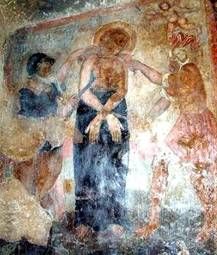
Image: Virginmarysaintbernardsaintprosper.JPG · Giovanni Soncini · Public domain, via Wikimedia Commons
From Sabine Baring-Gould, The Lives of the Saints, new edition in 16 vols. (London: John C. Nimmo, 1897–98); text from the Internet Archive scan (OCR, lightly cleaned; errors possible). Public domain.
Image: Giovanni Soncini, Wikimedia Commons (Public domain)
From Sabine Baring-Gould, The Lives of the Saints, new edition in 16 vols. (London: John C. Nimmo, 1897–98); text from the Internet Archive scan (OCR, lightly cleaned; errors possible). Public domain in the United States. Reproduced unedited, except for short bracketed notes in grey that we added to explain names and terms (“S.” is the old abbreviation for Saint). Some history and judgments reflect 19th-century scholarship.