F
St. Felix of Tubzacene
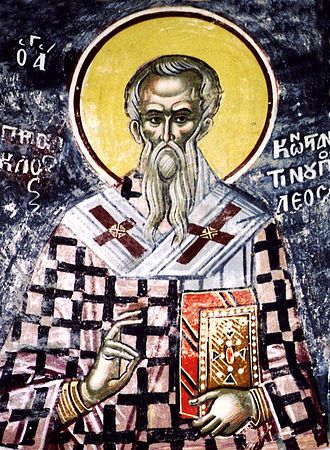
St. Proclus of…
C
A shepherd who stayed with his people through hard times.
Read the essentials →A shepherd who stayed with his people through hard times.
October 24
Not verified yet
Bishop
Thin entry · the 1897 book gives only 245 words. We have not filled the gap with invented detail.
VOL. XII. 19 hot blood. Better for Rusticus to live at a safe distance from such snares.
Stay faithful when it costs you. This account is about holding firm under pressure.
Make time for silence. Solitude and withdrawal to pray shape this life.
Learn from the kind of life it was. A shepherd who stayed with his people through hard times.
VOL. XII. 19 hot blood. Better for Rusticus to live at a safe distance from such snares. Proculus, Bishop of Marseilles, somewhat later, ordained Rusticus priest, and attached him to his church. He was elevated about 427 to the episcopal throne of Narbonne. Little is known of his acts as bishop. He built one of the churches in his city, and the inscription he put up recording the event is still extant He received some of the Christians flying the persecutions of the Vandal Arians [followers of Arius, who taught that the Son is a created being, not fully God] in Africa, but was perplexed when he found that some of them could not give him definite information as to their baptism, whether they had received the Sacrament of regeneration from Catholic or heretical priests. Some scandals disturbed his diocese, and he wrote to Pope Leo I. for advice how he should deal with these cases, and expressing his desire to resign his diocese that he might retire to the more congenial tranquillity of the cloister. But Leo strongly dissuaded him from abandoning his see. Rusticus had, moreover, consecrated a certain Hermes to the see of Beziers [a bishop’s “see” is his diocese, named from his seat (Latin sedes)], but his diocese refused to receive him. Rusticus entreated the Pope to allow Hermes to succeed him at Narbonne. S. Rusticus attended the second Council of Arles in 451, also the third Council of Arles held to adjudicate on the differences between the Bishop of Frdjus and the Abbot of Lerins.
He died in 461, and his relics [the bodily remains of a saint, or objects they used, kept with honor] are still shown at Narbonne.
Feast: October 24
One short email a day for nine days. The day's prayer, a line from St. Rusticus of Narbonne's story, and a nudge to keep going.
From Sabine Baring-Gould, The Lives of the Saints, new edition in 16 vols. (London: John C. Nimmo, 1897–98); text from the Internet Archive scan (OCR, lightly cleaned; errors possible). Public domain.
From Sabine Baring-Gould, The Lives of the Saints, new edition in 16 vols. (London: John C. Nimmo, 1897–98); text from the Internet Archive scan (OCR, lightly cleaned; errors possible). Public domain in the United States. Reproduced unedited, except for short bracketed notes in grey that we added to explain names and terms (“S.” is the old abbreviation for Saint). Some history and judgments reflect 19th-century scholarship.