S

Faithfulness to Christ when it cost everything.

Read the essentials →
April 6 · Martyr

St. Sixtus or Xystus

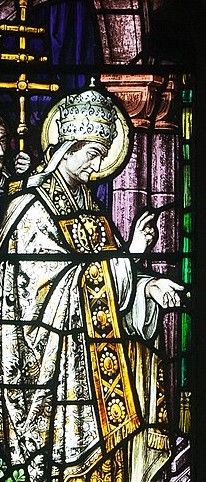
St. Sixtus or Xystus, Pope

Faithfulness to Christ when it cost everything.

Traditional feast

April 6
1914 / pre-1969 calendar, per Baring-Gould (1897)

Current feast

Not verified yet

Represents

Martyr

Their story

Adapted in modern English from the Catholic Encyclopedia (1913) · original text below · little is known

Sixtus I (in the oldest documents, Xystus) succeeded St Alexander as Bishop of Rome and was followed by St Telesphorus. He reigned about ten years in the time of Emperor Hadrian (Roman emperor 117–138). He was a Roman, son of Pastor.

The Liber Pontificalis (the early medieval 'Book of the Popes', not always reliable for the earliest ones) credits him with three rules: only sacred ministers may touch the sacred vessels; bishops summoned to Rome must present apostolic letters on returning home; and after the Preface the priest recites the Sanctus with the people.

Old catalogues and martyrologies call him a martyr. He was buried in the Vatican beside St Peter. The Xystus named in the Canon of the Mass is Xystus II, not this pope.

Early life

The book says little or nothing about early life. This is how the account begins.

What they represent

How they teach us to live

Drawn from themes in the original account

Learn from the kind of life it was. Faithfulness to Christ when it cost everything.

Keep their day. Remember them on April 6 with a short prayer, and ask for their help.

From the Catholic Encyclopedia

1913 · 385 words

Pope St. Sixtus I (in the oldest documents, Xystus is the spelling used for the first three popes of that name), succeeded St. Alexander and was followed by St. Telesphorus. According to the "Liberian Catalogue" of popes, he ruled the Church during the reign of Adrian "a conulatu Nigri et Aproniani usque Vero III et Ambibulo", that is, from 117 to 126. Eusebius [Eusebius of Caesarea (d. c. 339), the first historian of the Church], who in his "Chronicon" made use of a catalogue of popes different from the one he used in his "Historia ecclesiastica", states in his "Chronicon" that Sixtus I was pope from 114 to 124, while in his "History" he makes him rule from 114 to 128. All authorities agree that he reigned about ten years. He was a Roman by birth, and his father's name was Pastor. According to the "Liber Pontificalis" (ed. Duchesne, I, 128), he passed the following three ordinances: (1) that none but sacred ministers are allowed to touch the sacred vessels; (2) that bishops who have been summoned to the Holy See shall, upon their return, not be received by their diocese except on presenting Apostolic letters; (3) that after the Preface in the Mass the priest shall recite the Sanctus with the people. The "Felician Catalogue" of popes and the various martyrologies give him the title of martyr. His feast is celebrated on 6 April. He was buried in the Vatican, beside the tomb of St. Peter. His relics [the bodily remains of a saint, or objects they used, kept with honor] are said to have been transferred to Alatri in 1132, though O Jozzi ("Il corpo di S. Sisto I., papa e martire rivendicato alla basilica Vaticana", Rome, 1900) contends that they are still in the Vatican Basilica. Butler (Lives of the Saints, 6 April) states that Clement X gave some of his relics to Cardinal de Retz, who placed them in the Abbey of St. Michael in Lorraine. The Xystus who is commemorated in the Canon of the Mass is Xystus II, not Xystus I.

Acta SS., April, I, 531-4; Liber Pontificatis, ed. DUCHESNE, I (Paris, 1886), 128; MARINI, Cenni storici popolari sopra S. Sisto I, papa e martire, e suo culto in Aletri (Foligno, 1884); DE PERSIIS, Del pontificato di S. Sisto I, papa e martire, della translazione delle sue reliquie da Roma ecc., memorie (Alatri, 1884); BARMBY in Dict. Christ. Biog., s. v. Sixtus (2) I.
Read more

The full original · 0 words

Read Baring-Gould’s full account

Baring-Gould’s sources: Roman Martyrology, and those of Ado, Notker, Bellinus, Maurolycus, &c., but some Martyrologies on April 3rd. Authorities: — Notice by S. Irenaeus and in the ancient Martyrologies.] MSggflF this holy pope and martyr almost nothing is cer* IlMCl tainly known, except thatS. Irenaeus speaks of him as having succeeded S. Alexander, and having been succeeded by S. Telesphorus in the see of Rome. Although, in the Martyrologies, he is called a martyr, there is no evidence that he shed his blood for the faith. He died April 6th, & MARCELLINUS, M.

Feast days

Feast: April 6

Nine days · Free

Pray the novena
with us.

One short email a day for nine days. The day's prayer, a line from St. Sixtus or Xystus's story, and a nudge to keep going.

Also on April 6
St. Celestine I., Pope

St. Celestine I.

April 6 · Martyr
Bl. Notker Balbulus

Bl. Notker Balbulus

April 6 · Feast
C

St. Celsus

April 6 · Feast
← All 1726 saints in the library
Sources & notes

Feast-day sources

Story sources

Sources

Credits

From Sabine Baring-Gould, The Lives of the Saints, new edition in 16 vols. (London: John C. Nimmo, 1897–98); text from the Internet Archive scan (OCR, lightly cleaned; errors possible). Public domain.

From “Catholic Encyclopedia (1913)/Pope St. Sixtus I,” The Catholic Encyclopedia (New York: Robert Appleton Company, 1907–1914), via Wikisource. Public domain. Matched by name and feast date; text unedited except for our bracketed notes in grey.

From Sabine Baring-Gould, The Lives of the Saints, new edition in 16 vols. (London: John C. Nimmo, 1897–98); text from the Internet Archive scan (OCR, lightly cleaned; errors possible). Public domain in the United States. Reproduced unedited, except for short bracketed notes in grey that we added to explain names and terms (“S.” is the old abbreviation for Saint). Some history and judgments reflect 19th-century scholarship.