St. Stephen Harding

Building a community where people could actually live the Gospel.

Read the essentials →
April 17 · Abbot

St. Stephen Harding

St. Stephen Harding

Building a community where people could actually live the Gospel.

Traditional feast

April 17
1914 / pre-1969 calendar, per Baring-Gould (1897)

Current feast

January 26
Secondary source · Wikipedia

Represents

Abbot

Their story

Adapted in modern English from the Catholic Encyclopedia (1913) · original text below

Stephen Harding was born at Sherborne in Dorset in the mid-eleventh century and educated in its monastery, then studied in Paris and Rome. Returning, he stopped at Molesme and, struck by the holiness of Abbot Robert, joined the community. He became one of Robert's chief supporters and one of the twenty-one monks who went to Cîteaux to found a stricter house.

He became prior under Alberic and, in 1110, abbot. The community had shrunk, but Stephen kept the strict observance. He even barred the Duke of Burgundy, the house's great patron, from the cloister, and was reduced to begging from door to door. The foundation seemed doomed until in 1112 St Bernard arrived with thirty companions.

Then Cîteaux flourished. Stephen founded thirteen monasteries, introduced general chapters and regular visitations, and wrote the 'Charter of Charity', approved in 1119, which bound the Cistercian (a strict reform of Benedictine monks begun at Cîteaux in 1098) houses together. Old and almost blind, he resigned in 1133 and died on 28 March 1134. The Cistercians regard him as their true founder.

Struggles & surrender

What they wrestled with, and how they gave it to God

  • A dying foundation ·
    As abbot he kept Cîteaux's strict rule even when the community had dwindled and he had offended its chief patron; he was reduced to begging door to door, and the house seemed doomed until St Bernard arrived in 1112.

Early life

The book says little or nothing about early life. This is how the account begins.

*£ Stephen Harding. resolved to reform the Order of S. Benedict, and they built the monastery of Citeaux. Stephen became abbot in 1109. In 1 1 13 S. Bernard, followed by thirty monks, came to Stephen Harding, to place themselves under his rule; and S. Stephen had the consolation, before his death, of seeing ninety monasteries spring up following his rule.

What they represent

How they teach us to live

Drawn from themes in the original account

Build up the community you belong to. This life was lived with and for a community.

Learn from the kind of life it was. Building a community where people could actually live the Gospel.

From the Catholic Encyclopedia

1913 · 445 words

Confessor, the third Abbot of Cîteaux, was born at Sherborne in Dorsetshire, England, about the middle of the eleventh century; died 28 March, 1134. He received his early education in the monastery of Sherborne and afterwards studied in Paris and Rome. On returning from the latter city he stopped at the monastery of Molesme and, being much impressed by the holiness of St. Robert, the abbot, joined that community. Here he practised great austerities, became one of St. Robert's chief supporters and was one of the band of twenty-one monks who, by authority of Hugh, Archbishop of Lyons, retired to Cïteaux to institute a reform in the new foundation there. When St. Robert was recalled to Molesme (1099), Stephen became prior of Cïteaux under Alberic, the new abbot. On Alberic's death (1110) Stephen, who was absent from the monastery at the time, was elected abbot. The number of monks was now very reduced, as no new members had come to fill the places of those who had died. Stephen, however, insisted on retaining the strict observance originally instituted and, having offended the Duke of Burgundy, Cïteau'sx great patron, by forbidding him or his family to enter the cloister, was even forced to beg alms from door to door. It seemed as if the foundation were doomed to die out when (1112) St. Bernard with thirty companions joined the community. This proved the beginning of extraordinary prosperity. The next year Stephen founded his first colony at La Ferté, and before is death he had established thirteen monasteries in all. His powers as an organizer were exceptional, he instituted the system of general chapters and regular visitations and, to ensure uniformity in all his foundations, drew up the famous "Charter of Charity" or collection of statues for the government of all monasteries united to Cïteaux, which was approved by Pope Callistus II in 1119 (see CISTERCIANS). In 1133 Stephen, being now old, infirm, and almost blind, resigned the post of abbot, designating as his successor Robert de Monte, who was accordingly elected by the monks. The saint's choice, however, proved unfortunate and the new abbot only held office for two years.

Stephen was buried in the tomb of Alberic, his predecessor, in the cloister of Cîteaux. In the Roman calendar his feast is 17 April, but the Cistercians [strict Benedictine reform begun at Cîteaux in 1098] themselves keep it on 15 July, with an octave, regarding him as the true founder of the order. Besides the "Carta Caritatis" he is commonly credited with the authorship of the "Exordium Cisterciencis cenobii", which however may not be his. Two of his sermons are preserved and also two letters (Nos. 45 and 49) in the "Epp. S. Bernardi".
Read more

The full original · 240 words

Read Baring-Gould’s full account

Baring-Gould’s sources: Roman, Benedictine and Gallican Martyrologies. Authority: — The Annales Cisterciences, William of Malmesbury and William, Abbot of S. Thierri, in his life of S. Bernard.] Little as is known of the early years of S. Stephen Harding, all his historians especially dwell on one feet, that he was an Englishman. The date and place of his birth, and the names of his parents, are alike unknown; but his name, Harding, seems to shew that he was of Saxon blood. He first appears as a boy, brought up in the monastery of Sherborne, in Dorsetshire. Thence he travelled to Scotland, and from Scotland to Paris and Rome. After visiting the holy city he returned to France, and entered the monastery of Molesme, of which S. Robert was then abbot, and the B. Alberic prior. The three in concert 1 The Aberdeen Breviary commemorates on this day a S. Domnan, whether the same or not it is impossible to decide.

*£ Stephen Harding. resolved to reform the Order of S. Benedict [father of Western monks (d. c. 547), author of the Rule], and they built the monastery of Citeaux. Stephen became abbot in 1109. In 1 1 13 S. Bernard, followed by thirty monks, came to Stephen Harding, to place themselves under his rule; and S. Stephen had the consolation, before his death, of seeing ninety monasteries spring up following his rule. He died on March 28th, in the year 1134, but his festival is observed on April 17th. S. Stephen was in character a very Englishman; his life was that strange mixture of repose and action which characterises England. Contemplative and ascetic as he was, he was still in his way a man of action; he had the head to plan, and the calm, unbending energy to execute, a great work. His very countenance, if we may trust his contemporary, the monk of Malmesbury, was English; he was courteous in speech, blithe in countenance, with a soul ever joyful in the Lord. His order seems to have thriven in S. Stephen's native air; most of our great abbeys — Tintem, Rievaulx, Fountains, Furness, andNetley, which are known by their beautiful ruins, were Cistercian [strict Benedictine reform begun at Cîteaux in 1098]. The order took to itself all the quiet nooks and valleys, and all the pleasant streams of Old England, and gladdened the soul of the labourer by its constant bells. Its agricultural character was peculiarly suited to the country, though it took its birth beyond the seas.

Feast days

Feast: January 26
Traditional: April 17

Nine days · Free

Pray the novena
with us.

One short email a day for nine days. The day's prayer, a line from St. Stephen Harding's story, and a nudge to keep going.

Also on April 17
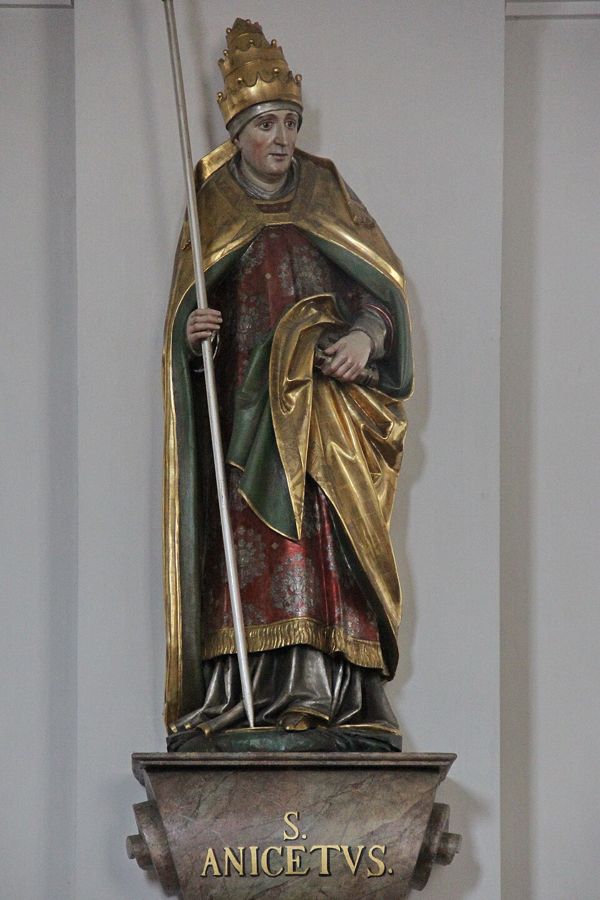
St. Anicetus, Pope

St. Anicetus

April 17 · Martyr
D

St. Domnan and Companions

April 17 · Martyrs
← All 1726 saints in the library
Sources & notes

Feast-day sources

Story sources

Sources

Credits

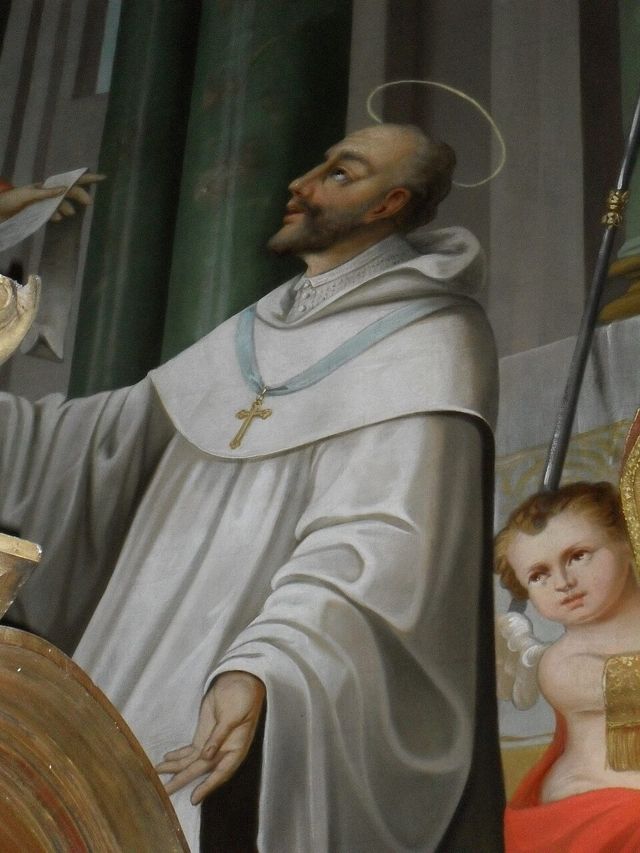
Image: Sv. Stevan Harding, Stevanovska cirkev.JPG · Doncsecz · CC BY-SA 3.0, via Wikimedia Commons

From Sabine Baring-Gould, The Lives of the Saints, new edition in 16 vols. (London: John C. Nimmo, 1897–98); text from the Internet Archive scan (OCR, lightly cleaned; errors possible). Public domain.

Image: Doncsecz, Wikimedia Commons (CC BY-SA 3.0)

From “Catholic Encyclopedia (1913)/St. Stephen Harding,” The Catholic Encyclopedia (New York: Robert Appleton Company, 1907–1914), via Wikisource. Public domain. Matched by name and feast date; text unedited except for our bracketed notes in grey.

From Sabine Baring-Gould, The Lives of the Saints, new edition in 16 vols. (London: John C. Nimmo, 1897–98); text from the Internet Archive scan (OCR, lightly cleaned; errors possible). Public domain in the United States. Reproduced unedited, except for short bracketed notes in grey that we added to explain names and terms (“S.” is the old abbreviation for Saint). Some history and judgments reflect 19th-century scholarship.