Their story
Adapted in modern English from Baring-Gould (1897) · original text below · little is known
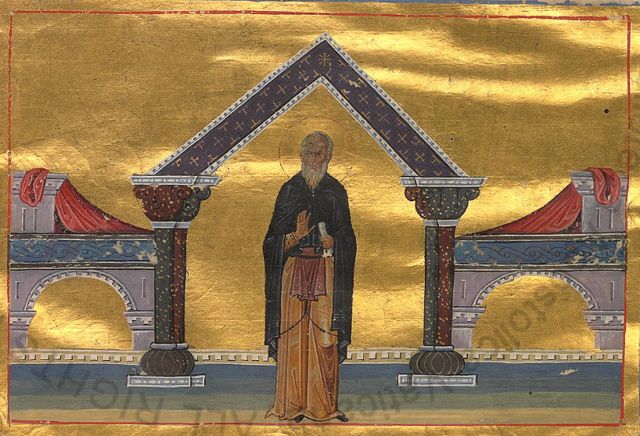
Theodoret (5th-century bishop and church historian), who met him, tells of Thalelæus, a hermit who built a hut beside a pagan shrine near Gabala. Despite terrifying noises and apparitions, and the efforts of the shrine's worshippers, he stayed and converted many of them.
He then shut himself in a cramped cage made of two wheels joined by bars, so low that his chin rested on his knees, and had lived in it ten years when Theodoret saw him. Theodoret spoke with many of his converts. Baring-Gould says this penance is not to be imitated, but that it served to impress the rough people of Syria.
Early life
The book says little or nothing about early life. This is how the account begins.
Thin entry · the 1897 book gives only 248 words. We have not filled the gap with invented detail.
"Not only have I heard of this man from others," says Theodoret, "but I saw him myself." Thalelæus erected for his habitation a small hut against an idol shrine, near Gabala, to which many people resorted, and where they offered sacrifice to devils. The evil spirits, enraged at his thus assaulting them in their sanctuary, endeavoured by hideous clamours and frightful apparitions, to scare the Christian hermit away; but every effort of demons and idolaters to drive him from this shrine proved ineffectual. Thalelæus succeeded in converting many who came as votaries to the temple, and persuaded them to bend their necks to the sweet yoke of Christ's law.
How they teach us to live
Drawn from themes in the original account
Share your faith, in words and by example. Preaching and conversion are central here.
Practise small acts of self-denial. The account dwells on fasting and penance; a skipped snack or a phone-free hour is a start.
Make time for silence. Solitude and withdrawal to pray shape this life.
Learn from the kind of life it was. Leaving everything to pray, yet still drawing people who needed wisdom.