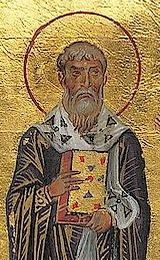
She ran away from home after S. Paul to Seleucia.
September 23
Not verified yet
Virgin
Martyr
She ran away from home after S. Paul to Seleucia. A 1 Dc baptismo, c. 17. "Quod si, qui Pauli perperam scripta legant, exemplum Theclze ad licentiam mulierum docendi tingendique defendunt, sriant in Asia presbyterum qui earn scripturam construxit quasi titulo Pauli de suo cumulans, convictum atque confessum id se a more Pauli fecisse, loco decessisse.” 2 Catal.
Share your faith, in words and by example. Preaching and conversion are central here.
Keep their day. Remember them on September 23 with a short prayer, and ask for their help.
She ran away from home after S. Paul to Seleucia. A 1 Dc baptismo, c. 17. "Quod si, qui Pauli perperam scripta legant, exemplum Theclze ad licentiam mulierum docendi tingendique defendunt, sriant in Asia presbyterum qui earn scripturam construxit quasi titulo Pauli de suo cumulans, convictum atque confessum id se a more Pauli fecisse, loco decessisse.” 2 Catal. Script. Ecclcs. " Periodicum Pauli ct Theclae et totam baptizati Leonis fabulam inter apocryphas scripturas computanus.” Liber ins.
native of that place tried to kiss her in the street, and she tore the clothes off his back in return for his salute. The man accused her before the governor, and she was exposed to wild beasts, which, however, would not touch her. She then jumped into a pond full of seals and porpoises, and baptized herself. All the sea-monsters in the pond died when she jumped in. After that she escaped, and followed S. Paul everywhere, dressed in boy’s clothes. She was then aged eighteen. When S. Paul left for Rome, she was led by a shining cloud to a cave, where she spent seventy years. The recomposed Acts of Thecla certainly embody early and genuine Acts that date back to subapostolic times. See Ramsay, “The Church in the Roman Empire,” 1895.
Feast: September 23
One short email a day for nine days. The day's prayer, a line from St. the Cl A's story, and a nudge to keep going.
From Sabine Baring-Gould, The Lives of the Saints, new edition in 16 vols. (London: John C. Nimmo, 1897–98); text from the Internet Archive scan (OCR, lightly cleaned; errors possible). Public domain.
From Sabine Baring-Gould, The Lives of the Saints, new edition in 16 vols. (London: John C. Nimmo, 1897–98); text from the Internet Archive scan (OCR, lightly cleaned; errors possible). Public domain in the United States. Reproduced unedited, except for short bracketed notes in grey that we added to explain names and terms (“S.” is the old abbreviation for Saint). Some history and judgments reflect 19th-century scholarship.