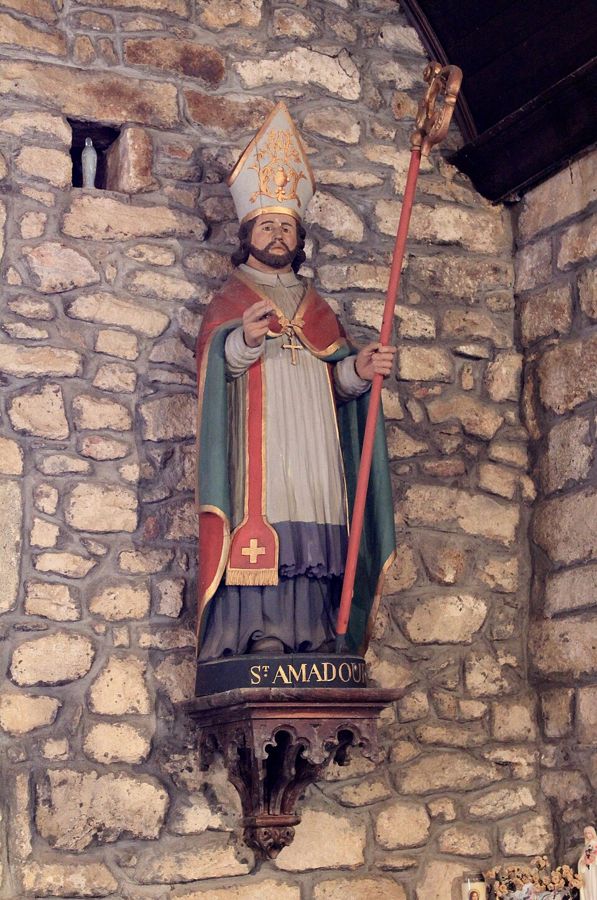
T

Theodard was born at Montauban about 840, probably into a noble and wealthy family, and studied both sacred and secular learning.

Read the essentials →
May 1 · Archbishop

St. Theodard of Narbonne

St. Theodard of Narbonne

Theodard was born at Montauban about 840, probably into a noble and wealthy family, and studied both sacred and secular learning.

Traditional feast

May 1
1914 / pre-1969 calendar, per Baring-Gould (1897)

Current feast

Not verified yet

Represents

Archbishop

Their story

Adapted in modern English from the Catholic Encyclopedia (1913) · original text below

Theodard was born at Montauban about 840, probably into a noble and wealthy family, and studied both sacred and secular learning. As a subdeacon he impressed Archbishop Sigebod of Narbonne at a synod in Toulouse, and Sigebod made him his archdeacon. He was praised as 'eyes to the blind, feet to the lame, a father to the poor'.

After Sigebod died he was elected archbishop and consecrated on 15 August 885, and went to Rome for the pallium. He defended the rights of his see, repaired the damage done by Saracen raids, restored the cathedral, and gave up his revenues and his church's treasures to ransom Christian captives.

He died at Montauban on 1 May 893 in the Benedictine (monks following the Rule of St. Benedict) abbey of St Martin, where he was buried. The Huguenots later plundered the abbey, and almost all his relics were lost.

Early life

Selected sentences from the original account, unaltered.

The Jews complained to the king, Carloman, son of Louis the Stammerer (d. 879), who reigned with his brother Louis III. The king bade the count of Toulouse call a council at Toulouse and investigate the case.

What they represent

How they teach us to live

Drawn from themes in the original account

Keep their day. Remember them on May 1 with a short prayer, and ask for their help.

From the Catholic Encyclopedia

1913 · 273 words

Archbishop of Narbonne, b. at Montauban about 840; d. at the same place 1 May, 893. He seems to have belonged to a noble and wealthy family and to have studied with great zeal both ecclesiastical and secular learning in his youth. He gave proof of his education and skill when he was a subdeacon at a synod at Toulouse that was called upon to settle a dispute between the Jews of the place and Bishop Bernhard. In this way the presiding officer of the synod, Archbishop Sigebod of Narbonne (873-855), came to have so high an opinion of Theodard that he made him his archdeacon. In this position Theodard distinguished himself by faultless morals, modesty, piety, and charitableness, and was "eyes to the blind, feet to the lame, a father to the poor, and the consoler of all the oppressed". After Sigebod's death (885) Theodard was elected his successor, consecrated on 15 August, 885, and in 886 went to Rome to obtain the pallium [a woolen band the pope gives to archbishops as a sign of their authority] from Stephen VI. Theodard maintained with energy the rights of his see and its suffragans, repaired the damages that these dioceses had suffered from the incursions of the Saracens [medieval Christian name for Arab and Muslim peoples], restored the cathedral, and gave up his revenues and the treasures of his church for the release of captive Christians. At a later date he was able to replace the treasures he had used. He died where he had lived in the Benedictine [monks following the Rule of St. Benedict] Abbey of St. Martin and was buried there. The abbey bore his name from 845. It was later plundered by the Huguenots; since then all the relics [the bodily remains of a saint, or objects they used, kept with honor] of St. Theodard, excepting a small remnant, have disappeared.

Read more

The full original · 520 words

Read Baring-Gould’s full account

Baring-Gould’s sources: Gallican Martyrologies. Authority: — A life founded partly on written accounts, partly on oral tradition, and when it was compiled is uncertain.] be their panegyrist, but if he relates their lives as they really were, taking Holy Scripture as his model, it is his [May i.

…duty not to gloss over their failings, and omit all mention of their faults. Holy Scripture mentions the fall of David, the apostasy of Solomon, the denial of S. Peter, and the hagiographer is dealing falsely with his materials if he does not relate what is blameworthy as well as what is to the praise of tire saint whose life he is recording. S. Theodard is chiefly known through an event in his life which first brought him into notice, and which we cannot fail to regard with the strongest reprobation. At his time at Toulouse it was the custom on Christmas Day, on Good Friday, and on the Feast of the Assumption, for a Jew to have his cheeks rudely boxed publicly before the cathedral doors, as part of the religious ceremonial. The Jews complained to the king, Carloman, son of Louis the Stammerer (d. 879), who reigned with his brother Louis III. The king bade the count of Toulouse call a council at Toulouse and investigate the case. Sigebod was then bishop, and the Jews made their complaint against him and the clergy of the cathedral. One would have supposed that the bishop would have been only too glad to have abandoned a custom as insulting as it was unchristian, but instead of doing so he resisted strenuously, and appointed the youthful Theodard, who offered to argue the case, to be his advocate. Theodard then produced a document, which was unquestionably a forgery, and which purported to be a charter of Charlemagne [king of the Franks, crowned emperor in 800] requiring the perpetuation of the offensive ceremony, because the Jews of Toulouse had invited into the country the forces of Abdelraman, which he had just succeeded in defeating. As it happened, it was not Charlemagne but Charles Martel who defeated the Saracens [medieval Christian name for Arab and Muslim peoples] and drove them out of the South of France; but this may be an error of the writer of the life, and not of Theodard the advocate. Suffice it to say that the Jews were utterly confounded by the products tion of this charter, as well as they might be; and Theodard, pursuing the advantage thus unscrupulously gained, obtained that on each of the three festivals, the Jew exposed to the stroke at the cathedral gate should be required to exclaim, “This I receive because my people crucified Jesus Christ, God of Gods, and Lord of Lords.” And should he refuse, he was to receive seven blows instead of one. Theodard condescended to argue with the unfortunate Jews; but, as Henschenius justly observes, “his arguments are more deserving of the name of quibbles.” The archbishop of Narbonne was so satisfied with the conduct of Theodard in this scandalous affair, that he ordained him and made him his archdeacon. On the death of the archbishop, Theodard was elected to fill his room, and he was consecrated amidst general rejoicings, even those of the Jews, we are told, which the Jew Apella may believe if he lists.

As archbishop he behaved with justice and was a model of piety. His seat was contested by a rival prelate, but Theodard obtained papal sanction and excommunicated his adversary.
Feast days

Feast: May 1

Nine days · Free

Pray the novena
with us.

One short email a day for nine days. The day's prayer, a line from St. Theodard of Narbonne's story, and a nudge to keep going.

Also on May 1
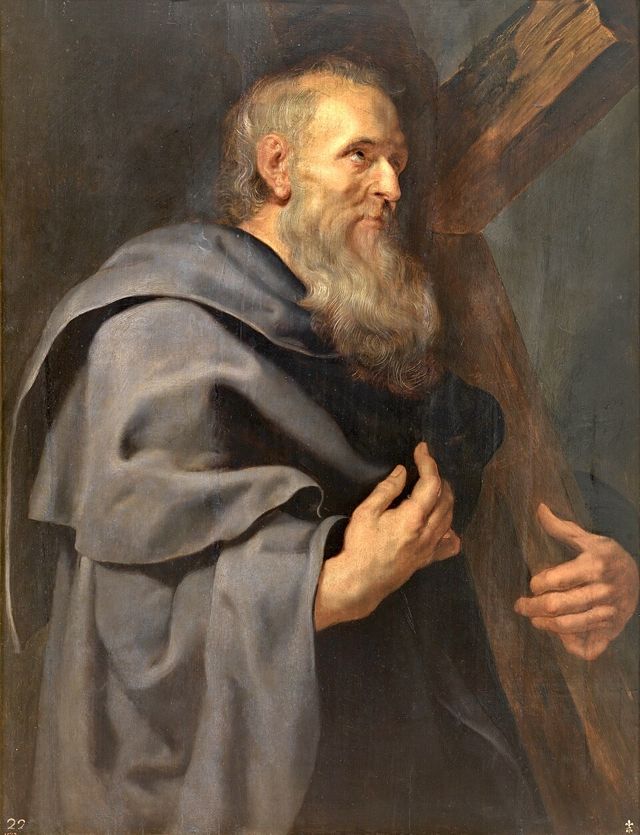
St. Philip

St. Philip

May 1 · Apostle, Martyr
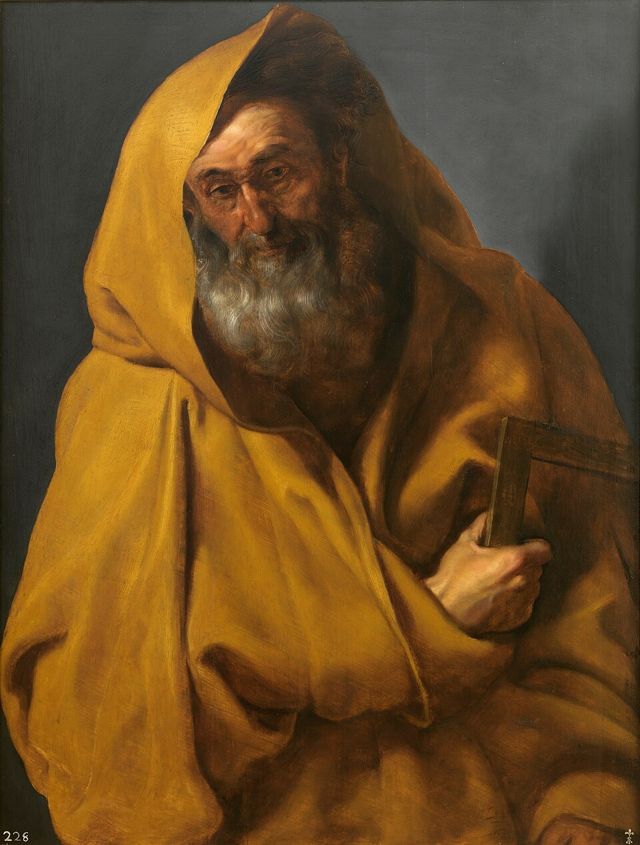
St. James the Less

St. James the Less

May 1 · Apostle
St. Amator of Auxerre

St. Amator of Auxerre

May 1 · Bishop
← All 1726 saints in the library
Sources & notes

Feast-day sources

Story sources

Sources

Credits

From Sabine Baring-Gould, The Lives of the Saints, new edition in 16 vols. (London: John C. Nimmo, 1897–98); text from the Internet Archive scan (OCR, lightly cleaned; errors possible). Public domain.

From “Catholic Encyclopedia (1913)/St. Theodard,” The Catholic Encyclopedia (New York: Robert Appleton Company, 1907–1914), via Wikisource. Public domain. Matched by name and feast date; text unedited except for our bracketed notes in grey.

From Sabine Baring-Gould, The Lives of the Saints, new edition in 16 vols. (London: John C. Nimmo, 1897–98); text from the Internet Archive scan (OCR, lightly cleaned; errors possible). Public domain in the United States. Reproduced unedited, except for short bracketed notes in grey that we added to explain names and terms (“S.” is the old abbreviation for Saint). Some history and judgments reflect 19th-century scholarship.