T

A shepherd who stayed with his people through hard times.

Read the essentials →
January 27 · Bishop, Confessor

St. Theodoric II of…

St. Theodoric II of Orleans

A shepherd who stayed with his people through hard times.

Traditional feast

January 27
1914 / pre-1969 calendar, per Baring-Gould (1914)

Current feast

Not verified yet

Represents

Bishop
Confessor

Their story

Adapted in modern English from Baring-Gould (1914) · original text below · little is known

Thierry, born at Château Thierry, won the trust of King Robert the Good and was elected bishop of Orleans. A priest named Adalric, who wanted the post, burst into the consecration with armed men.

Later Adalric, leading a band of ruffians, ambushed Thierry at night in a lane, threw him from his horse, and ran a sword at him, but the blade passed only through his clothes, and he made his way back to the city. Adalric begged forgiveness and received it. Thierry died on a journey at Tonnerre, where his kinsman Count Milo built a church of St. Michael over his body, and Adalric succeeded him.
Struggles & surrender

What they wrestled with, and how they gave it to God

  • Assassination attempt ·
    Source: Baring-Gould, Lives of the Saints. The priest Adalric, a rival for the see, disrupted his consecration and later ambushed him; Thierry forgave him.

Early life

Selected sentences from the original account, unaltered.

Thin entry · the 1914 book gives only 228 words. We have not filled the gap with invented detail.

S. Thierry was born at Château Thierry, so called from an ancestor of the saint, whose family was noble and wealthy.

What they represent

How they teach us to live

Drawn from themes in the original account

Learn from the kind of life it was. A shepherd who stayed with his people through hard times.

Keep their day. Remember them on January 27 with a short prayer, and ask for their help.

Read more

The full original · 228 words

Read Baring-Gould’s full account

Baring-Gould’s sources: Called in France Thierry . Authority: an ancient life in Bollandus.

S. Thierry was born at Château Thierry, so called from an ancestor of the saint, whose family was noble and wealthy. He was taken to court and gained the confidence of King Robert the Good. On the death of Bishop Arnulf of Orleans, Thierry was elected, with the consent of the king, to fill the vacant see. His appointment was opposed by a priest named Adalric who had desired the throne for himself, and who had the indecency to burst into the church with a band of armed men, and thrust up to the very altar, uttering violent menaces, when Thierry was being consecrated, in the hopes of terrifying the consecrating bishops from what they were doing. Afterwards the priest at the head of a party of ruffians waylaid the Bishop by night, in a lane, and throwing him from his horse, ran him through, as they believed, with a sword. The weapon providentially cut through his garments without wounding him; and when the would-be assassins had fled, he rose and regained the city. Adalric, fearing the consequences, threw himself on the compassion of the Bishop, and asked his pardon, which Thierry frankly accorded him. Thierry died on a journey at Tonnerre, where his kinsman Count Milo built the church of S. Michael over his body. He was succeeded on the throne of Orleans by the priest Adalric.

Feast days

Feast: January 27

Nine days · Free

Pray the novena
with us.

One short email a day for nine days. The day's prayer, a line from St. Theodoric II of…'s story, and a nudge to keep going.

Also on January 27
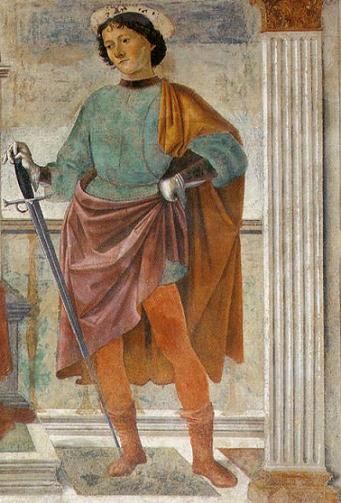
St. Julian of Mans

St. Julian of Mans

January 27 · Bishop
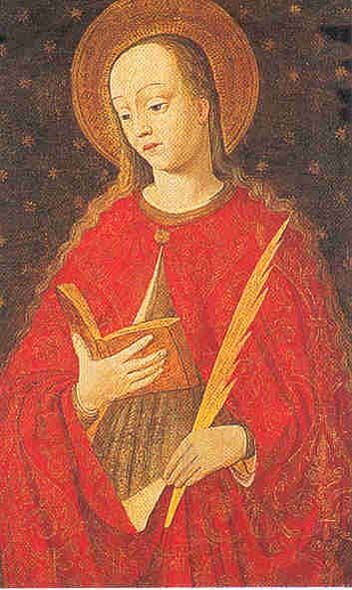
St. Devota in Corsica

St. Devota in Corsica

January 27 · Virgin, Martyr
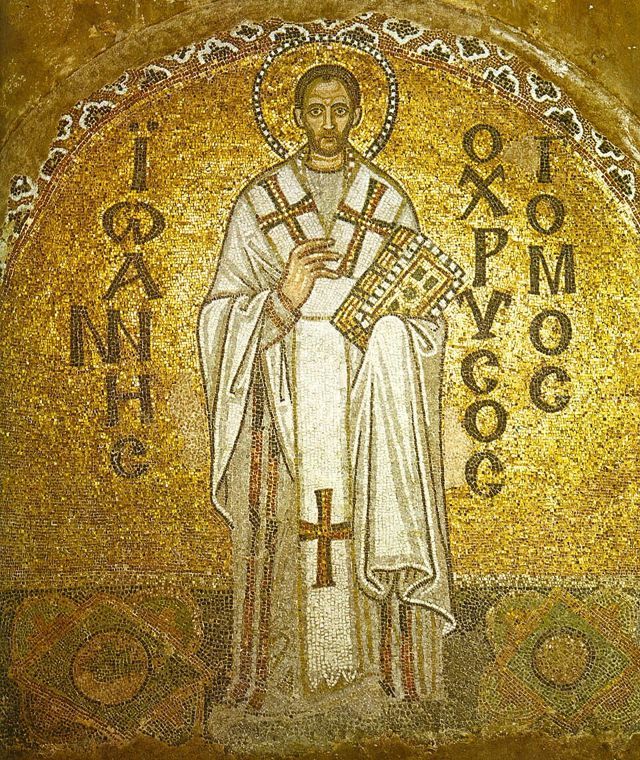
St. John Chrysostom

St. John Chrysostom

January 27 · Bishop, Deacon
← All 1726 saints in the library
Sources & notes

Feast-day sources

Story sources

Sources

Credits

From Sabine Baring-Gould, The Lives of the Saints, new and revised edition (Edinburgh: John Grant, 1914; first edition 1872). Public domain.

From Sabine Baring-Gould, The Lives of the Saints, new and revised edition (Edinburgh: John Grant, 1914; first edition 1872). Public domain in the United States. Reproduced unedited, except for short bracketed notes in grey that we added to explain names and terms (“S.” is the old abbreviation for Saint). Some history and judgments reflect 19th-century scholarship.