St. Verdiana

A whole life given to God with an undivided heart.

Read the essentials →
February 1 · Virgin

St. Verdiana

St. Verdiana

A whole life given to God with an undivided heart.

Traditional feast

February 1
1914 / pre-1969 calendar, per Baring-Gould (1897)

Current feast

February 1
Secondary source · Wikipedia

Represents

Virgin

Their story

Adapted in modern English from Baring-Gould (1897) · original text below

Verdiana was born at Castelfiorentino to parents who were poor though well-born, and her own early hardship made her pity everyone in need. At twelve a wealthy relative, a count, took her into his house to wait on his wife. She was so honest and careful that soon they left the whole household in her hands.

During a famine in the diocese of Florence, she saw starving people dying at the door, emptied her master's store of beans and fed them. He had already sold the beans. When he came back with the money and found the bin empty, he raged at the servants and caused a scandal in the house and the neighbourhood. A writer of her own time says that Verdiana spent the night in prayer, the bin was found full the next morning, and she told her master to give up such violence, since Christ had received the beans and returned them.

Her relative paid for her pilgrimage to Santiago de Compostela. On her return she decided to become a recluse. After long preparation, including three years in Rome, she received the veil in her native town. Carrying the cross and escorted by the clergy and people, she was led to her cell, and the door was walled up behind her. For many years she talked with visitors and received food and Communion through a window.

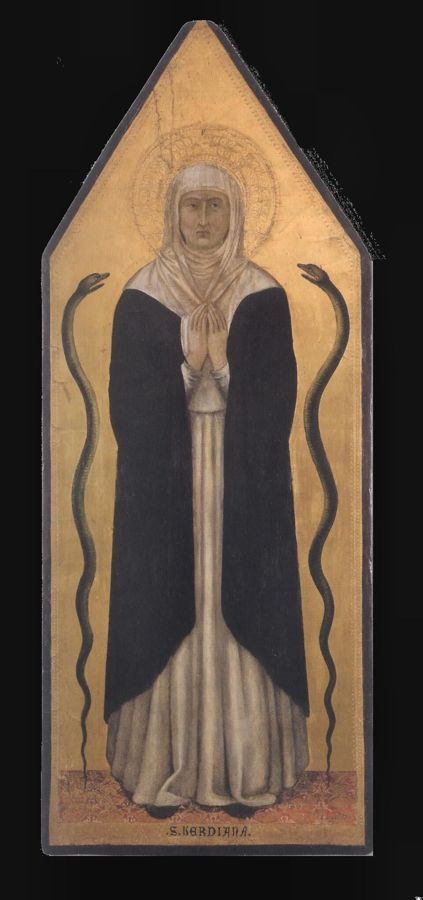
One day two large snakes crept in through the window and stayed. She overcame her disgust and fed them from her own food. They went out when no one was near but always came back at night and at mealtimes, until peasants killed one and drove the other away. When she felt death near, she made her confession, received Communion, closed her window and began the penitential psalms. Next morning the people broke in and found her dead, kneeling with eyes and hands raised, her psalter open at 'Have mercy upon me, O God.'

Early life

Selected sentences from the original account, unaltered.

Verdiana was the child of poor, though well-born parents; and her knowledge of the sufferings of the poor from her own experience in early years made her ever full of pity for those in need. At twelve years old she was noted for her beautiful and modest countenance, and humble deportment.

What they represent

How they teach us to live

Drawn from themes in the original account

Give to people in need. The account records care for the poor.

Learn from the kind of life it was. A whole life given to God with an undivided heart.

Read more

The full original · 663 words

Read Baring-Gould’s full account

Baring-Gould’s sources: Roman and Benedictine Martyrology, those of Menardus, Ferrarius, &c. Authority:—An old contemporary life, falsely attributed to Atto, B. of Pistoria.

Verdiana was the child of poor, though well-born parents; and her knowledge of the sufferings of the poor from her own experience in early years made her ever full of pity for those in need. At twelve years old she was noted for her beautiful and modest countenance, and humble deportment. A wealthy relation, a count, took her into his house, and made her wait upon his wife. Her strict probity and scrupulous discharge of her duties so gained the confidence of her master and mistress, that they entrusted to her the entire management of their house. One day that there was a famine raging in the diocese of Florence, and the poor were in extreme distress, the girl saw some miserable wretches dying from exhaustion at the door. Her master had a vessel of beans, and she hastily emptied the box, and fed the starving wretches with them. This would have been an act of questionable morality, were it not for the extremity of the case, when, to save life, an act is justified which would have been unjust were there no such an imperious necessity. Her master had, in the meantime, sold the beans, and he shortly after returned with the money. He went to the vessel, to send it to the purchaser, but found it empty. "Then," says the contemporary writer, "he began to shout and storm against the servants, and make such a to-do as to cause great scandal in the house and among the neighbours. Now when all the house was turned topsy-turvy about these beans, and was in an uproar, the lord's hand-maiden, with great confidence, betook herself to prayer, and spent the night in supplication. And on the morrow, the vessel was found full of beans as before. Then the master was called, and she bade him abstain for the future from such violence, for Christ who had received the beans had returned them."

By the kindness of the Count, her relative, she was enabled to make a pilgrimage to S. James, of Compostella, in company with a pious lady. On her return, she resolved to adopt the life of a recluse, and after long preparation, and a visit to Rome, where she spent three years, she obtained the desire of her heart, and received the veil from the hands of a canon of the Church of Castel Fiorentino, her native place, and bearing the Cross, preceded and followed by all the clergy and people, she was conducted to her cell, and, having been admitted into it, the door was walled up. In this cell she spent many years, conversing with those who visited her, and receiving her food through a window, through which, also, the priest communicated her. Two large snakes crept in at this window, one day, and thenceforth took up their abode with her. She received these fellow-comrades with great repugnance, but overcame it, and fed them from her own store of provisions. They would glide forth when no one was near, but never failed to return for the night, and when she took her meals. On one occasion they were injured by some peasants who pursued them with sticks and stones. Verdiana healed them, nevertheless the rustics attacked them again, killed one, and drove the other away, so that it never returned to the cell of the recluse.

When the holy woman felt that the hour of her release approached, she made her last confession and received the Blessed Sacrament through her window, and then closing it opened her psalter, and began to recite the penitential psalms. Next morning the people finding the window closed, and receiving no answer to their taps, broke into the cell, and found her dead, kneeling with eyes and hands upraised to heaven, and the psalter before her open at the psalm Miserere mihi , "Have mercy upon me, O God! after Thy great goodness; and according to the multitude of Thy mercies, do away mine offences."
Feast days

Feast: February 1

Nine days · Free

Pray the novena
with us.

One short email a day for nine days. The day's prayer, a line from St. Verdiana's story, and a nudge to keep going.

Also on February 1
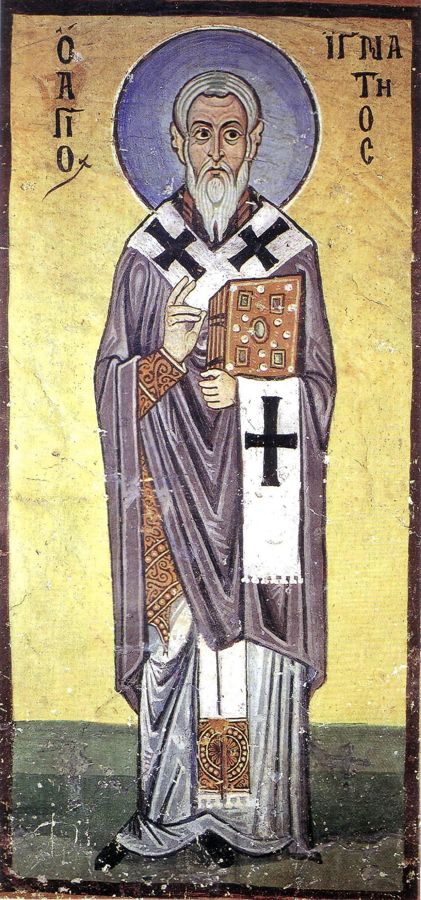
St. Ignatius

St. Ignatius

February 1 · Bishop, Martyr
P

Sts. Pionius and…

February 1 · Priest, Martyrs
E

St. Ephraem the Syrian

February 1 · Deacon, Confessor
← All 1727 saints in the library
Sources & notes

Feast-day sources

Story sources

Sources

Credits

Image: S.Verdiana, Museo di Santa Verdiana.jpg · anonimo pittore senese del XIV secolo · Public domain, via Wikimedia Commons

From Sabine Baring-Gould, The Lives of the Saints, new edition in 16 vols. (London: John C. Nimmo, 1897), digitized text from Project Gutenberg. Public domain.

Image: anonimo pittore senese del XIV secolo, Wikimedia Commons (Public domain)

From Sabine Baring-Gould, The Lives of the Saints, new edition in 16 vols. (London: John C. Nimmo, 1897), digitized text from Project Gutenberg. Public domain in the United States. Reproduced unedited, except for short bracketed notes in grey that we added to explain names and terms (“S.” is the old abbreviation for Saint). Some history and judgments reflect 19th-century scholarship.