St. Victoria

Faithfulness to Christ when it cost everything.

Read the essentials →
December 22 · Virgin, Martyr

St. Victoria

St. Victoria

Faithfulness to Christ when it cost everything.

Traditional feast

December 22
1914 / pre-1969 calendar, per Baring-Gould (1897)

Current feast

Not verified yet

Represents

Virgin
Martyr

Their story

Adapted in modern English from Alban Butler's Lives of the Saints · Baring-Gould original below · little is known

Victoria was a young Roman noblewoman who wished to remain a virgin. Eugenius, whom she refused, accused her to the judge.

When she would neither marry nor sacrifice, she was stabbed in the breast. Butler gives 250, under Decius; Baring-Gould, the text on this page, gives 253. The sources differ.

Early life

Selected sentences from the original account, unaltered.

But now that the earth is populated, and the Son of God has proclaimed, Increase in faith, multiply in charity, and replenish the heavens, carnal unions are vain.”

What they represent

How they teach us to live

Drawn from themes in the original account

Give to people in need. The account records care for the poor.

Learn from the kind of life it was. Faithfulness to Christ when it cost everything.

Read more

The full original · 279 words

Read Baring-Gould’s full account

Baring-Gould’s sources: Roman Martyrology. Usuardus, Ado, Notker, &c. Authorities: — The brief Acts in Ado, and a metrical version of the Acts by S. Aidhelm in his book, De Laude Viiginitatis. Aldhelm was bom about VICTORIA was betrothed to Eugenius, a pagan of rank and wealth in Rome. Titus Aurelius, a friend of Eugenius, wanted to marry S. Anatolia, to whom he was engaged, but she showed such repugnance towards the marriage state, that Titus Aurelius went to Victoria, and begged her, as she was a Christian like Anatolia, to persuade her to be reasonable, and to marry him.

Victoria readily consented, and went to Anatolia, and said to her: “ Listen to me, my sister: lama Christian, and I know that God does not abhor marriage. The prophets and the patriarchs had wives, and God blessed their posterity. Now listen to me: take your husband; he is an upright man, and will not betray that you are a Christ and it is very possible that your connection with him may be the means of his conversion.” This advice, so exactly what S. Paul gave,1 was met with disdain by S. Anatolia. “ Oh, Victoria 1” said she, “ conquer the devil, and be indeed Victoria. God said, when the world was void, Be fruitful, and multiply, and replenish the earth. But now that the earth is populated, and the Son of God has proclaimed, Increase in faith, multiply in charity, and replenish the heavens, carnal unions are vain.”

By these and other words Anatolia persuaded Victoria to a life of strict continence. Their bridegrooms carried them off to their estates in the country, and would not let them eat unless they consented to become their wives. Only a little bread was given them in the evening. At last the inveterate resolution of Victoria triumphed; Eugenius abandoned her to the magistrates, and she was decapitated.

If there be any truth in these Acts, it shows that a view of marriage must have obtained a hold in Rome in the middle of the third century which was identical with that afterwards developed by Manes. But it is more probable that the part referring to the opposition of the virgins to their marriage is an invention of a later age.
Feast days

Feast: December 22

Nine days · Free

Pray the novena
with us.

One short email a day for nine days. The day's prayer, a line from St. Victoria's story, and a nudge to keep going.

Also on December 22
I

St. Ischyrion

December 22 · Martyr
F

St. Flavian

December 22 · Martyr
E

St. Ernan

December 22 · Feast
← All 1726 saints in the library
Sources & notes

Feast-day sources

Story sources

Sources

Credits

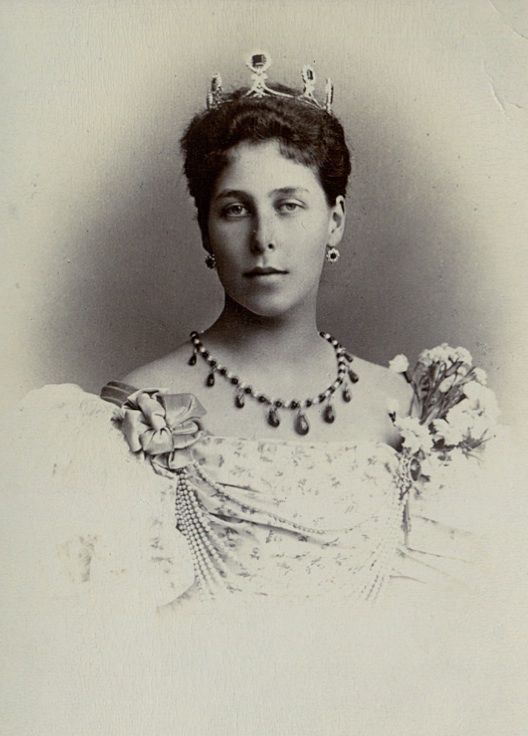
Image: Victoria Melita of Edinburgh and Saxe-Coburg and Gotha.jpg · Hugo Thiele · Public domain, via Wikimedia Commons

From Sabine Baring-Gould, The Lives of the Saints, new edition in 16 vols. (London: John C. Nimmo, 1897–98); text from the Internet Archive scan (OCR, lightly cleaned; errors possible). Public domain.

Image: Hugo Thiele, Wikimedia Commons (Public domain)

From Sabine Baring-Gould, The Lives of the Saints, new edition in 16 vols. (London: John C. Nimmo, 1897–98); text from the Internet Archive scan (OCR, lightly cleaned; errors possible). Public domain in the United States. Reproduced unedited, except for short bracketed notes in grey that we added to explain names and terms (“S.” is the old abbreviation for Saint). Some history and judgments reflect 19th-century scholarship.